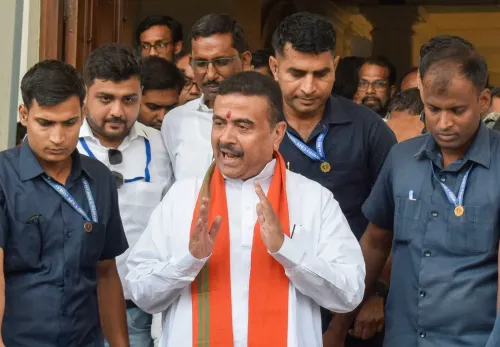
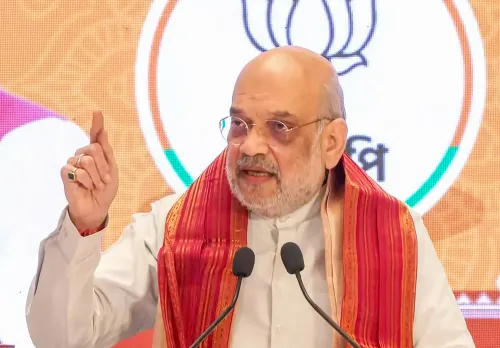
Smriti Irani: BJP Govt Transfers 1,024 Acres for Bengal Border Fencing
Synopsis
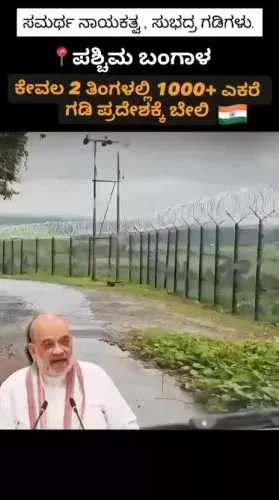
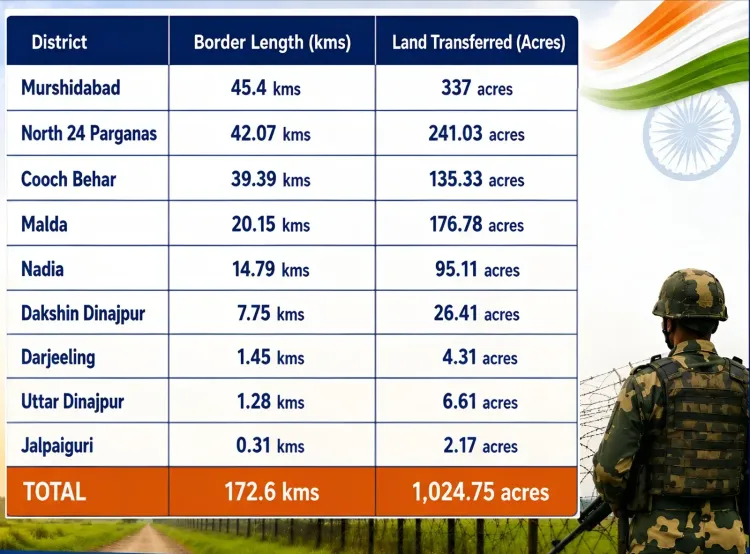
BJP leader Smriti Irani announced that the BJP government in West Bengal transferred 1,024.75 acres across nine border districts to the BSF for constructing 172.6 km of India-Bangladesh border fencing, calling it a step towards an infiltration-free Bengal.
Key Takeaways
1,024.75 acres of land across nine border districts in West Bengal has been handed over to the BSF .
The land transfer enables construction of 172.6 km of new border fencing along the India-Bangladesh border .
The India-Bangladesh border spans approximately 4,096 km ; fencing of the frontier was first approved in 1986 .
The 2015 Land Boundary Agreement between India and Bangladesh simplified border demarcation and facilitated land transfers for security works.
BJP leader Smriti Irani described the move as 'a significant step towards an infiltration-free Bengal.' The Ministry of Home Affairs is expected to provide further updates on fencing completion timelines.
BJP leader Smriti Irani on Thursday, 16 July 2026, highlighted a significant border security move, stating that the BJP government in West Bengal had handed over 1,024.75 acres of land across nine border districts to the Border Security Force (BSF) for the construction of 172.6 km of border fencing along the India-Bangladesh border.
Context
In her post, Irani described the move as 'a significant step towards an infiltration-free Bengal,' noting that 'critical stretches of the India-Bangladesh border remained unfenced for years.' The land transfer, she said, followed shortly after the BJP assumed office in West Bengal. The India-Bangladesh border stretches approximately 4,096 km, making it one of the longest land frontiers India manages.
Physical fencing of this frontier has been a long-standing internal security objective. Successive central governments have pursued it to curb unauthorised crossings, smuggling, and illegal immigration, with the project first approved as far back as 1986.
Policy Backdrop
The NDA government after 2014 accelerated border fencing initiatives and increased budgetary allocations for BSF infrastructure across the eastern frontier. A key enabling step was the 2015 Land Boundary Agreement between India and Bangladesh, which exchanged 162 enclaves and enabled clearer border demarcation, simplifying subsequent land transfers for security works in states including West Bengal.
Land acquisition by state governments for central forces like the BSF is a recurring administrative requirement in this long-running project. The transfer of 1,024.75 acres across nine districts represents a concentrated effort to resolve longstanding land-access bottlenecks that have historically delayed fencing progress.
Stakeholders and Impact
The BSF, as India's primary border-guarding force along the Bangladesh frontier, stands to gain operational ground for construction and patrol activity once fencing is in place. Communities residing in border districts of West Bengal have long experienced the security and economic consequences of porous stretches, including cross-border crime and illegal movement.
Residents of the nine border districts involved in the land transfer are among the most directly affected stakeholders, as completed fencing typically alters patterns of local movement and trade while reducing infiltration risks. BSF personnel deployed in these sectors are expected to benefit from improved infrastructure and clearer operational boundaries.
What's Next
The pace at which the 172.6 km of fencing is constructed will depend on BSF project timelines, terrain challenges, and central government funding cycles. Observers will watch for official updates from the Ministry of Home Affairs on fencing completion percentages and any further land transfer notifications in remaining unfenced border districts.
With the land now formally transferred, the administrative precondition for construction is met. Whether the fencing project proceeds on schedule will be a key indicator of the BJP government's stated commitment to an 'infiltration-free Bengal.'
Point of View
A theme the party has consistently amplified ahead of electoral cycles in West Bengal. The claim connects to a decades-old national project — fencing the Bangladesh frontier — lending it policy legitimacy beyond partisan messaging. However, since the research flags the BJP's current governance status in West Bengal and the precise 2026 figures as unverified, the announcement warrants independent corroboration before it is treated as settled fact. If confirmed, the transfer would mark a meaningful acceleration of a project that has historically been slowed by exactly this kind of land-access bottleneck.
NationPress
16 Jul 2026
Frequently Asked Questions
How much land has been transferred to the BSF for India-Bangladesh border fencing in West Bengal?
According to BJP leader Smriti Irani, 1,024.75 acres of land across nine border districts in West Bengal has been handed over to the BSF for border fencing construction.
How long is the new border fencing planned for West Bengal?
The land transfer is intended to facilitate the construction of 172.6 km of border fencing along the India-Bangladesh border in West Bengal.
When was India-Bangladesh border fencing first approved?
Fencing of the India-Bangladesh border was first approved in 1986 and has progressed intermittently under successive central governments since then.
What is the total length of the India-Bangladesh border?
The India-Bangladesh border stretches approximately 4,096 km , making it one of India's longest land frontiers and a long-standing focus of BSF security operations.
What role did the 2015 Land Boundary Agreement play in border fencing?
The 2015 Land Boundary Agreement between India and Bangladesh exchanged 162 enclaves and enabled clearer border demarcation, simplifying subsequent land transfers for security infrastructure including fencing.