Bihar CM Office Launches School Live Classes for Quality Ed
Synopsis
The Chief Minister's Office of Bihar on 16 July 2026 unveiled Bihar School Live Classes, a technology-enabled programme to deliver quality, competitive-exam-oriented instruction equally to all government school students across the state, marking a new phase in Bihar's decade-long school-education reform effort.
Key Takeaways
The Chief Minister's Office of Bihar announced Bihar School Live Classes on 16 July 2026 .
The programme aims to provide technology-driven, quality education equally to every student in Bihar 's government schools.
The initiative explicitly targets competitive-exam preparedness , addressing a gap for students without access to private coaching.
Bihar has sustained school-education reforms since 2005 under Nitish Kumar , with digital learning components added from 2018 via Samagra Shiksha Abhiyan .
The programme fits a broader national pattern of state-led digital classroom expansion accelerated after 2020 .
Participation data and board or entrance-exam results from enrolled schools will be the key metrics to watch.
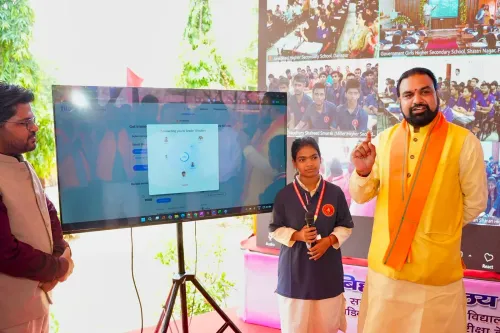
The Chief Minister's Office of Bihar on Thursday, 16 July 2026, announced Bihar School Live Classes, describing the initiative as a significant step toward ensuring equal access to technology-driven, quality, and competitive-exam-oriented education for every student in the state.
Posting on X, the official account of the Chief Minister's Office stated: 'बिहार स्कूल लाइव क्लासेज' ('Bihar School Live Classes') is 'an important initiative in the direction of ensuring equal access to technology-driven, quality, and competitive-exam-oriented education for every student of the state.' The post added that 'this effort will prove to be a milestone in making education more accessible, modern, and effective.'
Context
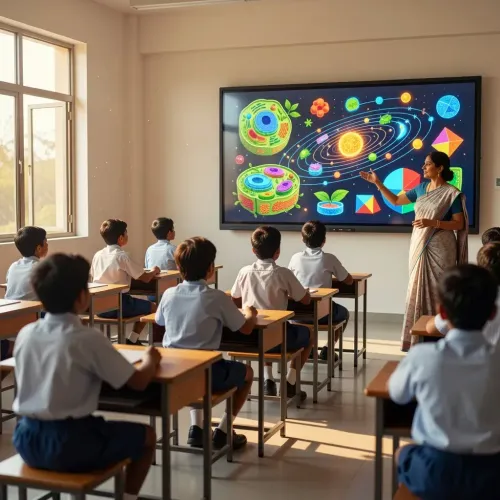
Bihar School Live Classes is a state initiative designed to deliver live digital instruction to students enrolled in government schools across Bihar. The programme specifically targets competitive-examination preparedness — a persistent gap for students in districts where private coaching centres remain out of reach financially or geographically. The announcement underscores the state government's intent to close that gap through publicly funded, technology-enabled classrooms.Policy Backdrop
Bihar has maintained a sustained focus on school education since 2005, when the administration of Chief Minister Nitish Kumar began a series of reforms that produced measurable gains in enrollment and school infrastructure over successive terms. From 2018 onwards, the state deepened its engagement with digital and remedial learning by rolling out components of the centrally supported Samagra Shiksha Abhiyan, which incorporated technology-assisted instruction at the district level. Bihar School Live Classes extends that lineage into a live-streaming model aimed at replicating, for government school students, the kind of real-time instruction that urban and private-school peers access more readily. Several Indian states accelerated live and recorded digital classroom programmes after 2020 to address learning gaps exposed during school closures. Bihar's current initiative fits the broader national pattern of deploying central and state resources to bring structured, exam-focused instruction to underserved districts — particularly for students preparing for board examinations and national-level entrance tests.Stakeholders and Impact
The primary beneficiaries are students in Bihar's government schools, particularly those in rural and semi-urban blocks where qualified subject teachers and coaching facilities are scarce. Government school teachers stand to gain structured digital content that can supplement classroom delivery. Competitive-exam aspirants — students preparing for engineering, medical, and civil services entrance tests — represent a specific cohort the programme explicitly aims to serve. Equitable access to exam-oriented content could meaningfully alter outcomes for first-generation learners in the state.What's Next
Attention will now turn to implementation details: the scale of rollout across Bihar's 38 districts, the subjects and grade levels covered, and the technology infrastructure supporting live streaming in low-connectivity areas. Analysts and education officials will watch participation data and subsequent board or entrance-examination results from schools using the platform as the clearest measure of whether the initiative delivers on its stated promise of making education 'more accessible, modern, and effective.'Point of View
Where live-class models have become the standard response to learning-gap concerns. Whether the programme achieves its equity goals will depend heavily on last-mile infrastructure — a challenge the announcement does not yet address publicly.
NationPress
15 Oct 2026
Frequently Asked Questions
What is Bihar School Live Classes?
Bihar School Live Classes is a state government initiative announced on 16 July 2026 that delivers live, technology-driven instruction to students in Bihar 's government schools, with a focus on quality education and competitive-exam preparation.
Who announced Bihar School Live Classes?
The Chief Minister's Office of Bihar made the announcement on X (formerly Twitter) on 16 July 2026 , describing it as a milestone in making education more accessible and modern.
Which students will benefit from Bihar School Live Classes?
Students enrolled in Bihar 's government schools across all 38 districts are the primary beneficiaries, with particular focus on those in rural areas who lack access to private coaching for competitive examinations.
How does Bihar School Live Classes fit into existing education policy?
The scheme extends Bihar 's sustained school-education reforms dating to 2005 and builds on digital learning components introduced under Samagra Shiksha Abhiyan from 2018 , now adding a live-streaming instructional model.
What should we watch for after the Bihar School Live Classes launch?
Key indicators will include the scale of district-level rollout, subjects and grades covered, connectivity infrastructure in low-access areas, and — over time — student performance in board and national entrance examinations.