Aaditya Thackeray demands pure petrol option alongside E20 ethanol blends
Synopsis
Aaditya Thackeray's letter to PM Modi isn't just a consumer complaint — it's a direct challenge to the Centre's flagship E20 ethanol mandate. By invoking the government's own admission of a 3–5% mileage drop, raising water sustainability alarms over sugarcane dependence, and alleging policy capture by industrial lobbies, Thackeray has reframed a fuel programme as a question of fairness, ecology, and accountability.
Key Takeaways
Aaditya Thackeray wrote to PM Modi on 16 July demanding 100% pure petrol be made available alongside ethanol-blended fuel at pumps.
India's Ethanol Blending Programme (EBP) has reached a mandatory E20 rollout — 20% ethanol, 80% petrol — nationwide.
Government FAQs reportedly acknowledge a 3–5% reduction in fuel economy for some vehicles on higher ethanol blends.
Thackeray flagged the ecological risk of scaling up sugarcane cultivation — one of India's most water-intensive crops — to meet ethanol targets.
He proposed a two-option fuel system : pure petrol for older or incompatible vehicles; blended petrol for flex-fuel or opt-in consumers.
Thackeray alleged the policy disproportionately benefits industrial lobbies over ordinary consumers, calling for full government transparency.
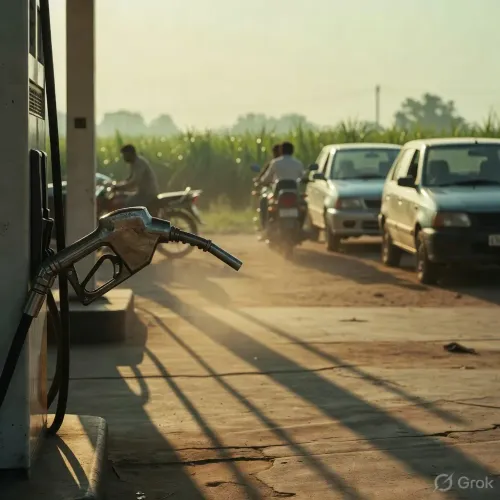
Shiv Sena (UBT) leader and Worli MLA Aaditya Thackeray wrote to Prime Minister Narendra Modi on Thursday, 16 July, urging the Centre to restore consumer choice in fuel by making 100 per cent pure petrol available at pumps alongside the existing ethanol-blended alternatives. The letter challenges the compulsory nature of India's Ethanol Blending Programme (EBP), which has reached a nationwide E20 mandate — a blend of 20 per cent ethanol and 80 per cent petrol.
The Consumer Grievance
Thackeray argued that millions of vehicle owners — particularly youth and middle-class families who have invested years of savings and long-term EMIs into their automobiles — are being forced to run their vehicles on fuel they were never engineered to handle. He cited widespread public complaints of lower mileage and degraded engine performance following the scale-up of ethanol blending.
Critically, Thackeray pointed to the Centre's own documentation: government FAQs reportedly acknowledge a 3–5 per cent reduction in fuel economy for certain vehicles running on higher ethanol blends. A large share of vehicles currently on Indian roads, he noted, were manufactured before flex-fuel compatibility became a design consideration.
Environmental and Water Concerns
Beyond the immediate impact on vehicle owners, the former Maharashtra Environment Minister raised questions about the ecological sustainability of scaling up ethanol production. He specifically flagged India's growing dependence on sugarcane — one of the country's most water-intensive crops — to meet ethanol manufacturing targets. This, he argued, poses a serious concern at a time when multiple regions across India are experiencing acute water shortages.
Allegations of Policy Capture
Thackeray also raised a pointed political concern: a growing public perception, he wrote, that the current ethanol blending policy disproportionately benefits specific industrial lobbies and corporate entities rather than ordinary consumers. He called on the Centre to address these concerns with full transparency, and to make the policy's beneficiary structure publicly accountable.
What Thackeray Has Proposed
Drawing on international precedents where consumers freely select fuel based on vehicle compatibility, Thackeray proposed a two-option system at fuel retail outlets: 100 per cent pure petrol for older, standard, or non-compatible vehicles, and ethanol-blended petrol for consumers who opt in or own compatible flex-fuel vehicles. He argued this would protect consumer rights, prevent mechanical damage to pre-existing automobiles, and rebuild public confidence in India's sustainability transition.
The letter arrives as the EBP — long championed by the government as a pathway to energy independence and foreign exchange savings — faces mounting friction from consumers and the agricultural sector alike. Whether the Centre responds with a policy revision or defends the mandate's current structure will be closely watched.
Point of View
But the substance deserves scrutiny on its own terms. The government's own acknowledgment of a 3–5% mileage drop is a significant concession buried in FAQs — not in policy communications — and that gap between official messaging and documented impact is precisely where consumer trust erodes. The sugarcane-water nexus is a legitimate structural concern that mainstream coverage of the EBP has largely ignored: India cannot simultaneously chase water security and an ethanol programme built on one of its thirstiest crops. The allegation of industrial capture is harder to substantiate without specifics, but the opacity of beneficiary disclosures gives it oxygen. The Centre's response — or silence — will define whether this stays a political letter or becomes a policy inflection point.
NationPress
15 Oct 2026
Frequently Asked Questions
What did Aaditya Thackeray demand in his letter to PM Modi?
Thackeray demanded that the Centre reintroduce 100 per cent pure petrol at fuel stations alongside ethanol-blended options, giving consumers the choice to select fuel based on their vehicle's compatibility. He argued the current compulsory E20 mandate is hurting vehicle performance and mileage for millions of owners.
What is India's Ethanol Blending Programme (EBP) and what is E20?
The Ethanol Blending Programme is the Centre's policy to mix ethanol with petrol to reduce fossil fuel dependence and save on foreign exchange. E20 refers to a blend of 20 per cent ethanol and 80 per cent petrol, which has now been rolled out as a mandatory nationwide standard.
Why are vehicle owners concerned about ethanol-blended petrol?
Many vehicle owners report lower mileage and poorer engine performance after the scale-up of ethanol blending. A large share of vehicles on Indian roads were not designed for high-ethanol blends, and the government's own FAQs reportedly acknowledge a 3–5 per cent reduction in fuel economy for some vehicles.
What environmental concerns did Thackeray raise about the ethanol policy?
Thackeray highlighted India's growing reliance on sugarcane — one of the most water-intensive crops — to meet ethanol production targets. He questioned whether scaling up sugarcane cultivation is sustainable given the acute water shortages already affecting multiple regions across India.
What two-option fuel system has Thackeray proposed?
Thackeray has proposed that fuel stations offer two choices: 100 per cent pure petrol for older, standard, or non-compatible vehicles, and ethanol-blended petrol for consumers who choose it or own flex-fuel vehicles. He cited international markets where such consumer choice is standard practice.