CM Sukhu Pledges Quality Education at Nominal Fee for Rural HP Students

Synopsis
Chief Minister Sukhvinder Singh Sukhu's office announced a nominal-fee quality education facility for rural students in Himachal Pradesh, responding to a public suggestion about Doon's development. The government pledged continued sensitivity to citizen-driven welfare proposals.
Key Takeaways
The Chief Minister's Office of Himachal Pradesh confirmed on 16 July 2026 that a facility for quality education at nominal fees has been put in place.
Rural students across Himachal Pradesh are the primary intended beneficiaries of the initiative.
The announcement was made in response to a public suggestion related to the development and welfare of Doon .
CM Thakur Sukhvinder Singh Sukhu reaffirmed the government's commitment to act with sensitivity on every meaningful suggestion concerning Doon's development.
The move aligns with the Sukhu government's broader post-2022 policy focus on affordable schooling and rural welfare in Himachal Pradesh.
Formal institutional details and budget allocations for the scheme are yet to be publicly notified.
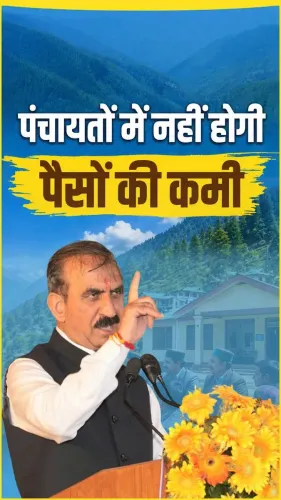
The Chief Minister's Office of Himachal Pradesh, on behalf of Chief Minister Thakur Sukhvinder Singh Sukhu, announced on Thursday, 16 July 2026 that a facility has been put in place to provide quality education at nominal fees, with a particular focus on students from rural areas. The statement, posted in response to a public suggestion, also reaffirmed the state government's commitment to act with sensitivity on every meaningful suggestion related to the development and welfare of Doon.
In the post, CM Sukhu stated — 'इससे विशेषकर ग्रामीण क्षेत्रों के विद्यार्थियों को नाममात्र के शुल्क पर गुणवत्तापूर्ण शिक्षा उपलब्ध होगी' — meaning: 'This will make quality education available at nominal fees, especially for students in rural areas.' He added that the state government would continue to work with sensitivity on every constructive suggestion related to the development and public welfare of Doon.
Context
The post is a reply from the Chief Minister's Office of Himachal Pradesh to a citizen or stakeholder who had submitted a suggestion, likely concerning educational access in the Doon region of the state. While the specific suggestion and the precise nature of the facility are not detailed in the post, the government's response confirms that action has already been taken — framing this as responsive, citizen-driven governance.
Himachal Pradesh has long maintained one of the highest literacy rates among Indian states, but the challenge of delivering quality education across its difficult, mountainous terrain and dispersed population has persisted. Rural and semi-urban pockets, including areas such as Doon, have historically faced gaps in access to affordable schooling infrastructure.
Policy Backdrop
Since coming to power in December 2022, the Sukhu-led Congress government has positioned education access and rural welfare as central planks of its policy agenda. The emphasis on nominal-fee models aligns with a broader national trend, where several state governments have introduced subsidised or low-cost schooling arrangements to reduce the financial burden on families, particularly in geographically remote regions.
Himachal Pradesh's dispersed settlement patterns mean that even small fee structures can be prohibitive for families in interior villages. Nominal-fee education initiatives are seen as a direct intervention to prevent dropout rates and encourage enrolment, especially at the secondary and higher secondary levels where private coaching costs can mount significantly.
Stakeholders and Impact
Rural students and their families across Himachal Pradesh stand to be the primary beneficiaries of this initiative. For households in areas with limited economic activity, even a marginal reduction in education costs can have a meaningful impact on enrolment and retention rates. Parents in remote areas, who often weigh the cost of schooling against immediate livelihood needs, are a key constituency the government appears to be addressing.
The use of the official CMO Himachal Pradesh social media handle to respond directly to public suggestions also signals a broader governance approach — one that treats digital platforms as a channel for two-way civic engagement rather than one-way announcements.
What's Next
Formal notifications, budget allocations, and institutional details regarding the nominal-fee education facility are expected to follow. Observers will watch the Himachal Pradesh state budget and education department circulars for specifics on the scale, location, and eligibility criteria of the scheme. The government's stated intent to continue engaging with suggestions on Doon's development also signals that further announcements on local welfare initiatives may be forthcoming.
Point of View
Responsive governance — particularly valuable in a state where terrain limits direct outreach. Anchoring the education announcement around rural access and nominal fees taps into a long-standing welfare expectation in Himachal Pradesh, where the Congress has historically positioned itself as the party of the 'aam aadmi' against a backdrop of BJP competition. The reference to Doon, a constituency-level geography, also suggests the government is calibrating its welfare messaging at a granular, locally resonant level. Whether this translates into a formal, funded scheme or remains a directional commitment will be the true test of the announcement's policy weight.
NationPress
16 Jul 2026
Frequently Asked Questions
What did CM Sukhu announce about education in Himachal Pradesh?
CM Sukhvinder Singh Sukhu's office announced that a facility has been put in place to provide quality education at nominal fees, with a specific focus on students from rural areas of Himachal Pradesh.
Which area of Himachal Pradesh does this education initiative relate to?
The announcement was made in response to a suggestion related to Doon , a region in Himachal Pradesh, and the government pledged to act on all meaningful suggestions concerning Doon's development and public welfare.
Who will benefit from the nominal-fee education scheme in HP?
Rural students and their families in Himachal Pradesh are the primary intended beneficiaries, as the initiative aims to make quality schooling accessible without imposing a significant financial burden.
When did CM Sukhu make this education announcement?
The Chief Minister's Office of Himachal Pradesh posted the announcement on 16 July 2026 via its official account on X.
What is the Sukhu government's broader education policy focus?
Since taking office in December 2022 , the Sukhu-led Congress government has prioritised expanding affordable and subsidised schooling infrastructure, particularly in rural and geographically remote parts of Himachal Pradesh.