Shekhawat meets WTTC chief to boost India inbound tourism
Synopsis
Union Tourism Minister Gajendra Singh Shekhawat held a productive meeting with WTTC President Gloria Guevara on 17 July 2026, focusing on boosting India's inbound tourism, strengthening global promotion, and improving international and sub-national tourism ranking methodologies.
Key Takeaways
Gajendra Singh Shekhawat met WTTC President Gloria Guevara on 17 July 2026 to advance India-WTTC tourism cooperation.
Discussions covered three priorities: increasing inbound tourism , enhancing global tourism promotion , and improving ranking methodology .
The focus on sub-national tourism rankings reflects a federal push to develop tourism circuits beyond established destinations.
The WTTC is the global private-sector body whose benchmarks influence international tourism competitiveness assessments.
The Prime Minister's Office and Ministry of Tourism were tagged, indicating high-level institutional support for the initiative.
Follow-up deliverables to watch include joint working groups and a revised tourism statistics methodology from the Ministry of Tourism.
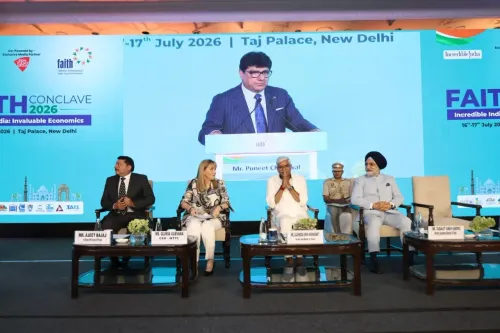
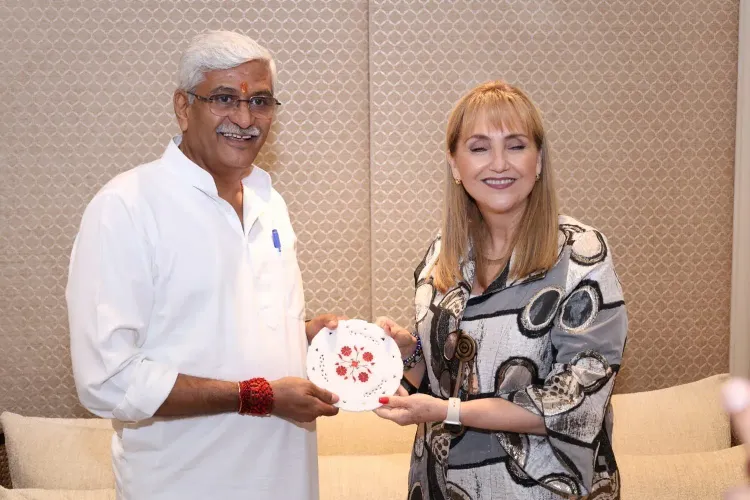
Union Culture and Tourism Minister Gajendra Singh Shekhawat met Ms. Gloria Guevara, President and CEO of the World Travel and Tourism Council (WTTC), on Thursday, 17 July 2026, in a bid to strengthen India's global tourism footprint and deepen cooperation with the world's foremost private-sector tourism body.
Context
Shekhawat described the meeting as 'productive', with discussions centred on three key areas: increasing inbound tourism to India, enhancing India's global tourism promotion, and improving the methodology used for international and sub-national tourism rankings. The minister tagged the Prime Minister's Office and the Ministry of Tourism in his post, signalling high-level institutional backing for the engagement.
The WTTC is the global voice of the private travel and tourism sector, representing major companies across aviation, hospitality, cruises, and travel services. Its annual economic impact reports and ranking methodologies carry significant weight in shaping how countries are benchmarked for tourism competitiveness.
Policy Backdrop
India's engagement with international tourism bodies has a long policy lineage, dating to the 2002 National Tourism Policy, which first emphasised data quality and global partnerships. Post-pandemic recovery efforts from 2020 onwards saw renewed urgency in boosting inbound arrivals, which had collapsed during the COVID-19 years and have since been on a gradual recovery path.
The specific mention of sub-national tourism rankings is significant. It reflects a deliberate federal push to develop tourism circuits and destinations beyond established metros and heritage sites, giving state tourism boards a stronger stake in national performance metrics. Improving the underlying data methodology is seen as foundational to making India's rankings more accurately reflect ground-level tourism activity.
India has consistently positioned tourism as an economic multiplier — a sector capable of generating large-scale employment and contributing meaningfully to GDP — and partnerships with bodies like the WTTC are central to aligning domestic policy with global competitiveness and sustainability benchmarks.
Stakeholders and Impact
The immediate stakeholders include state tourism boards across India, which stand to benefit from improved sub-national ranking frameworks that can attract investment and visitor flows to emerging destinations. The private travel and tourism industry — hotels, airlines, tour operators, and travel technology firms — also has a direct interest in any WTTC-backed initiatives that improve India's international image as a destination.
For the Ministry of Tourism, deeper collaboration with the WTTC could translate into access to global best practices in tourism data collection and promotion strategies, strengthening India's case in forums such as the UN World Tourism Organization. A competitive and sustainable tourism ecosystem, as Shekhawat described the shared goal, would also align India's tourism policy more closely with global sustainability benchmarks increasingly demanded by international travellers.
What's Next
Observers will watch for any follow-up joint statements, working groups, or memoranda of understanding emerging from this engagement, particularly in the lead-up to the WTTC's annual global summit. A revised tourism statistics methodology from the Ministry of Tourism, potentially co-developed with WTTC inputs, would be a concrete deliverable to track.
With India's ambitions to become one of the world's top tourism destinations, the outcome of this collaboration could shape both the country's international ranking trajectory and the policy architecture supporting its inbound tourism growth in the years ahead.
Point of View
State-level data to support its push to diversify tourism beyond the Golden Triangle. Aligning with the WTTC's private-sector frameworks also positions India to attract higher-value inbound travellers by meeting global sustainability and competitiveness benchmarks. This engagement fits a consistent pattern under the current government of using international institutional partnerships to lend credibility and scale to domestic tourism ambitions.
NationPress
15 Oct 2026
Frequently Asked Questions
Who is Gloria Guevara and why did Shekhawat meet her?
Gloria Guevara is the President and CEO of the World Travel and Tourism Council (WTTC) , the global body representing the private travel and tourism sector. Union Tourism Minister Gajendra Singh Shekhawat met her on 17 July 2026 to discuss boosting India's inbound tourism, improving global promotion, and refining international and sub-national tourism ranking methodologies.
What is the WTTC and what role does it play in tourism rankings?
The World Travel and Tourism Council (WTTC) is a global private-sector organisation representing the travel and tourism industry, including aviation, hospitality, and travel services. It produces economic impact reports and ranking methodologies that are widely used to benchmark countries for tourism competitiveness and sustainability.
What are sub-national tourism rankings and why do they matter for India?
Sub-national tourism rankings assess the tourism performance of individual states or regions within a country, rather than the country as a whole. For India, improving these rankings matters because it can help attract investment and visitors to emerging destinations beyond established hubs, supporting a federal push to develop diverse tourism circuits.
What is India's strategy to increase inbound tourism?
India has pursued a multi-pronged approach to increasing inbound tourism, including international partnerships with bodies like the WTTC , improving tourism data and ranking methodologies, and promoting sustainable and competitive tourism ecosystems. The Ministry of Tourism has been central to these efforts since the 2002 National Tourism Policy .
What are the expected outcomes of the Shekhawat-WTTC meeting?
Concrete outcomes to watch for include follow-up joint working groups, possible memoranda of understanding, and a revised tourism statistics methodology co-developed with WTTC inputs. These could strengthen India's position in global tourism indices and support the country's ambition to become a top international destination.