CM Sukhu Pushes for Financially Strong Gram Panchayats in HP

Synopsis
Chief Minister Sukhvinder Singh Sukhu on 16 June 2026 reaffirmed Himachal Pradesh's push to make gram panchayats economically self-sufficient, framing it as a cornerstone of inclusive and sustainable rural development in the state.
Key Takeaways
CM Thakur Sukhvinder Singh Sukhu stated on 16 June 2026 that the government aims to make gram panchayats economically strong.
The goal is to give 'a new direction' to inclusive and sustainable development through strengthened village-level institutions.
Gram panchayats in India derive their constitutional mandate from the 73rd Constitutional Amendment Act of 1992 .
Himachal Pradesh has a predominantly rural and hilly geography where panchayat governance is critical to service delivery.
The specific policy measure or scheme referenced in the statement was not disclosed in the post.
State budget allocations and future panchayat elections will be key indicators of follow-through on this commitment.
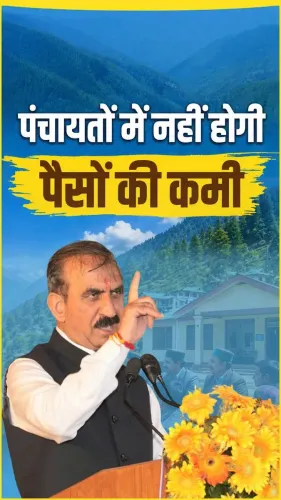
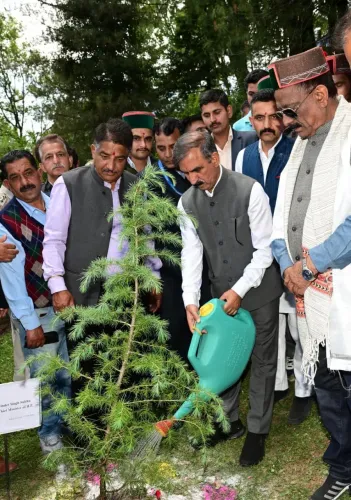
The Chief Minister's Office of Himachal Pradesh on Tuesday, 16 June 2026, shared a statement from Chief Minister Thakur Sukhvinder Singh Sukhu reaffirming the state government's commitment to strengthening gram panchayats economically and steering inclusive, sustainable development at the grassroots level.
In his statement, CM Sukhu said: 'हमारा प्रयास है कि इससे ग्राम पंचायतें आर्थिक रूप से सुदृढ़ हों तथा समावेशी एवं सतत विकास को नई दिशा मिले' — translated: 'Our effort is that gram panchayats become economically strong through this, and inclusive as well as sustainable development receives a new direction.'
Context
Himachal Pradesh is a predominantly rural and hilly state where village-level governance carries outsized importance for service delivery and local planning. Gram panchayats — the elected village councils mandated under the 73rd Constitutional Amendment Act of 1992 — are the frontline institutions through which development funds and administrative functions reach rural households.
CM Sukhu's remark is framed around a specific initiative or measure, referred to as 'this' (इससे) in the post, the precise details of which were not disclosed in the statement. The emphasis, however, is on economic consolidation of panchayat bodies and a renewed push toward inclusive growth.
Policy Backdrop
The 73rd Constitutional Amendment inserted Part IX into the Constitution and established a three-tier Panchayati Raj system, mandating devolution of functions, funds, and functionaries to gram panchayats. Despite this constitutional mandate, financial self-sufficiency of gram panchayats has remained a long-standing challenge across Indian states, including Himachal Pradesh.
Over successive decades, the state has periodically revised its Himachal Pradesh Panchayati Raj Act and introduced state-level schemes aimed at boosting the own-source revenue of gram panchayats. These efforts align with broader national frameworks, including NITI Aayog goals for decentralised planning and inclusive rural growth.
Stakeholders and Impact
The primary beneficiaries of stronger gram panchayat finances are rural households across Himachal Pradesh's villages, who depend on these bodies for roads, water supply, sanitation, and local welfare schemes. Economically empowered panchayats are better positioned to plan and execute development works without excessive dependence on state transfers.
Elected panchayat representatives — including Gram Pradhans and ward members — stand to gain greater administrative and financial authority, enabling more responsive local governance. Civil society groups focused on rural development and women's self-help networks, which often work through panchayat structures, would also benefit from stronger institutional capacity at the village level.
What's Next
Observers will watch for formal announcements in the Himachal Pradesh state budget or through gazette notifications that flesh out the specific policy measure CM Sukhu referenced. Performance audits of gram panchayats and the next round of panchayat elections in the state will serve as key tests of whether financial devolution translates into measurable improvements in rural service delivery.
If the state follows through with concrete revenue-raising powers or enhanced grants for gram panchayats, it could set a replicable model for other hill states grappling with the same challenge of making village self-governance financially viable.
Point of View
Sukhu is signalling a rural-first posture ahead of the next electoral cycle in Himachal Pradesh. The vagueness of 'this' (इससे) in the post, however, leaves the commitment open-ended — a pattern common in political communication where intent is announced before policy detail is finalised. The real test will come when specific revenue rules, grant structures, or devolution orders are notified and subjected to independent audit.
NationPress
18 Sept 2026
Frequently Asked Questions
What did CM Sukhu say about gram panchayats on 16 June 2026?
CM Sukhvinder Singh Sukhu stated that the Himachal Pradesh government's effort is to make gram panchayats economically strong and to give inclusive and sustainable development a new direction through a specific but unnamed initiative.
What is the role of gram panchayats in Himachal Pradesh?
Gram panchayats are elected village-level bodies mandated by the 73rd Constitutional Amendment Act of 1992. In Himachal Pradesh, they are the primary institutions for grassroots planning, local service delivery, and rural development.
What is the 73rd Constitutional Amendment and why does it matter for panchayats?
The 73rd Constitutional Amendment Act of 1992 inserted Part IX into the Indian Constitution, establishing a three-tier Panchayati Raj system and mandating devolution of functions, funds, and functionaries to gram panchayats across India.
Has Himachal Pradesh taken steps before to strengthen panchayat finances?
Yes. Himachal Pradesh has periodically amended its Panchayati Raj Act and introduced state schemes to boost the own-source revenue of gram panchayats, in line with national goals for decentralised rural development.
What should we watch for next regarding HP panchayat policy?
Key things to watch include formal state budget allocations for gram panchayats, gazette notifications detailing the specific measure CM Sukhu referenced, and performance audits ahead of the next round of panchayat elections in Himachal Pradesh.