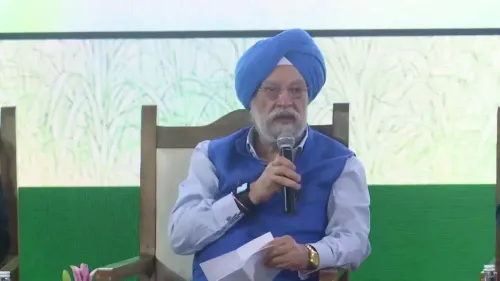
Puri Defends E20 Fuel, Calls Criticism 'Propaganda'
Synopsis
Petroleum Minister Hardeep Singh Puri on 10 July 2026 defended India's ethanol blending programme, calling post-E85 criticism of E20 'propaganda' and citing a timeline showing E10 (May 2022), E15, and E20 (April 2025) are already in use nationwide. E85 launched on 5 June 2026 at ₹20 per litre cheaper than petrol.
Key Takeaways
E85 was launched on 5 June 2026 at ₹20 per litre cheaper than standard petrol.
Minister Hardeep Singh Puri called subsequent criticism of E20 'propaganda' and linked its timing to the E85 launch.
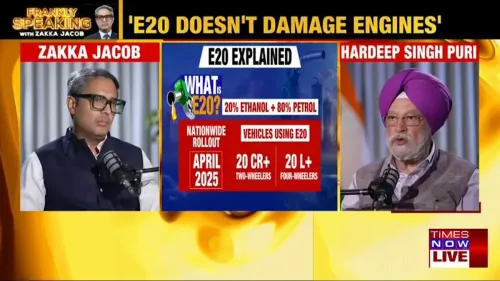
E10 has been in nationwide use since May 2022 ; E15 for the past three-and-a-half years; E20 since April 2025 .
India imports roughly 85 per cent of its crude oil, making the ethanol blending programme central to energy security.
The National Policy on Biofuels, 2018 set a 20 per cent blending target, later advanced from 2030 to 2025.
Rollout of E85-compatible flex-fuel vehicles and expansion of ethanol production capacity are the next milestones to watch.
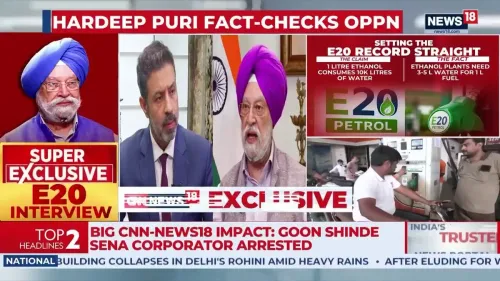
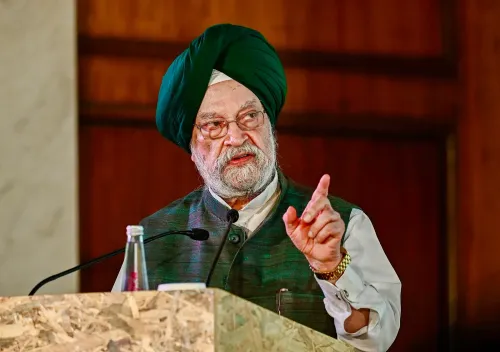
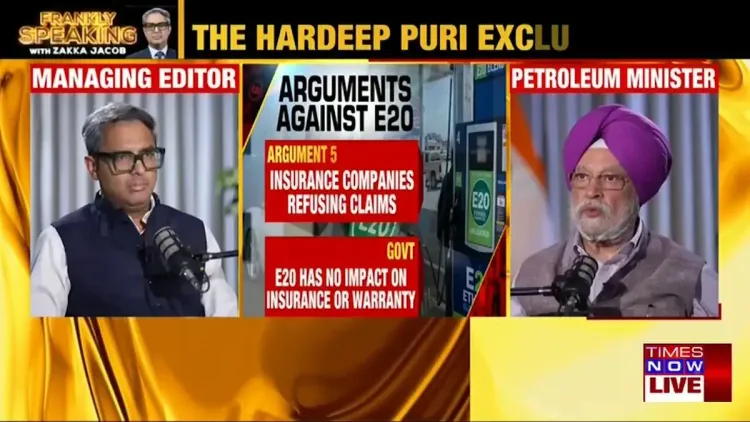
Union Petroleum Minister Hardeep Singh Puri on Friday, 10 July 2026 pushed back sharply against what he described as a coordinated propaganda campaign targeting E20 ethanol-blended petrol, asserting that successive blends have been in nationwide use for years without incident and questioning whether opposition to the fuel is actually opposition to India's energy self-reliance.
Context
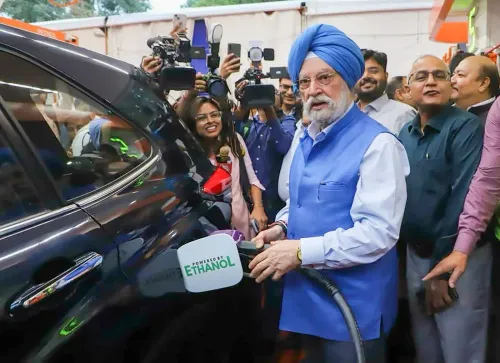
In a Hindi-language post on X, Minister Puri posed a pointed question: 'जिस ईंधन का करोड़ों वाहन वर्षों से बिना किसी समस्या के उपयोग कर रहे हैं, उसी पर अब सवाल क्यों?' — 'Why are questions being raised now about a fuel that crores of vehicles have been using for years without any problem?' He directly linked the timing of the criticism to the 5 June 2026 launch of E85, a higher-blend ethanol fuel priced at ₹20 per litre cheaper than standard petrol, suggesting the backlash against E20 began only after E85 entered the market.
Puri laid out a factual timeline to counter the narrative: E10 has been in use since May 2022, E15 for the past three-and-a-half years, and E20 has been available across the country since April 2025. 'The truth is,' he wrote, 'these blends are already being used nationwide.'
Policy Backdrop
India's Ethanol Blended Petrol Programme is anchored in the National Policy on Biofuels, 2018, which originally set a 20 per cent blending target for 2030. The government subsequently advanced that deadline to 2025 through a 2021 roadmap and a series of cabinet decisions, reflecting the urgency of reducing crude oil import dependence. India imports roughly 85 per cent of its crude oil needs, making energy security a strategic priority.
The blending programme draws ethanol primarily from sugarcane and surplus food grains, simultaneously creating income for sugarcane farmers and reducing tailpipe emissions. Oil marketing companies have progressively expanded blending infrastructure to meet successive targets ahead of schedule.
Stakeholders and Impact
Vehicle owners are at the centre of the public debate, with concerns — which Puri characterises as unfounded — circulating about engine compatibility and performance with higher ethanol blends. The minister's intervention is aimed at reassuring the public that the transition from E10 to E15 to E20 has already occurred without widespread complaint. Ethanol producers and sugarcane farmers stand to gain further from E85's rollout, which creates a substantially larger market for domestically produced biofuel.
The pricing advantage of E85 — ₹20 per litre cheaper than petrol — is a direct consumer benefit that the government is keen to highlight, particularly as household fuel costs remain a politically sensitive issue.
What's Next
The government's immediate priority is the rollout of E85-compatible flex-fuel vehicles, which can run on any blend between petrol and 85 per cent ethanol, making the pricing benefit accessible to a wider consumer base. Expansion of ethanol production capacity and clarity on vehicle warranty and engine standards for higher blends are expected to follow. Puri's post signals that the ministry will actively counter any public messaging it views as undermining the programme's momentum, framing energy self-reliance as the ultimate stakes of the debate.
Point of View
' the minister is elevating a technical fuel-quality debate into a nationalist frame, making dissent politically costly. The timing suggests the government is aware that public anxiety about engine compatibility could blunt consumer uptake of E85-compatible vehicles, which are critical to making the pricing advantage of the higher blend commercially meaningful. This fits a broader BJP pattern of casting energy import-substitution as an extension of the 'Atmanirbhar Bharat' narrative.
NationPress
8 Oct 2026
Frequently Asked Questions
What is E20 petrol and is it safe for my vehicle?
E20 is petrol blended with 20 per cent ethanol. According to Petroleum Minister Hardeep Singh Puri, E20 has been in nationwide use across India since April 2025, and lower blends like E10 and E15 have been used for years before that without widespread engine problems.
What is E85 fuel and how much cheaper is it than petrol?
E85 is a high-blend fuel containing up to 85 per cent ethanol. It was launched in India on 5 June 2026 and is priced at ₹20 per litre less than standard petrol, according to Minister Puri's post.
When did India start the ethanol blending programme?
India's ethanol blending efforts are anchored in the National Policy on Biofuels, 2018. E10 was rolled out nationally by May 2022, followed by E15, and E20 became available across the country from April 2025.
Why is Hardeep Singh Puri defending E20 fuel now?
Puri says criticism of E20 began only after the E85 launch on 5 June 2026, and he has called it 'propaganda,' suggesting the real motive is opposition to India's push for energy self-reliance through domestic biofuels.
What are flex-fuel vehicles and why do they matter for E85?
Flex-fuel vehicles can run on any blend of petrol and ethanol, including E85. Their rollout is the next key step in India's ethanol programme, as they allow consumers to take full advantage of E85's lower price.