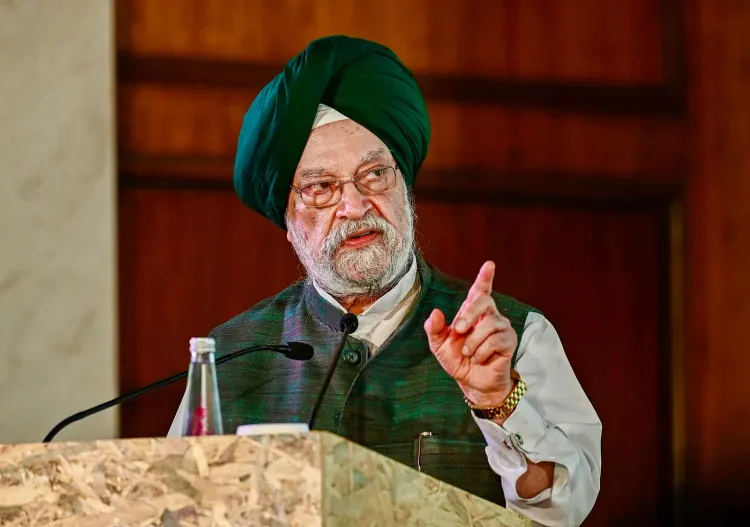
E20 fuel scientifically tested and safe, says Minister Hardeep Puri
Synopsis
Minister Hardeep Puri has gone on the offensive over E20 fuel, alleging a timed misinformation campaign emerged right after India's E85 flex-fuel launch on 5 June. With over 20 crore two-wheelers already on E20 and India importing 85% of its crude, the ethanol blending push is both an energy security bet and a political flashpoint — and Puri is calling out the opposition's timing.
Key Takeaways
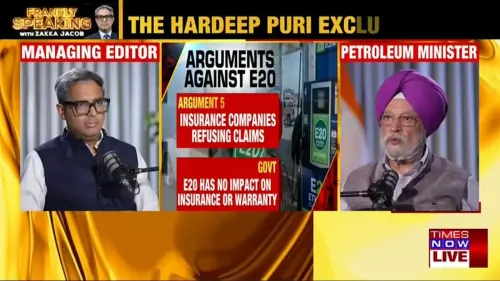
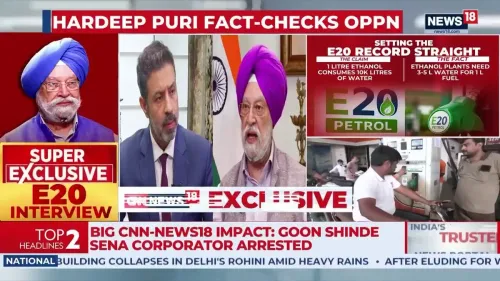
Minister Hardeep Singh Puri rejected criticism of E20 fuel on 9 July , calling it scientifically tested and internationally proven.
India has progressively adopted E15 (April 2023), E19 (April 2024), and E20 (April 2025) with no major reported issues.
More than 20 crore two-wheelers and over 20 lakh four-wheelers are already running on E20 fuel.
Puri alleged a misinformation campaign intensified after the launch of E85 flex-fuel vehicles on 5 June .
India imports over 85 per cent of its crude oil and accounts for around 30 per cent of global oil demand growth.
The minister noted the ethanol blending programme was originally started under the previous Congress -led government.
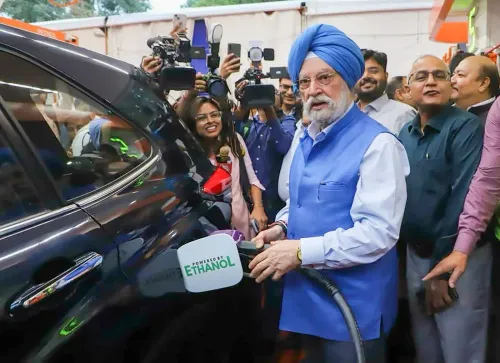
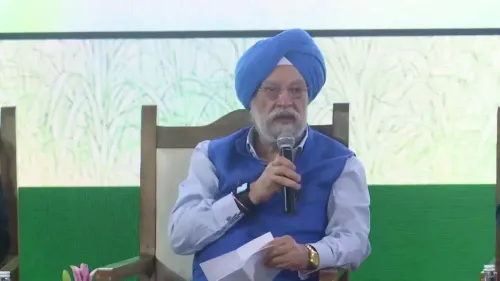
Union Petroleum and Natural Gas Minister Hardeep Singh Puri on 9 July firmly rejected criticism of ethanol-blended petrol, asserting that E20 fuel is scientifically validated, safe for all compatible vehicles, and a cornerstone of India's energy self-reliance strategy. The minister also alleged that a coordinated misinformation campaign against ethanol blending had gained momentum following the launch of E85-compatible flex-fuel vehicles in the country.
India's Ethanol Blending Timeline
In a post on X, Minister Puri outlined India's steady progression through higher ethanol blends — E15 since April 2023, E19 since April 2024, and E20 since April 2025 — with no significant issues reported despite large-scale adoption. He pointed out that more than 20 crore two-wheelers and over 20 lakh four-wheelers have been running on E20 fuel for years without incident.
'More than 20 crore two-wheelers and over 20 lakh four-wheelers have been running successfully on E20 fuel for years, yet suddenly a campaign against ethanol blending has gathered pace,' Puri said.
The E85 Launch and Alleged Misinformation
Puri claimed that criticism of ethanol-blended fuels intensified specifically after India launched E85 fuel for flex-fuel vehicles on 5 June, a development he described as a major milestone in reducing the country's dependence on imported crude oil. 'Look closely at the timeline and the pattern becomes difficult to ignore,' the minister said, alleging that fearmongering around ethanol blends began shortly after the E85 rollout.
Notably, the minister characterised the current opposition to accelerated ethanol blending as politically motivated, pointing out that the programme itself was initiated under the previous Congress-led government.
Energy Security and Economic Case
India currently imports more than 85 per cent of its crude oil and accounts for approximately 30 per cent of global oil demand growth, making the development of domestic alternative fuels critical, according to Puri. He argued that every litre of ethanol blended into petrol helps cut crude imports, curbs air pollution, supports domestic farmers, and conserves foreign exchange.
'Every litre of ethanol blended into petrol helps reduce crude oil imports, strengthens India's energy security, reduces air pollution, supports domestic farmers and saves valuable foreign exchange,' he said.
Benefits for Farmers
The minister said the ethanol blending programme had transformed the country's 'Annadatas' (food providers) into 'Urjadatas' (energy providers) by creating an additional and stable source of income for India's farming community. He added that the programme also makes the country less vulnerable to geopolitical disruptions and global oil price volatility.
What Comes Next
With E85 now commercially available for flex-fuel vehicles and the government defending the programme's scientific credentials, the focus will shift to whether public concerns — amplified through social media — affect adoption rates. The Centre's position is that ethanol blending is an internationally proven, verified, and completely safe approach, and it shows no signs of reversing course on its blending targets.
Point of View
The minister is framing the debate as industry or opposition sabotage rather than legitimate consumer concern — a framing that sidesteps the genuine public anxiety about engine compatibility and mileage that has circulated online. The ethanol blending programme has real structural merit: India's 85% crude import dependency is a genuine vulnerability. But the government's credibility on this issue would be better served by independent technical audits and transparent consumer data than by attributing all criticism to motivated actors. The Congress origin point is a clever rhetorical move, but it doesn't answer the question of whether the pace of blending escalation — from E15 to E20 in two years — has outrun vehicle-fleet readiness.
NationPress
8 Oct 2026
Frequently Asked Questions
What is E20 fuel and is it safe for vehicles?
E20 fuel is petrol blended with 20 per cent ethanol. Minister Hardeep Puri has described it as scientifically tested, internationally proven, and completely safe for compatible vehicles, with more than 20 crore two-wheelers and 20 lakh four-wheelers reportedly running on it without major issues.
Why did Minister Puri allege a misinformation campaign against ethanol blending?
Puri alleged that criticism of ethanol-blended fuels intensified specifically after India launched E85 fuel for flex-fuel vehicles on 5 June, suggesting the timing pointed to a coordinated campaign rather than organic consumer concern. He described the opposition to accelerated blending as politically motivated.
What is India's ethanol blending timeline?
India introduced E15 in April 2023, E19 in April 2024, and E20 in April 2025. The government has now also launched E85 for flex-fuel vehicles, marking a significant escalation in the country's ethanol blending programme.
Why does India's government prioritise ethanol blending?
India imports more than 85 per cent of its crude oil and accounts for around 30 per cent of global oil demand growth. Ethanol blending reduces crude import dependency, cuts air pollution, supports farmers with additional income, and insulates the economy from global oil price volatility, according to the minister.
Did the Congress government start India's ethanol blending programme?
Yes, according to Minister Puri, the ethanol blending programme was initiated under the previous Congress-led government. He used this to argue that current opposition to its accelerated implementation appears politically motivated rather than principled.