Petroleum Minister Puri Launches E85 Fuel at IndianOil Outlet in Delhi
Synopsis
Union Petroleum Minister Hardeep Singh Puri launched E85 fuel — an 85 per cent ethanol blend — at an IndianOil outlet in New Delhi on June 5, 2026, advancing India's ethanol blending programme well beyond the E20 milestone and signalling a major push toward flex-fuel infrastructure and reduced crude import dependence.
Key Takeaways
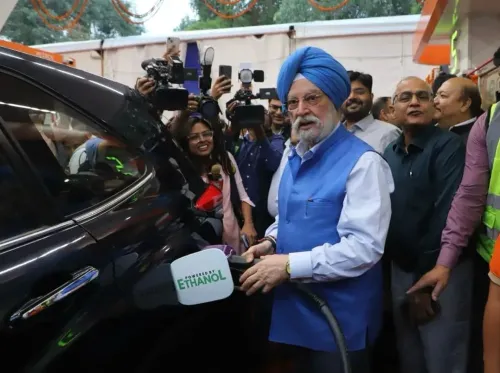
E85 fuel , comprising up to 85 per cent ethanol, was formally launched at an IndianOil retail outlet in New Delhi on June 5, 2026 .
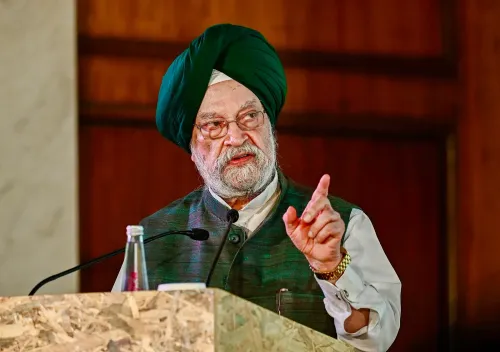
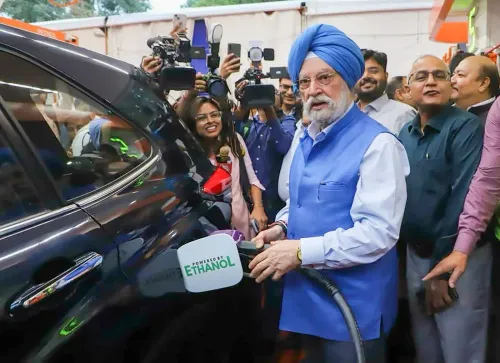
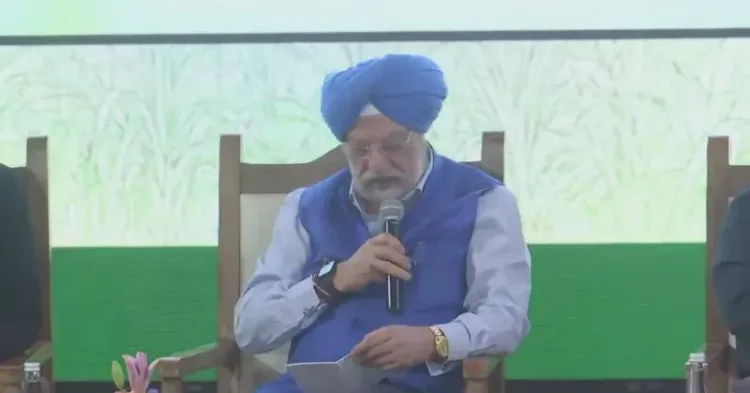
Union Petroleum Minister Hardeep Singh Puri presided over the launch, calling it 'historic'.
The launch builds on India's National Policy on Biofuels, 2018 and the accelerated E20 blending target advanced to 2025 in 2021.
Sugarcane farmers , flex-fuel vehicle manufacturers, and oil marketing companies are the primary stakeholders affected.
The event coincided with World Environment Day , reinforcing India's climate and energy-security messaging.
Expansion of E85 pumps beyond the pilot outlet and OEM rollout of compatible vehicles are the key next steps to watch.
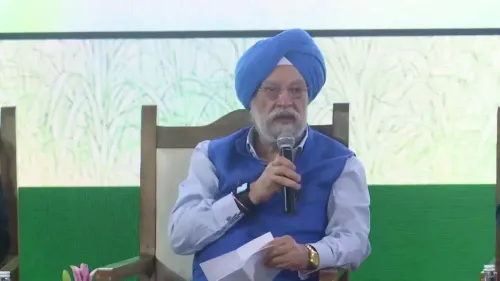
Union Petroleum Minister Hardeep Singh Puri on Friday, June 5, 2026 presided over the historic launch of E85 fuel at an Indian Oil Corporation retail outlet in New Delhi, marking a significant milestone in India's ethanol blending programme and its push to reduce crude oil import dependence.
Context
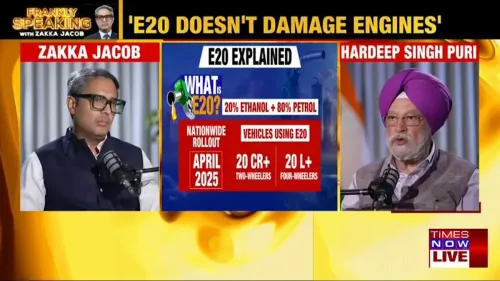
E85 is a high-blend fuel comprising up to 85 per cent ethanol and 15 per cent petrol, representing a major step beyond the E20 (20 per cent ethanol blend) that India had only recently begun rolling out at select pumps. The launch at an IndianOil outlet — the country's largest public-sector oil marketing company — signals that higher-blend fuels are moving from policy documents to the forecourt. Minister Puri described the occasion as 'historic', reflecting the government's view of the milestone as a generational shift in India's fuel mix.
Policy Backdrop
India's journey to E85 has been built on successive policy interventions over nearly a decade. The National Policy on Biofuels, 2018 established the foundational framework for promoting domestic biofuel production as a tool for energy security and reduced import dependence. In 2021, the government advanced the target for 20 per cent ethanol blending (E20) from 2030 to 2025, and E20 fuel began appearing at select retail outlets from 2023 onwards as part of a phased rollout.
E85 sits well beyond that threshold and aligns with India's broader strategy of promoting flex-fuel vehicles — vehicles engineered to run on any blend from E0 to E85 — alongside diversification of ethanol feedstocks beyond sugarcane to include grains, agricultural residues, and damaged food produce. The initiative also dovetails with India's net-zero 2070 climate commitment and its obligations under international climate agreements.
Stakeholders and Impact
Indian Oil Corporation, as the implementing agency at the retail level, carries the responsibility of expanding E85 pump infrastructure across the country. Sugarcane farmers and other agricultural producers stand to benefit from assured and growing feedstock demand, providing a direct rural income support dimension to what is primarily an energy policy. Oil marketing companies will need to invest in compatible storage and dispensing infrastructure at petrol stations nationwide.
For flex-fuel vehicle manufacturers, the launch of E85 at a public pump creates the commercial signal needed to accelerate production and sales of E85-compatible cars and two-wheelers. Several original equipment manufacturers have already introduced or announced flex-fuel variants in anticipation of exactly this development. Consumers who own compatible vehicles could benefit from lower fuel costs, since ethanol is generally cheaper to produce domestically than imported crude-derived petrol.
What's Next
The immediate question is the pace of E85 pump rollout beyond the initial pilot outlet in New Delhi. Expanding availability to Tier-2 and Tier-3 cities will be essential for the fuel to gain meaningful market share. Observers will also watch for parliamentary and state-level action on feedstock pricing, supply-chain incentives, and whether dedicated procurement frameworks are put in place to guarantee ethanol supply at the volumes E85 adoption would require.
The launch on World Environment Day, June 5, is unlikely to be coincidental — it positions India's high-blend ethanol push as part of its international climate narrative at a moment of heightened global attention to decarbonisation. If E85 infrastructure scales as intended, it could meaningfully reduce transport-sector emissions and trim India's annual crude import bill, reinforcing the dual energy-security and climate logic that has driven the blending programme since its inception.
Point of View
Betting that supply will create its own demand among OEMs and consumers. Anchoring the launch on World Environment Day frames a domestic energy-security move within India's international climate commitments, a dual narrative the government has consistently deployed since the 2021 acceleration of the E20 target. For Minister Puri, presiding over a 'historic' first at an IndianOil outlet continues a pattern of using high-visibility retail moments to build political capital around the energy transition. The real test will be whether the pace of pump rollout and flex-fuel vehicle penetration can match the ambition of the headline announcement.
NationPress
19 Sept 2026
Frequently Asked Questions
What is E85 fuel and how is it different from regular petrol?
E85 is a fuel blend containing up to 85 per cent ethanol and 15 per cent petrol. Regular petrol sold in India currently contains a much lower ethanol share; E85 significantly cuts the proportion of crude-oil-derived fuel and reduces transport-sector carbon emissions.
Where was E85 fuel launched in India?
E85 fuel was launched at an Indian Oil Corporation retail outlet in New Delhi on June 5, 2026, by Union Petroleum Minister Hardeep Singh Puri.
Can my car run on E85 fuel?
Only flex-fuel vehicles specifically engineered to handle high ethanol blends can run on E85. Most standard petrol cars sold in India are not compatible with E85, so consumers should check their vehicle specifications before using this fuel.
What is India's ethanol blending target?
India had set a target of 20 per cent ethanol blending (E20) in petrol, advancing the deadline from 2030 to 2025 in 2021. The launch of E85 goes significantly beyond that target and represents the next phase of the blending programme.
Why did India launch E85 on World Environment Day?
The June 5 launch date coincides with World Environment Day, allowing the government to frame its domestic energy-security initiative — reducing crude oil imports through higher ethanol blends — within India's broader international climate and net-zero commitments.