Puri Hails Flex-Fuel Two-Wheeler Launch, Cites 20% Ethanol Blending
Synopsis
Union Petroleum Minister Hardeep Singh Puri called the launch of flex-fuel technology for India's 300-million-strong two-wheeler fleet a defining moment, noting ethanol blending in petrol has climbed from 1.5% in 2014 to 20% today, cutting the oil import bill and turning farmers into energy-givers alongside their role as food-growers.
Key Takeaways
Puri marked the flex-fuel two-wheeler launch on 3 June 2026 as a defining moment for mobility.
India's active two-wheeler fleet stands at over 300 million vehicles.
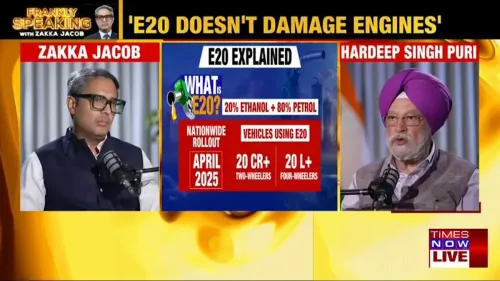
Ethanol blending in petrol has risen from 1.5% in 2014 to 20% , the E20 target.
The minister said the shift will reduce the energy import bill and boost farmer incomes.
Farmers are positioned as Urjadatas (energy-givers) alongside being Annadatas (food-givers).
The government has signalled it is 'looking beyond' the 20% blending mark.
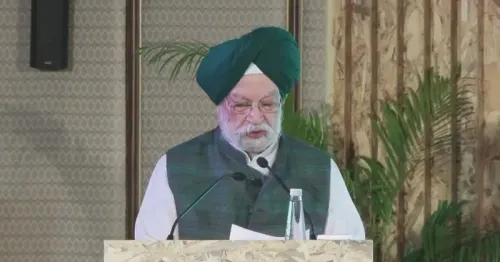
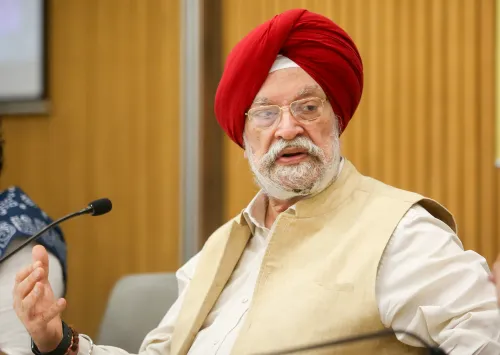
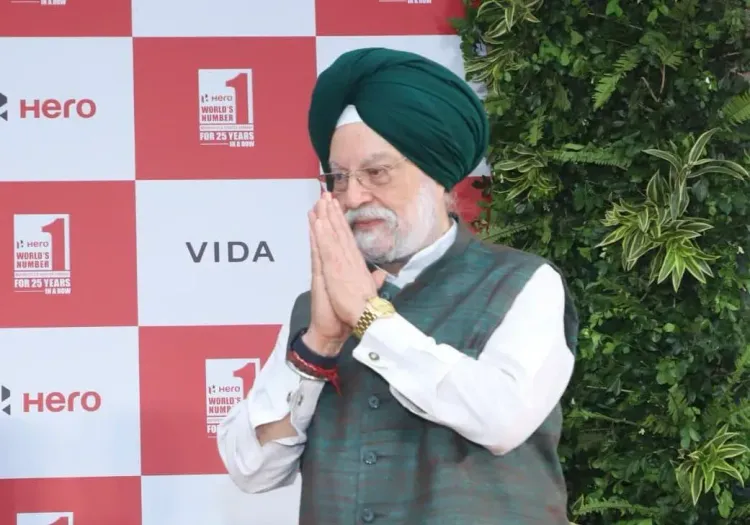
Union Petroleum Minister Hardeep Singh Puri on 3 June 2026 hailed the launch of flex-fuel technology for India's two-wheeler segment as a 'defining moment' in the country's mobility and biofuels journey, noting that ethanol blending in petrol has risen from 1.5% in 2014 to 20% today. Posting from New Delhi, Puri framed the rollout as a structural shift for an active fleet of over 300 million two-wheelers and a fresh income stream for farmers.
'India has one of the world's largest two-wheeler ecosystems with an active two-wheeler fleet of over 300 million vehicles. The flex-fuel technology has the potential to transform mobility at an unprecedented scale,' Puri wrote. He added that the launch will 'help reduce our energy imports bill and continue to provide an additional source of income to our farmers who have become Urjadatas (energy-givers) from only being the country's Annadatas (food-givers).'
Context
Flex-fuel vehicles can run on petrol blended with high proportions of ethanol, typically up to E85. India's passenger-car flex-fuel rollout began in 2023, and extending the technology to two-wheelers — the dominant mode of personal transport in the country — has been a stated policy priority of the petroleum ministry.
The minister's reference to 20% blending, branded E20, marks the headline target set under the National Policy on Biofuels 2018, which was later advanced from 2030 to 2025 by the Centre. Puri's post pegs the achievement against a baseline of 1.5% blending in 2014, when the present government took office.
Policy backdrop
The Ethanol Blended Petrol (EBP) Programme, run through oil marketing companies, procures ethanol from sugar mills and grain-based distilleries. The Centre has progressively widened feedstock eligibility to include sugarcane juice, B-heavy and C-heavy molasses, damaged foodgrains, and surplus rice and maize, building a year-round supply chain.
The biofuels push sits alongside India's broader energy-security calculus. As the world's third-largest crude importer, India spends well over USD 100 billion a year on oil imports, and every percentage point of blending displaces a measurable volume of imported petrol.
Stakeholders and impact
For two-wheeler manufacturers, flex-fuel certification implies engine recalibration, material upgrades for fuel-system components, and new after-sales protocols. Industry bodies have long flagged the need for harmonised BIS standards and clarity on GST treatment of flex-fuel vehicles to keep on-road prices competitive.
For farmers, particularly in the cane belts of Uttar Pradesh, Maharashtra and Karnataka and the maize-growing tracts of Bihar and Telangana, sustained ethanol procurement has emerged as a hedge against price volatility in food markets. Puri's Annadata-to-Urjadata formulation reprises a rhetorical thread the government has used to link agricultural policy with energy policy.
Oil marketing companies, meanwhile, face the operational challenge of building out dedicated flex-fuel dispensing infrastructure at retail outlets, especially in tier-2 and tier-3 markets where two-wheeler penetration is highest.
What's next
Attention now shifts to commercial launch timelines and pricing announcements by major two-wheeler manufacturers, and to state-level feedstock procurement orders for the 2026-27 crushing season. The minister signalled that the government is 'looking beyond' the 20% blending mark, leaving open the possibility of higher blends and a broader flex-fuel mandate across vehicle categories.
If uptake of flex-fuel two-wheelers scales as policymakers hope, the segment could become the single largest demand driver for Indian ethanol, reshaping both the fuel-retail mix and the economics of sugar and grain agriculture over the second half of the decade.
Point of View
Framing flex-fuel two-wheelers as the logical extension of an ethanol arc that began with passenger cars. The Annadata-to-Urjadata phrasing deliberately fuses farm policy with energy security, a political message tuned for cane and grain belts ahead of state polls. The real test, however, lies downstream: pricing, dispensing infrastructure and OEM commitment will decide whether the segment moves from launch optics to mass adoption.
NationPress
21 Oct 2026
Frequently Asked Questions
What is flex-fuel technology in two-wheelers?
Flex-fuel two-wheelers are vehicles whose engines and fuel systems are designed to run on petrol blended with high proportions of ethanol, typically up to E85. They automatically adjust to varying ethanol-petrol ratios at the pump.
What is India's current ethanol blending percentage?
According to Union Petroleum Minister Hardeep Singh Puri, India has achieved 20% ethanol blending in petrol, up from just 1.5% in 2014. This is the headline E20 target under the National Policy on Biofuels.
How does ethanol blending help farmers?
Ethanol blending creates a second revenue stream for farmers by channelling sugarcane, molasses, maize and surplus foodgrains into fuel production. The government calls this transition turning Annadatas (food-givers) into Urjadatas (energy-givers).
How big is India's two-wheeler market?
India has an active two-wheeler fleet of over 300 million vehicles, one of the largest in the world. This makes the segment the single biggest potential demand driver for flex-fuel adoption.
How does ethanol blending reduce India's oil import bill?
Every percentage point of ethanol blended into petrol displaces an equivalent volume of imported crude-derived fuel. For India, the world's third-largest oil importer with an annual oil import bill exceeding USD 100 billion, this translates into significant foreign-exchange savings.