Yadav reviews Sloth Bear project, plans rhino, pygmy hog push
Synopsis
At the 91st SC-NBWL meeting in Coimbatore, Union Environment Minister Bhupender Yadav reviewed Project Sloth Bear and announced a dedicated rhino conservation project via National CAMPA, while the Pygmy Hog is set to be added to the CSS-IDWH critically endangered species list.
Key Takeaways
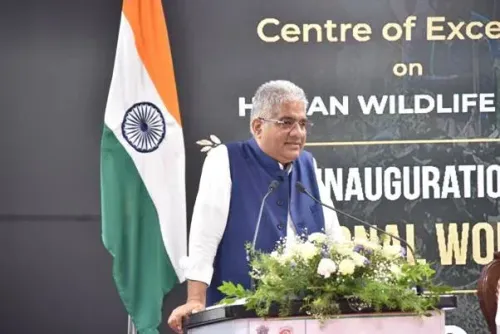
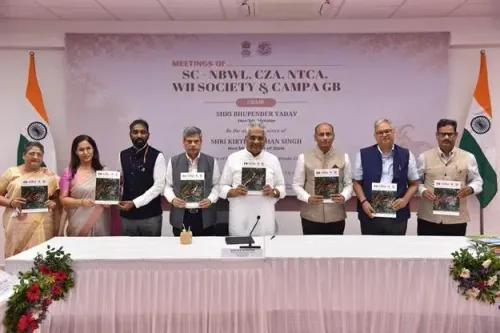
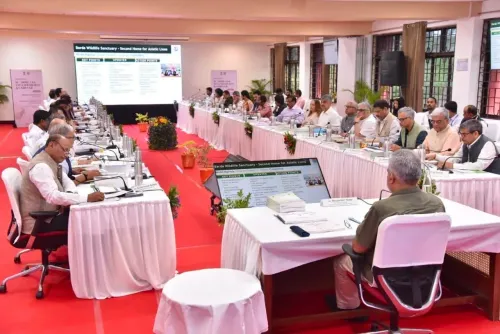
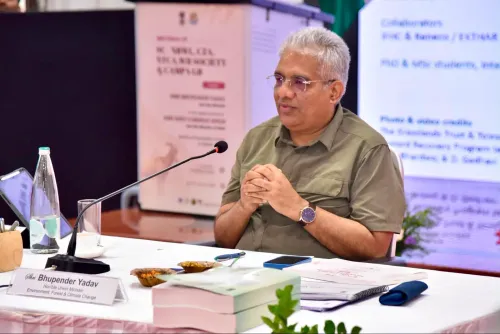
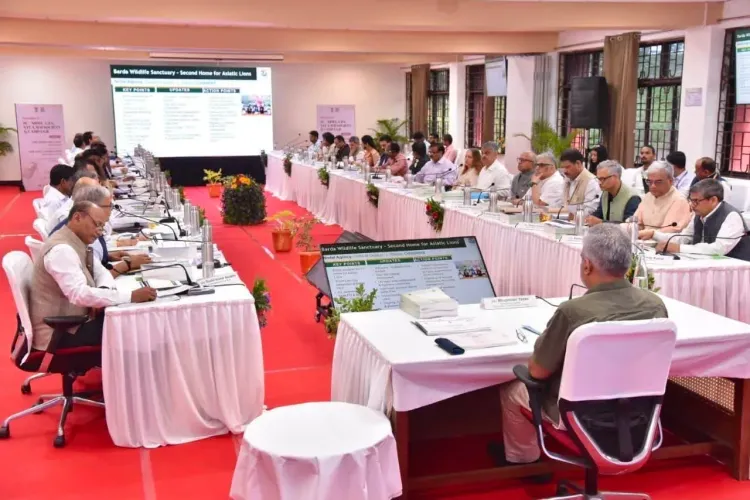
The 91st SC-NBWL meeting was held on 9 July 2026 at CASFoS, Coimbatore , chaired by Union Environment Minister Bhupender Yadav .
Progress on Project Sloth Bear was reviewed at the meeting.
A dedicated rhino conservation project will be launched soon with National CAMPA funding in the Greater One-Horned Rhinoceros range states.
The Pygmy Hog will be added to the critically endangered species list under the CSS-IDWH scheme for focused conservation support.
Both species are found in the Brahmaputra and Duar–Terai grassland landscapes of northeast India.
The move extends India's flagship species conservation model — established via Project Tiger and Project Elephant — to grassland-dependent mammals.
Union Environment Minister Bhupender Yadav on Thursday, 9 July 2026, chaired the 91st meeting of the Standing Committee of the National Board for Wildlife (SC-NBWL) at the Centre for Advanced Studies in Forestry (CASFoS), Coimbatore, where progress on Project Sloth Bear was reviewed and fresh conservation commitments were announced for grassland species including the Greater One-Horned Rhinoceros and the Pygmy Hog.
Context
Yadav posted on X that the meeting reviewed Project Sloth Bear and discussed 'conservation issues concerning grassland species, particularly those found in the Brahmaputra and Duar–Terai landscapes.' The minister confirmed that a dedicated project for rhino conservation 'will be launched soon' with assistance from National CAMPA in the species' range states, and that the Pygmy Hog will be included in the list of critically endangered species under the CSS-IDWH scheme to receive focused support.
The Brahmaputra–Duar Terai landscape, spanning Assam and neighbouring northeastern states, is one of India's most biodiverse grassland and floodplain ecosystems. It is the last stronghold of both the Greater One-Horned Rhinoceros and the Pygmy Hog, the world's smallest and one of its most threatened wild pigs.
Policy Backdrop
The SC-NBWL is a statutory advisory body constituted under the Wildlife (Protection) Act, 1972, and has conducted numbered project reviews since the early 2000s. Its clearances and recommendations carry significant weight in directing central funding and state-level action on wildlife matters.
National CAMPA — the authority managing the Compensatory Afforestation Fund — was institutionalised following a Supreme Court order in 2009, channelling payments from user agencies that divert forest land into afforestation and wildlife habitat works. The CSS-IDWH (Centrally Sponsored Scheme for Integrated Development of Wildlife Habitats) was restructured in 2008-09 to include a dedicated component for the recovery of critically endangered species, making it the primary vehicle for species-specific conservation funding beyond Project Tiger and Project Elephant.
Rhino conservation in Assam has received sustained central support since the Indian Rhino Vision 2020 programme was launched in 2005, which aimed to increase the rhino population across multiple protected areas. The forthcoming dedicated project would mark a structural escalation of that commitment.
Stakeholders and Impact
The announcements directly affect northeast India's forest departments, particularly those in Assam, West Bengal, and Arunachal Pradesh — the principal range states for both species — who will be responsible for implementing the new rhino project once formally notified. Grassland conservation organisations and wildlife researchers working in the Terai arc have long advocated for greater institutional attention to non-tiger grassland species.
The Pygmy Hog's inclusion in the CSS-IDWH critically endangered species list is significant: it would unlock scheme funding for habitat restoration, captive breeding support, and reintroduction efforts managed by specialised conservation programmes. The species was once considered extinct before a small population was rediscovered in Manas National Park in the 1970s, and captive breeding has since produced animals for reintroduction.
What's Next
The formal launch notification for the dedicated rhino conservation project in range states and a gazette notification adding the Pygmy Hog to the CSS-IDWH priority list are the immediate milestones to watch. Subsequent SC-NBWL agenda items are expected to track implementation progress on both fronts.
India's expanding flagship species model — from Project Tiger (1973) and Project Elephant (1992) to Project Sloth Bear and now a prospective rhino project — signals a broadening of the country's species-centric conservation architecture, increasingly backed by CAMPA funds alongside traditional budgetary allocations. The 91st SC-NBWL meeting suggests this model is being extended deeper into grassland ecosystems that have historically received less institutional attention than forest habitats.
Point of View
The government is leveraging a fund whose scale has grown substantially since its 2009 Supreme Court-mandated creation, reducing dependence on annual budget allocations. The Pygmy Hog's elevation to CSS-IDWH priority status is notable given the species' near-extinction history and the relatively niche advocacy ecosystem around it — suggesting the ministry is responding to scientific consensus rather than political visibility. Together, these moves indicate a broadening of India's conservation ambition into landscapes and species that have historically sat at the margins of flagship programme attention.
NationPress
8 Oct 2026
Frequently Asked Questions
What is Project Sloth Bear and what was reviewed at the SC-NBWL meeting?
Project Sloth Bear is a targeted central conservation initiative focused on habitat protection and human-wildlife conflict mitigation for sloth bears in India. At the 91st SC-NBWL meeting on 9 July 2026, Union Environment Minister Bhupender Yadav reviewed its progress alongside broader grassland species conservation discussions.
What is the dedicated rhino conservation project announced by Bhupender Yadav?
Yadav announced that a dedicated project for the conservation of the Greater One-Horned Rhinoceros will be launched soon, funded with the assistance of National CAMPA, in the range states where the species is found — primarily Assam and neighbouring northeastern states.
Why is the Pygmy Hog being added to the CSS-IDWH scheme?
The Pygmy Hog is among the world's most endangered mammals, found primarily in the Brahmaputra floodplain grasslands of Assam. Its inclusion in the CSS-IDWH critically endangered species list will unlock dedicated central scheme funding for habitat restoration, captive breeding, and reintroduction support.
What is National CAMPA and how does it fund wildlife conservation?
National CAMPA manages the Compensatory Afforestation Fund, collected from agencies that divert forest land for non-forest use. Following a Supreme Court order in 2009, these funds can be directed toward afforestation and wildlife habitat improvement projects, including species-specific conservation programmes.
Where is the Brahmaputra–Duar Terai landscape and why is it important?
The Brahmaputra–Duar Terai landscape is a floodplain grassland ecosystem spanning Assam and parts of neighbouring northeastern states. It is the primary habitat for the Greater One-Horned Rhinoceros and the Pygmy Hog, making it one of India's most critical grassland conservation zones.