Bhupender Yadav launches rhino, dolphin conservation projects at CAMPA meet
Synopsis
India has its first dedicated Centre of Excellence and a national digital portal to tackle human–wildlife conflict — a challenge the environment minister called the country's foremost conservation crisis. At the same sitting, CAMPA approved species-specific rescue plans for river dolphins, snow leopards, the Indian rhino, and wild water buffalo, signalling a sharper, tech-driven shift in how India manages its most endangered animals.
Key Takeaways
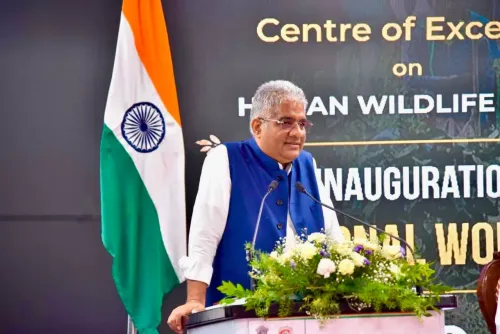
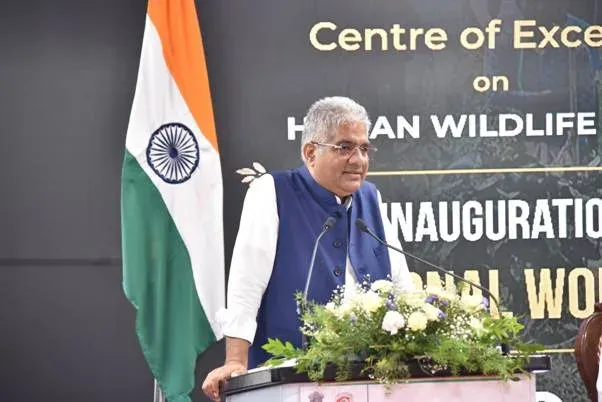
Bhupender Yadav inaugurated the Centre of Excellence on Human–Wildlife Conflict in Coimbatore on 10 July 2025 .
The National Human–Wildlife Conflict Portal was launched to centralise data management and decision support nationwide.
CAMPA's 7th Governing Body Meeting approved conservation projects for River Dolphins , Snow Leopards (Phase-II), Indian Rhinoceros , and Wild Water Buffalo .
Continued support was approved for Manipur's Sangai (Brow-antlered Deer), one of the world's rarest deer species.
The first edition of 'Current Status of Human–Wildlife Conflict in India: An Overview' was released at the event.
Union MoS Kirti Vardhan Singh also attended the CAMPA Governing Body Meeting.
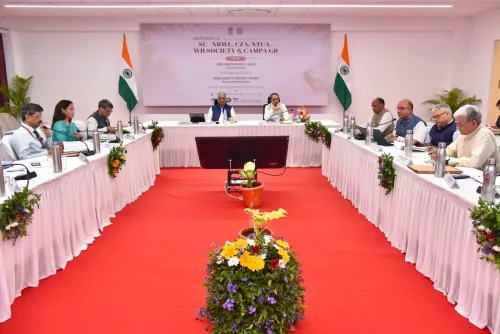
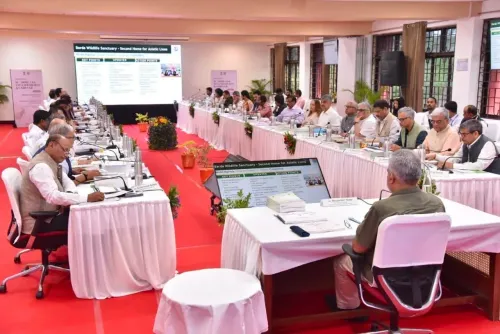
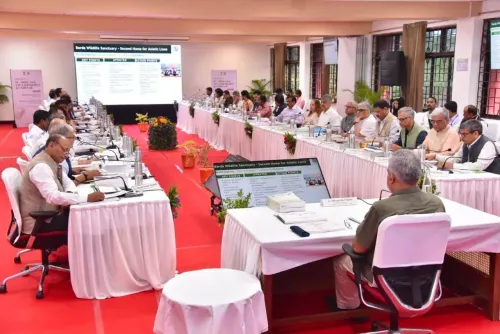
Union Minister for Environment, Forest and Climate Change Bhupender Yadav on Friday, 10 July declared that human–wildlife conflict has become one of India's most pressing conservation and development challenges, inaugurating a dedicated Centre of Excellence (CoE) on the issue in Coimbatore. The event coincided with the 7th Meeting of the Governing Body of National CAMPA, which greenlit four new wildlife conservation projects covering River Dolphins, Snow Leopards, Wild Water Buffalo, and the Indian Rhinoceros.
Key Announcements at Coimbatore
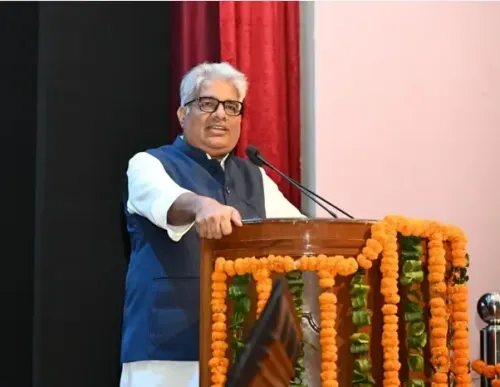
Inaugurating the Centre of Excellence on Human–Wildlife Conflict, Yadav called for a shift in approach. 'Our approach should be solution-oriented, instead of being problem-oriented, utilising modern technological advances,' he said. He urged forest departments across the country to adopt proactive, preventive measures — addressing conflicts through multi-stakeholder consultations with local communities rather than reactive responses.
The Minister also launched the National Human–Wildlife Conflict Portal, a digital platform built to streamline data management, knowledge sharing, and decision support for conflict mitigation at the national level. The first edition of a publication series titled 'Current Status of Human–Wildlife Conflict in India: An Overview' was simultaneously released, offering a comprehensive assessment of trends and emerging challenges in the space.
Conservation Projects Approved by CAMPA
The National Compensatory Afforestation Fund Management and Planning Authority (CAMPA) Governing Body reviewed overall performance and cleared several new initiatives. The approved projects include a Conservation and Recovery Action Plan for River Dolphins, Project Snow Leopard Phase-II — encompassing a second cycle of population estimation — a Conservation Action Plan for the Indian Rhinoceros, and a pan-India conservation approach for the Wild Water Buffalo. Continued support was also approved for the protection of Manipur's Brow-antlered Deer (Sangai), one of the world's rarest deer species found only in the state.
Why Human–Wildlife Conflict Demands Urgent Attention
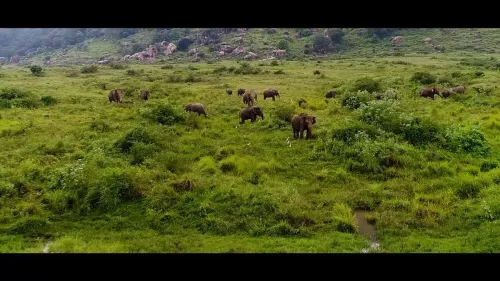
Human–wildlife conflict in India has intensified as forest cover shrinks and wildlife corridors are fragmented by infrastructure and agriculture. Incidents involving elephants, leopards, and wild boar — resulting in crop damage, livestock loss, and human casualties — have strained relations between conservation authorities and rural communities. Notably, this is the first time a dedicated CoE and a national digital portal have been established specifically to address the challenge at scale.
Yadav stressed that 'coexistence and harmony, instead of conflict, should be the mantra of ecological sustainability,' framing the initiative not as a wildlife-versus-people binary but as an integrated development challenge requiring innovative best practices and modern technology.
Meeting Attendance and Institutional Context
The 7th CAMPA Governing Body Meeting was also attended by Union Minister of State Kirti Vardhan Singh, according to an official statement. CAMPA manages funds collected from industries for compensatory afforestation when forest land is diverted for non-forest use — making it one of the primary funding vehicles for wildlife and forest conservation in India.
With four major species-specific projects now approved and a national conflict portal operational, the government's next steps will determine whether these institutional frameworks translate into measurable outcomes for both wildlife and the communities that live alongside them.
Point of View
But India's track record on human–wildlife conflict mitigation has been uneven — largely reactive, under-resourced at the field level, and dependent on state forest departments with stretched capacity. The real test for CAMPA's newly approved species plans will be implementation fidelity: past conservation action plans for species like the Great Indian Bustard have stalled at the funding-approval stage. Coexistence rhetoric is easy; what communities living on forest fringes need is faster compensation, better early-warning systems, and genuine income alternatives — none of which a portal alone can deliver.
NationPress
10 Oct 2026
Frequently Asked Questions
What is the National Human–Wildlife Conflict Portal launched by Bhupender Yadav?
It is a digital platform launched by Union Environment Minister Bhupender Yadav in Coimbatore on 10 July 2025, designed to centralise data management, knowledge sharing, and decision support for managing human–wildlife conflict across India. The portal aims to help forest departments respond more effectively and proactively to conflict incidents nationwide.
Which wildlife conservation projects did CAMPA approve at its 7th Governing Body Meeting?
CAMPA approved four new projects: a Conservation and Recovery Action Plan for River Dolphins, Project Snow Leopard Phase-II (including a second population estimation cycle), a Conservation Action Plan for the Indian Rhinoceros, and a pan-India conservation approach for the Wild Water Buffalo. Continued support for Manipur's Brow-antlered Deer (Sangai) was also approved.
Why is human–wildlife conflict considered a major challenge in India?
Human–wildlife conflict has intensified as forest corridors shrink due to infrastructure expansion and agriculture, pushing animals like elephants, leopards, and wild boar into human settlements. The resulting crop damage, livestock loss, and casualties have created tension between conservation goals and the livelihoods of rural communities living near forest areas.
What is CAMPA and why does it matter for wildlife conservation?
The National Compensatory Afforestation Fund Management and Planning Authority (CAMPA) manages funds collected from industries when forest land is diverted for non-forest use. These funds are deployed for compensatory afforestation, forest conservation, and wildlife protection, making CAMPA a primary financial mechanism for India's conservation programmes.
What is the significance of Project Snow Leopard Phase-II?
Project Snow Leopard Phase-II includes a second cycle of population estimation for the snow leopard, a vulnerable high-altitude species found in India's Himalayan and trans-Himalayan regions. The updated population data will inform targeted conservation interventions and help assess whether earlier protection measures have improved the species' numbers.