Yadav Highlights 12 Years of Wildlife Gains Under Modi
Synopsis
On World Environment Day 2026, Union Environment Minister Bhupender Yadav credited 12 years of PM Modi's leadership for India's wildlife conservation gains, citing tiger recovery, the 2022 Wildlife Protection Amendment Act, and cheetah reintroduction as milestones against a backdrop of global biodiversity decline.
Key Takeaways
Union Environment Minister Bhupender Yadav posted on World Environment Day, June 5, 2026 , highlighting 12 years of wildlife conservation progress under PM Modi .
The 4th All India Tiger Estimation (2018–19) recorded 2,967 tigers , reflecting a sustained recovery since 2006.
India hosted the 4th Asia Ministerial Conference on Tiger Conservation in 2022 , reaffirming global tiger recovery commitments.
The Wildlife (Protection) Amendment Act, 2022 updated India's foundational 1972 wildlife law, strengthening penalties and aligning with CITES.
Cheetah reintroduction at Kuno National Park, Madhya Pradesh in September 2022 marked the first restoration of a species extinct in India since 1952 .
The next national tiger census and further rules under the 2022 Amendment Act remain key near-term policy milestones to watch.
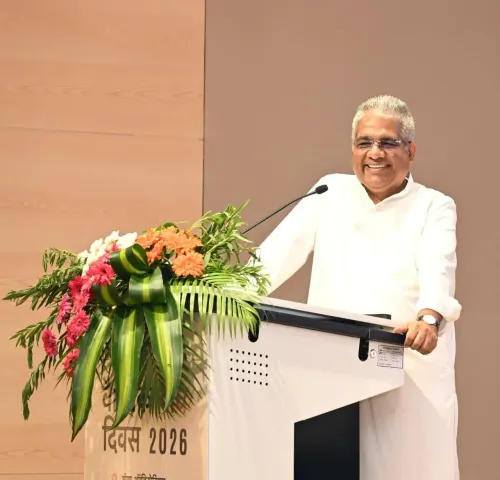
Union Environment Minister Bhupender Yadav on Friday, June 5, 2026 — World Environment Day — credited Prime Minister Narendra Modi's 'environmentally sensitive leadership' over the past 12 years for significant advances in India's wildlife conservation record, asserting that the country continues to make wildlife thrive even as global biodiversity loss accelerates.
Context
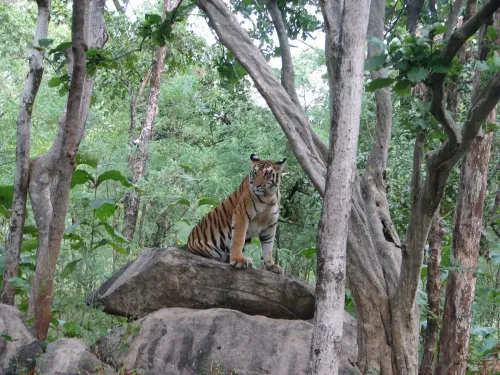
Posting under the hashtag #NowForClimate, Minister Yadav wrote: 'At a time the world is losing wildlife, India continues to ensure they thrive and prosper.' The message was accompanied by four images and arrived on World Environment Day, the United Nations-designated annual observance that this year carries heightened urgency given international assessments documenting accelerating species loss across every major biome.
The 12-year reference marks the period since May 2014, when the Modi government first took office, framing wildlife conservation as a continuous policy achievement of the current administration.
Policy Backdrop
India's modern wildlife governance rests on the Wildlife (Protection) Act, 1972, which was substantially updated by the Wildlife (Protection) Amendment Act, 2022. The amendment strengthened penalties, rationalised species schedules, and aligned domestic law more closely with India's obligations under the Convention on International Trade in Endangered Species (CITES).
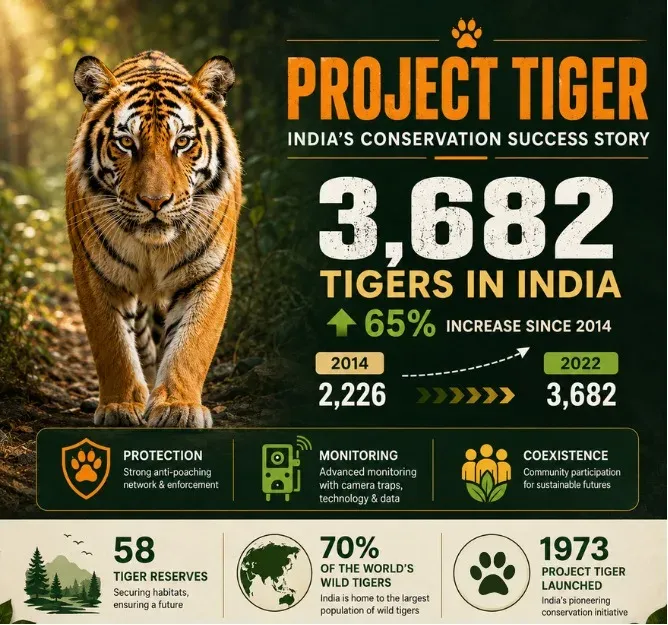
Project Tiger, the national tiger conservation programme launched in 1973, has remained the flagship of this policy architecture. The fourth All India Tiger Estimation (2018–19) reported 2,967 tigers, continuing a recovery trend documented since 2006 and making India home to the world's largest wild tiger population. In 2022, India hosted the 4th Asia Ministerial Conference on Tiger Conservation, reaffirming commitments under the Global Tiger Recovery Programme.
A landmark moment of the current government's tenure was the September 2022 reintroduction of cheetahs at Kuno National Park in Madhya Pradesh — the first attempt to restore a species that had been extinct in India since 1952. The programme brought Namibian and South African cheetahs under a long-term species restoration initiative.
Stakeholders and Impact
Wildlife conservation policy in India directly affects forest-dependent communities, protected area managers, and the country's growing wildlife research ecosystem. Expansion of tiger reserves and buffer zones has historically required careful negotiation with communities living in and around forest land, making the human dimension of conservation policy as consequential as the ecological one.
For international observers, India's reported megafauna recovery — particularly for tigers and, more recently, cheetahs — is cited as a counterpoint to global biodiversity decline narratives. The minister's post explicitly invokes that contrast, positioning India as a conservation success story at a moment when multilateral forums are pressing for stronger national commitments.
What's Next
The next All India Tiger Estimation report is among the most-watched upcoming deliverables in Indian wildlife policy, with researchers and conservationists expecting it to provide updated population data beyond the 2018–19 cycle. Additionally, rules and notifications under the Wildlife (Protection) Amendment Act, 2022 continue to be operationalised, with further secondary legislation possible. Minister Yadav's World Environment Day messaging signals that wildlife conservation will remain a prominent plank of the government's climate and environment communications in the months ahead.
Point of View
Cheetah reintroduction, legislative reform — to the broader BJP narrative of governance achievement under PM Modi. By invoking global biodiversity loss as a foil, the statement positions India as an outlier success story, a framing that has traction in multilateral climate diplomacy. The emphasis on 12 continuous years is also a signal to domestic audiences ahead of any future electoral cycle, reinforcing the environment portfolio as a policy strength. The choice of the #NowForClimate hashtag suggests deliberate alignment with international climate communication frameworks, indicating the government intends to project this record on global platforms.
NationPress
20 Oct 2026
Frequently Asked Questions
What has India achieved in wildlife conservation in the last 12 years?
Under the Modi government since 2014, India has reported a rising tiger population — with the 2018–19 census recording 2,967 tigers — enacted the Wildlife (Protection) Amendment Act in 2022, and reintroduced cheetahs at Kuno National Park in Madhya Pradesh after the species was absent from India since 1952.
What is Project Tiger and how has it performed?
Project Tiger is India's national tiger conservation programme, launched in 1973. It has overseen a steady recovery in tiger numbers, with the fourth All India Tiger Estimation (2018–19) reporting 2,967 tigers, making India home to the world's largest wild tiger population.
Where were cheetahs reintroduced in India?
Cheetahs were reintroduced at Kuno National Park in Madhya Pradesh in September 2022, marking the first restoration of a locally extinct species in India since cheetahs disappeared from the country in 1952.
What is the Wildlife Protection Amendment Act 2022?
The Wildlife (Protection) Amendment Act, 2022 updated India's foundational 1972 wildlife law by strengthening penalties for poaching and trade, rationalising species schedules, and aligning Indian law more closely with CITES international obligations.
Why did Bhupender Yadav post about wildlife conservation on June 5?
June 5 is World Environment Day, the United Nations-designated annual observance for environmental awareness. Minister Yadav's post marked the occasion by highlighting India's conservation record under PM Modi's government over the past 12 years.