Trump Thanks Elon Musk for SpaceX Stock Gift via Trump Accounts

Synopsis
President Donald Trump thanked Elon Musk for directing SpaceX stock to millions of American children via 'Trump Accounts,' calling it the fulfilment of the programme's original vision. Eligibility and distribution details remain unannounced.
Key Takeaways
President Donald Trump publicly thanked Elon Musk for donating SpaceX stock to millions of American children.
The donation was made through a government initiative called Trump Accounts , described as a savings programme for minors.
Trump called Musk a 'legendary friend' and said the move was 'exactly what was envisioned' when the programme was created.
Musk was a documented public supporter of Trump during the 2024 presidential campaign cycle.
SpaceX , founded in 2002 , is a privately held company — raising open questions about stock valuation and transfer mechanisms.
Eligibility rules and distribution details for Trump Accounts have not yet been officially published.
A government savings programme for American children got a headline-grabbing corporate backer on Monday, October 19, 2026, as President Donald J. Trump publicly credited Elon Musk and SpaceX for donating stock to millions of minors through the administration's flagship 'Trump Accounts' initiative — calling Musk a 'legendary friend' whose generosity was 'exactly what was envisioned' when the programme was created.
What Trump said — and what Trump Accounts are
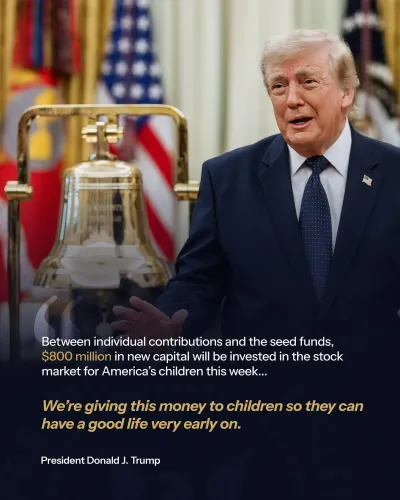
The White House posted a direct quote from President Trump: 'A BIG THANK YOU to our legendary friend, @elonmusk, for his incredible generosity in giving SpaceX Stock to millions of American children through TRUMP ACCOUNTS!' The statement frames the stock donation not as a one-off gesture but as a fulfilment of the programme's founding purpose — a government-named account scheme aimed at building long-term wealth for American minors.
The specifics of eligibility rules, how SpaceX shares are valued for account purposes, and the distribution mechanism have not yet been detailed in official public releases. Those details are the next critical piece of this story.
Musk's role: from campaign trail to corporate donor
Elon Musk, founder and CEO of SpaceX — the private aerospace company he established in 2002 — was a prominent public supporter of Trump during the 2024 presidential campaign. His move to direct SpaceX equity into a White House-branded children's savings programme marks a striking escalation of that relationship: from political endorsement to direct corporate participation in a federal initiative.
SpaceX remains a privately held company, which raises immediate questions about how its stock is priced, transferred, and held on behalf of minors — questions the administration has not yet publicly answered.
The political economy of naming a programme after a sitting president
Government savings schemes for children are not new — the concept has precedents across multiple administrations and several countries. What is unusual is the direct presidential branding and the public, name-checked involvement of a private billionaire's company as a stock donor. The combination puts the initiative at the intersection of economic policy, corporate philanthropy, and political identity — a space that will attract both fierce supporters and sharp critics.
For millions of American families, the promise of SpaceX equity in a government-backed account is a tangible, if still unverified, financial headline. Whether the mechanism holds up to regulatory scrutiny will define whether this becomes a signature legacy programme or a flashpoint.
Point of View
This becomes a powerful populist economic legacy story; if they don't, it becomes a governance liability. Either way, the episode signals that the administration is willing to use corporate partnerships as a core instrument of social policy, not just a backdrop.
NationPress
20 Oct 2026
Frequently Asked Questions
What are Trump Accounts?
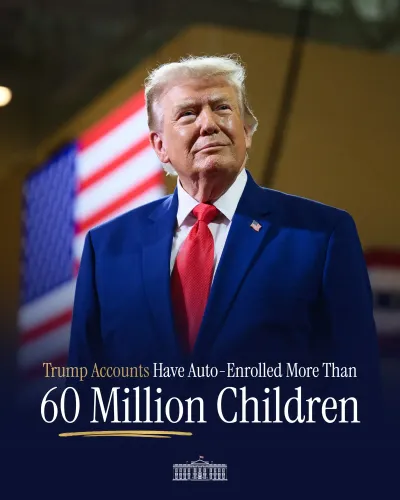
Trump Accounts are a White House-branded savings programme designed to build long-term wealth for American children. President Trump announced that SpaceX stock has been donated to millions of children through the scheme, though full eligibility and distribution details have not yet been officially published.
What did Elon Musk do for Trump Accounts?
According to a White House post quoting President Trump, Elon Musk donated SpaceX stock to millions of American children through the Trump Accounts programme. Trump called the gesture an example of 'incredible generosity.'
Is SpaceX a publicly traded company?
No. SpaceX remains a privately held company as of 2026, which raises open questions about how its shares are valued, transferred, and held within a government savings programme for minors.
How does Elon Musk relate to Donald Trump politically?
Elon Musk was a prominent public supporter of Donald Trump during the 2024 U.S. presidential election campaign. His involvement in Trump Accounts represents a further deepening of that relationship into domestic economic policy.
Who is eligible for Trump Accounts?
The White House statement does not specify eligibility criteria. Official announcements detailing account rules, age limits, and distribution mechanisms are still awaited.