Trump Accounts to Give 60 Million US Kids a Financial Head Start
Synopsis
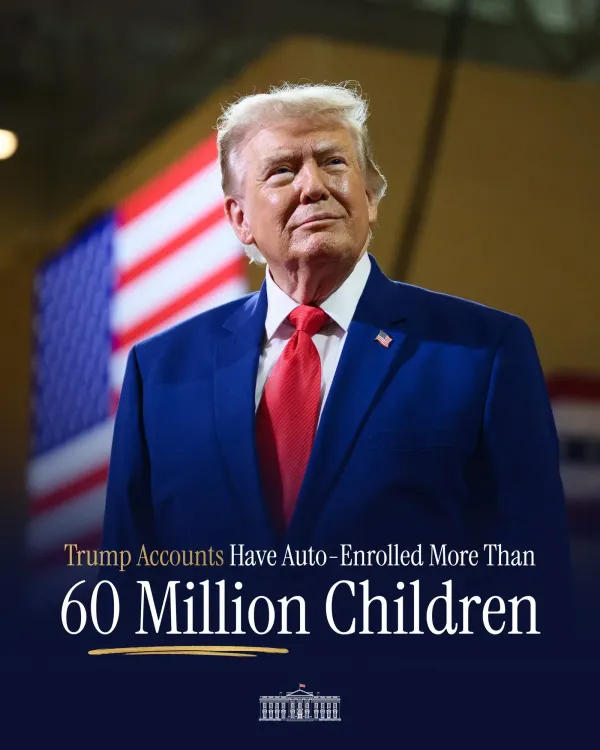
The White House announced that 60 million American children are now enrolled in 'Trump Accounts,' a presidential initiative designed to give the next generation a direct financial stake in the United States' future, with details available at TrumpAccounts.gov.
Key Takeaways
60 million American children have been set up with accounts under the Trump Accounts initiative.
The programme is backed by a dedicated official government portal: TrumpAccounts.gov .
The White House credits President Donald Trump directly for the initiative.
The scheme is framed as giving children a 'financial stake' in America's future, suggesting a savings or investment mechanism.
No breakdown of account funding structure or eligibility criteria was included in the official announcement post.
Sixty million American children are about to receive something no previous administration has offered at this scale: a direct financial stake in the country's future. The White House announced on Friday, October 2, 2026, that President Donald Trump's initiative — branded 'Trump Accounts' — is now set up and ready for the next generation of Americans.
What Are Trump Accounts?
The White House post states that 60 million American children are 'set up for success' through the programme, directing the public to the official portal TrumpAccounts.gov. The initiative is framed as giving America's youth a 'financial stake' in the nation's future — language that suggests a savings or investment account mechanism seeded for eligible children.
The specifics of how accounts are funded, what asset class they hold, and how children or families access them have not been detailed in the announcement post. No legislative text or programme rules were included in the research available at the time of publication.
The Scale: 60 Million Children
The number is striking. 60 million represents a substantial share of the roughly 73 million children under 18 in the United States, suggesting near-universal reach for eligible age groups. If accurate, this would rank among the largest child-directed financial programmes in American history — comparable in ambition, if not in form, to earlier proposals for 'baby bonds' floated across party lines over the past decade.
The deployment of a dedicated government domain — TrumpAccounts.gov — indicates formal executive infrastructure behind the rollout, rather than a pilot or proposal stage.
Why This Matters Beyond America's Borders
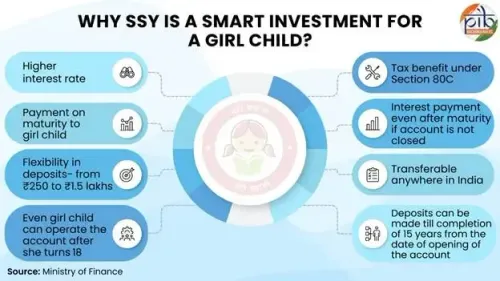
For India and the broader developing world, large-scale child savings schemes have a precedent — from the Sukanya Samriddhi Yojana for girls to various state-level child insurance programmes. The American move, if it delivers at the scale claimed, will be watched closely as a model for how wealthy democracies anchor the next generation to national economic growth. It also arrives as debates about intergenerational wealth inequality intensify globally.
The political framing — attaching the president's name directly to the accounts — mirrors a wider pattern of tying policy identity to executive brand, a strategy that has electoral as well as policy implications heading into future US cycles.
Point of View
A double-edged strategy. If the programme delivers measurable financial outcomes for families, it could redraw assumptions about which party champions economic security for ordinary Americans; if implementation stumbles, the name ensures accountability is equally direct. For India and other democracies tracking US social policy, the scale of 60 million beneficiaries will be a key benchmark to watch.
NationPress
2 Oct 2026
Frequently Asked Questions
What are Trump Accounts for children in the US?
Trump Accounts is a US government initiative announced in 2026 that provides American children with a financial account intended to give them a stake in the country's future. Details are available at TrumpAccounts.gov.
How many children are covered under Trump Accounts?
The White House states that 60 million American children are now set up under the Trump Accounts programme.
Who launched the Trump Accounts programme?
The programme is attributed to President Donald Trump and was announced through the official White House communications channel in October 2026.
Where can I find information about Trump Accounts?
The White House directed the public to the official portal TrumpAccounts.gov for information about the programme.
Is Trump Accounts similar to India's Sukanya Samriddhi Yojana?
Both are government-backed child-directed financial schemes, but they differ in structure and target group. Sukanya Samriddhi Yojana is specifically for the girl child in India, while Trump Accounts appears to target a broad cross-section of American children.