Ramaswamy Backs Open Fields Doctrine in Ohio Hunter Talk
Synopsis
Vivek Ramaswamy voiced support for the Open Fields Doctrine on October 2, 2026, citing a discussion with Stephen Ziegler and his core constitutionalist beliefs — entering a live debate over Fourth Amendment protections that matters deeply to Ohio's hunting communities.
Key Takeaways
Vivek Ramaswamy publicly backed the Open Fields Doctrine on October 2, 2026 .
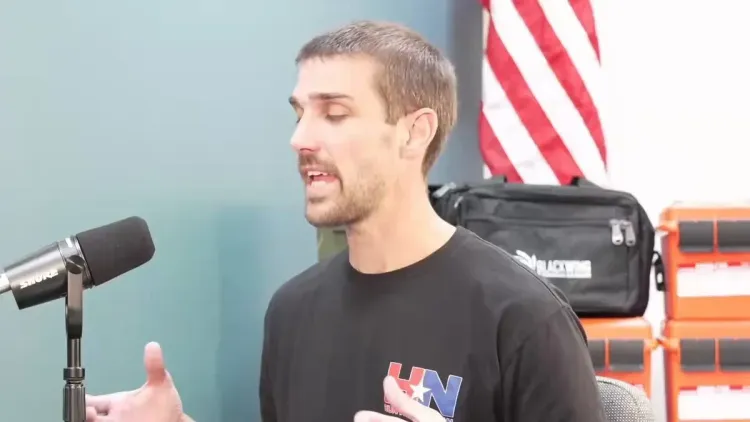
He cited a 'deep discussion' with Stephen Ziegler in Ohio as the basis for his post.
The Open Fields Doctrine, established in 1924 and reaffirmed in 1984 , limits Fourth Amendment protections on land beyond a home's immediate surroundings.
Ramaswamy framed his position as flowing from being 'a constitutionalist at my core.' The issue carries direct stakes for Ohio 's rural hunting communities on questions of warrantless searches of private land.
Entrepreneur Vivek Ramaswamy stepped into a nuanced constitutional debate on Friday, October 2, 2026, declaring his support for the Open Fields Doctrine — a legal principle that has shaped American land-rights and hunting law for nearly a century — after a 'deep discussion' with Stephen Ziegler in Ohio.
What the Open Fields Doctrine actually means for hunters
The Open Fields Doctrine, first established by the U.S. Supreme Court in Hester v. United States (1924) and reaffirmed in Oliver v. United States (1984), holds that the Fourth Amendment's protection against unreasonable searches does not extend to open fields beyond the immediate area surrounding a home. For landowners and hunters in rural states like Ohio, the doctrine carries direct, practical stakes — it governs whether law enforcement can enter private farmland or wooded property without a warrant to investigate poaching, trespassing, or other violations.
Ramaswamy posted on X that 'serious hunters in Ohio care a lot about the Open Fields Doctrine and prior Supreme Court decisions on this,' signalling that his engagement was rooted in local constituent concern rather than abstract theory. His framing — 'I'm a constitutionalist at my core and that informs my views here' — is consistent with the strict-textualist, limited-government brand of conservatism he has championed since his 2024 Republican presidential run.
Ramaswamy's Ohio roots and the politics of land rights
Vivek Ramaswamy, born and raised in Cincinnati, Ohio, has maintained deep ties to the state even as he built a national profile as the founder of Strive Asset Management and as a co-lead of the U.S. Department of Government Efficiency (DOGE) advisory effort under the second Trump administration. Ohio's rural hunting communities represent a politically significant constituency — one that bridges property rights, Second Amendment culture, and deep skepticism of federal regulatory overreach.
The doctrine has periodically returned to legal spotlight, with several state courts and legal advocates arguing it warrants fresh Supreme Court scrutiny in the age of drone surveillance and GPS monitoring. Whether Ramaswamy is laying groundwork for a formal policy position, a future legislative push, or simply deepening his grassroots engagement in Ohio remains an open question — but the conversation with Ziegler suggests active, on-the-ground listening rather than top-down positioning.
For a figure who built his political identity on constitutional originalism, aligning with hunters on a Fourth Amendment precedent is a natural fit. The question now is whether that alignment translates into something more concrete — a legislative proposal, an amicus brief, or a broader land-rights platform heading into the next election cycle.
Point of View
But its significance depends on what follows. Engaging Ohio hunters on Fourth Amendment precedent is smart retail politics in a state he knows intimately, and it signals he remains active in shaping conservative legal discourse even after DOGE. The doctrine itself is overdue for a fresh national conversation — advances in surveillance technology have made its century-old logic increasingly contested — and a prominent constitutionalist voice entering the debate could accelerate that reckoning.
NationPress
2 Oct 2026
Frequently Asked Questions
What is the Open Fields Doctrine in the United States?
The Open Fields Doctrine is a legal principle holding that the Fourth Amendment's protection against unreasonable searches does not apply to open land beyond the immediate area surrounding a home, allowing law enforcement to enter such areas without a warrant. It was first established by the Supreme Court in 1924.
Why does the Open Fields Doctrine matter to hunters in Ohio?
For Ohio hunters and rural landowners, the doctrine determines whether authorities can enter private farmland or forested property without a warrant — affecting poaching investigations, trespassing enforcement, and broader land-rights protections.
What is Vivek Ramaswamy's connection to Ohio?
Vivek Ramaswamy was born and raised in Cincinnati, Ohio, and has maintained strong ties to the state throughout his career as a biotech entrepreneur, founder of Strive Asset Management, 2024 Republican presidential candidate, and DOGE co-lead.
What did Vivek Ramaswamy say about the Open Fields Doctrine?
Ramaswamy posted on X that serious hunters in Ohio care deeply about the doctrine and prior Supreme Court decisions, that he had a deep discussion with Stephen Ziegler on the topic, and that his constitutionalist principles inform his views on the matter.
Which Supreme Court cases defined the Open Fields Doctrine?
The doctrine was first articulated in Hester v. United States in 1924 and was significantly reaffirmed and expanded in Oliver v. United States in 1984, which held that open fields do not qualify as 'persons, houses, papers, and effects' protected by the Fourth Amendment.