Maharashtra Finance Commission recommends 27.3% tax devolution to local bodies

Synopsis
Maharashtra's Sixth Finance Commission has recommended raising local body tax devolution to 27.3% of SOTR — but the deeper story is a state economy showing fiscal stress, a tenfold regional revenue gap between Konkan and Amravati, and over 63% of Gram Panchayats serving populations too small to be financially viable. The reform package is ambitious; the execution risk is real.
Key Takeaways
The Sixth Maharashtra Finance Commission , chaired by Dr Nitin Kareer , recommends raising SOTR devolution to local bodies from 26.3% to 27.3% .
The fund will be split 55% to Urban Local Bodies and 45% to Rural Local Bodies, with 5% each reserved for performance grants and rural-urban transition.
Maharashtra's SOTR grew from ₹1.64 lakh crore in 2020-21 to ₹3.67 lakh crore in 2024-25, yet the state has moved into a revenue deficit.
An annual resource gap of ₹8,217 crore exists in local body finances; Amravati's per capita own revenue is just ₹10,661 against Konkan's ₹1,01,798 .
Key reforms include reverting Profession Tax collection to local bodies (centralised since 1975 ), a CV-based property tax transition within one year , and a proposed MLBFRBM Act .
Full implementation is estimated to address at least 2.6% of identified fiscal gaps through new tax assignments and collection efficiencies.
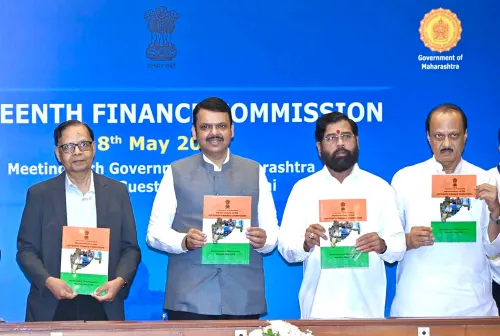
The Sixth Maharashtra Finance Commission, chaired by Dr Nitin Kareer, has recommended an annual devolution of 27.3 per cent of the State's Own Tax Revenue (SOTR) to local bodies, tabling its final report in the Maharashtra Legislature on Friday, 10 July. The proposal marks a decisive push toward financial decentralisation, raising the existing 26.3 per cent rate by a full percentage point.
How the Devolution Will Be Split
The combined devolution fund will be divided between Urban Local Bodies (ULBs), which receive 55 per cent, and Rural Local Bodies, which receive the remaining 45 per cent. Within both allocations, 5 per cent is strictly reserved as performance grants and another 5 per cent is earmarked for rural-urban transition management. The Commission's final report covers the five-year period commencing 1 April 2026.
Maharashtra's Fiscal Backdrop
The report positions Maharashtra as the engine of the Indian economy, with its nominal Gross State Domestic Product (GSDP) for 2024-25 estimated at ₹45,31,518 crore, accounting for a 14 per cent share of India's GDP. The SOTR grew sharply from ₹1.64 lakh crore in 2020-21 to ₹3.67 lakh crore in 2024-25. Despite this revenue growth, the state has slipped from a revenue surplus in 2018-19 to a revenue deficit, with committed expenditure — salaries, pensions and interest payments — projected to rise from 46 per cent of total spending in 2024-25 to 51 per cent in 2025-26.
A critical vulnerability flagged by the Commission is that 43 per cent of outstanding state securities are due to mature between 2030 and 2033, creating a sharp repayment peak that could strain future fiscal space.
The Structural Weaknesses in Local Body Finances
Zilla Parishads (ZPs) and Panchayat Samitis (PSs) generate only 10 to 30 per cent of their receipts from their own sources, with 60 to 70 per cent of total expenditure absorbed by establishment costs, leaving little room for development spending. Gram Panchayats fare better, generating roughly 40 per cent of revenue independently through property tax collections, with capital expenditure at 38 per cent of their budgets. However, more than 63 per cent of Gram Panchayats serve populations of fewer than 2,000, raising serious questions about their long-term financial viability.
Regional disparities are stark: the Konkan division reports per capita own revenue of ₹1,01,798, while the lagging Amravati division registers just ₹10,661 — a nearly tenfold gap. The Commission has identified a persistent annual resource shortfall of ₹8,217 crore in local body finances.
Key Structural Reforms Recommended
To close the fiscal gap, the Commission has proposed reverting the collection of Profession Tax to local bodies — a function centralised by the state since 1975. It has also recommended shifting Additional Stamp Duty and land-use premium fund flows to an automated direct transfer mechanism through the Virtual Treasury, eliminating operational delays.
All ULBs are advised to transition to a Capital Value (CV)-based property tax system within one year, with compliance linked directly to performance grants. Local bodies would also be granted statutory authority to access the MahaTraffic App to recover pending e-challan traffic fines, retaining 20 per cent of collections as untied service grants.
Additionally, the Commission has proposed enacting a Maharashtra Local Bodies Fiscal Responsibility and Budgetary Management (MLBFRBM) Act to embed fiscal discipline at the grassroots level, and placing a financial liability cap of 1.5 times residual capacity on new administrative approvals to prevent overcommitment of funds.
Expected Impact
The Commission estimates that full implementation of its recommendations will address at least 2.6 per cent of identified fiscal gaps through collection efficiencies and new tax assignments. The report, guided by the maxim 'If it can be measured, it can be improved,' frames these interventions as essential to empowering local self-governments to deliver on public expectations. How swiftly the state government acts on these recommendations will determine whether Maharashtra's local bodies can break their long-standing dependence on state grants.
Point of View
But the Commission's report reveals a deeper structural problem: Maharashtra's local bodies are fiscally hollowed out, with rural institutions generating as little as 10% of their own revenue while spending 60–70% on salaries. The tenfold per capita revenue gap between Konkan and Amravati is a governance failure hiding in plain sight. The proposed MLBFRBM Act and CV-based property tax shift are the right prescriptions, but Maharashtra has a long history of finance commission recommendations gathering dust. The real test is whether the state government — itself sliding into revenue deficit with a debt maturity cliff between 2030 and 2033 — has the fiscal bandwidth and political will to actually implement them.
NationPress
10 Jul 2026
Frequently Asked Questions
What has the Sixth Maharashtra Finance Commission recommended?
The Commission has recommended raising the annual devolution of State's Own Tax Revenue (SOTR) to local bodies from 26.3% to 27.3%, covering a five-year period from 1 April 2026. The additional funds will be split 55% to Urban Local Bodies and 45% to Rural Local Bodies, with performance and transition grants carved out within each allocation.
Who chairs the Sixth Maharashtra Finance Commission?
The Sixth Maharashtra Finance Commission is chaired by Dr Nitin Kareer. The Commission tabled its final report in the Maharashtra Legislature on 10 July.
What is the annual resource gap in Maharashtra's local body finances?
The Commission identified a persistent annual resource gap of ₹8,217 crore in local body finances. It has mapped a series of structural interventions — including reverting Profession Tax collection and automating stamp duty transfers — to close this gap.
What are the key structural reforms proposed for local bodies?
The Commission has proposed reverting Profession Tax collection to local bodies (centralised since 1975), transitioning all ULBs to a Capital Value-based property tax system within one year, automating Additional Stamp Duty fund flows via the Virtual Treasury, granting local bodies access to the MahaTraffic App for e-challan recovery, and enacting a Maharashtra Local Bodies Fiscal Responsibility and Budgetary Management Act.
How severe are the regional financial disparities among Maharashtra's local bodies?
The disparities are stark: the Konkan division reports per capita own revenue of ₹1,01,798, while the Amravati division registers just ₹10,661 — a nearly tenfold difference. More than 63% of Gram Panchayats serve populations below 2,000, raising questions about their long-term viability.