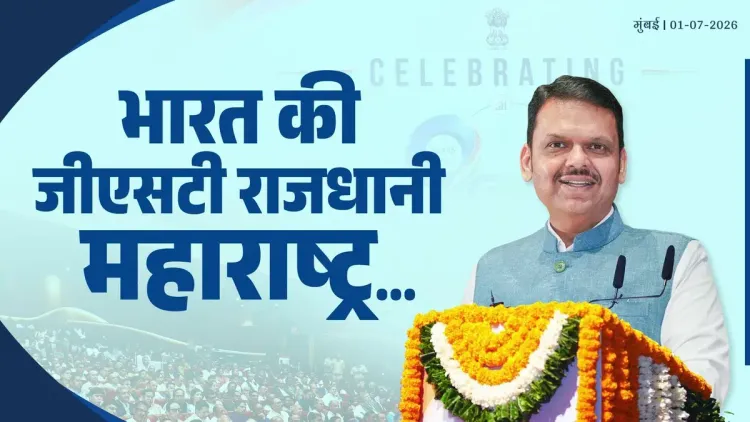
CM Fadnavis Calls Maharashtra India's GST Capital
Synopsis
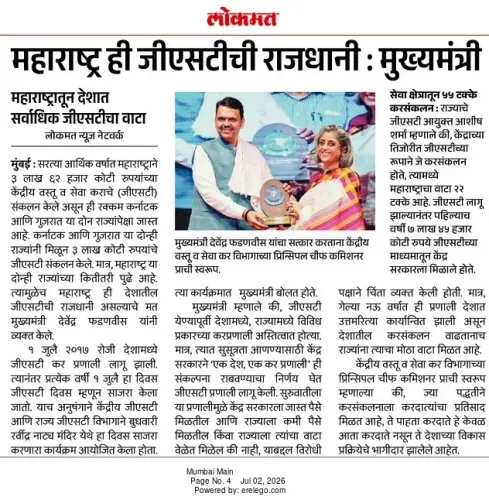
Chief Minister Devendra Fadnavis declared Maharashtra India's 'GST Capital' at the 9th GST Day event in Mumbai on 1 July 2026, highlighting the state's leading role in national indirect tax revenue since GST's launch in 2017.
Key Takeaways
CM Devendra Fadnavis declared Maharashtra India's 'GST Capital' at the 9th GST Day event in Mumbai on 1 July 2026 .
GST was rolled out nationally on 1 July 2017 under the 101st Constitutional Amendment , replacing multiple central and state levies.
Maharashtra has ranked among India's top GST revenue-generating states since 2017 , driven by manufacturing, services, and port activity.
The annual GST Day event serves as a platform for states to showcase compliance performance within the GST Council framework.
The 'GST Capital' label carries both economic and political significance, reinforcing Mumbai 's position as India's commercial hub.
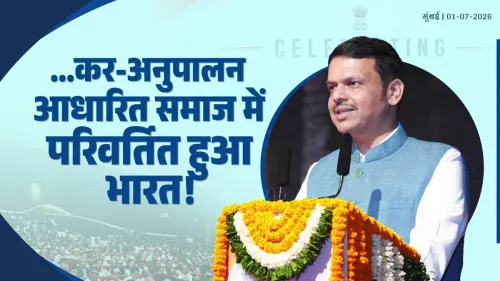
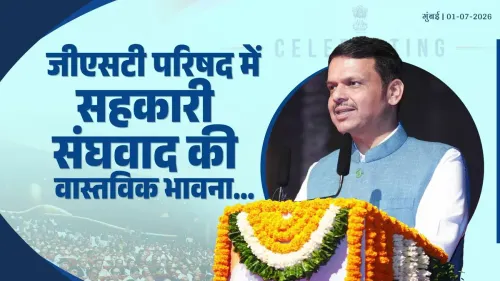
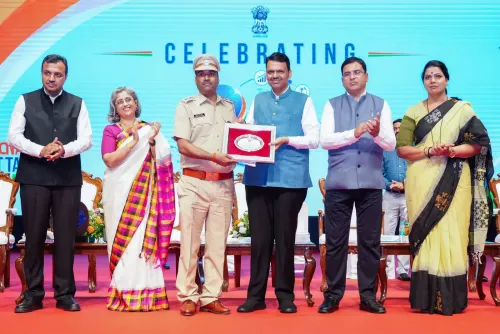
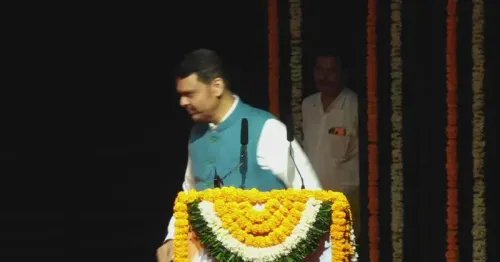
Maharashtra Chief Minister Devendra Fadnavis declared on Wednesday, 1 July 2026, that Maharashtra can rightfully be called India's 'GST Capital,' making the remark at the 9th GST Day celebrations held in Mumbai. The statement came on the ninth anniversary of the Goods and Services Tax, marking a milestone in India's unified indirect tax regime.
Context
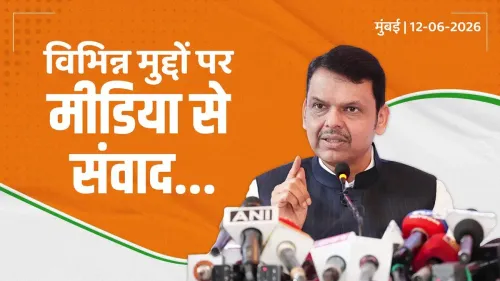
Posting on X, Fadnavis wrote in Marathi and Hindi: 'महाराष्ट्राला भारताची जीएसटी राजधानी म्हणता येईल' ['Maharashtra can be called India's GST Capital']. The remark was made at the 9th Goods and Services Tax Day event, 2026, held in Mumbai on 1 July 2026. The annual GST Day marks the rollout of the unified tax on 1 July 2017.
GST was introduced nationwide following the 101st Constitutional Amendment of 2016, subsuming a web of central and state levies into a single indirect tax framework. Nine years on, the anniversary has become an occasion for states to spotlight their compliance records and revenue contributions within the GST Council framework.
Policy Backdrop
Maharashtra, with Mumbai as its financial and commercial nerve centre, has consistently ranked among the top GST revenue-generating states since the tax's inception in 2017. The state's outsized contribution stems from its dense concentration of manufacturing units, services industries, and major port activity along its coastline.
Annual GST Day events serve as federal platforms where state governments, tax administrators, and industry bodies assess compliance performance. By hosting the 9th GST Day in Mumbai, Maharashtra positioned itself at the centre of the national conversation on indirect tax governance.
Stakeholders and Impact
Maharashtra's businesses, taxpayers, and state finance officials stand as the primary stakeholders in the 'GST Capital' framing. For industry, the label signals a stable and high-compliance tax environment that can attract investment and reinforce Mumbai's status as India's commercial capital.
State finance officials are likely to use the recognition to press for a stronger voice in GST Council deliberations on revenue-sharing formulas and compliance incentives. The framing also carries political weight for Fadnavis and the ruling alliance, underscoring Maharashtra's economic centrality to the national exchequer.
What's Next
Upcoming GST Council meetings will be watched for any revisions to revenue-sharing arrangements or new compliance measures that could affect Maharashtra's standing. State budget documents in the coming cycle are also expected to reflect the government's intent to consolidate and build on this revenue leadership.
As the ninth year of GST concludes, CM Fadnavis's declaration sets a benchmark that Maharashtra's administration will be expected to defend with hard revenue data in the months ahead.
Point of View
He reinforces Maharashtra's leverage within the GST Council at a time when revenue-sharing debates between states and the Centre remain live. The move also serves a domestic political purpose, projecting fiscal competence ahead of any future state budget or election cycle. Analysts will, however, watch for hard revenue data to substantiate the claim beyond the ceremonial occasion.
NationPress
30 Sept 2026
Frequently Asked Questions
Why did CM Fadnavis call Maharashtra India's GST Capital?
CM Devendra Fadnavis made the declaration at the 9th GST Day celebrations in Mumbai on 1 July 2026, citing Maharashtra's consistent position as one of India's top contributors to GST revenue since the tax was launched in 2017.
What is GST Day and why is it celebrated on 1 July?
GST Day is observed on 1 July every year to mark the launch of the Goods and Services Tax on 1 July 2017, when India replaced a complex web of central and state indirect taxes with a single unified regime under the 101st Constitutional Amendment.
How much GST revenue does Maharashtra contribute to India?
Maharashtra has ranked among the top GST revenue-generating states since 2017 owing to its concentration of manufacturing, services, and port activity, though specific 2026 revenue figures were not cited in the official statement.
Where was the 9th GST Day event held in 2026?
The 9th GST Day event in 2026 was held in Mumbai, the financial and commercial capital of India and the seat of the Maharashtra state government.
What is the GST Council and what role does Maharashtra play in it?
The GST Council is the federal body comprising the Union Finance Minister and state finance ministers that governs GST policy, rates, and revenue-sharing. As a top revenue contributor, Maharashtra holds significant weight in Council deliberations on compliance and fiscal arrangements.