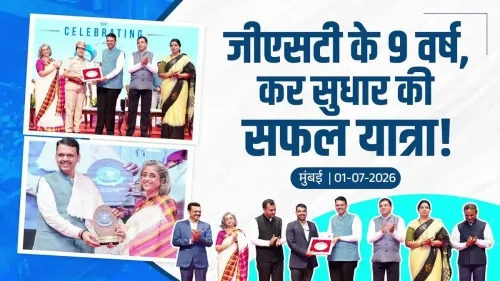
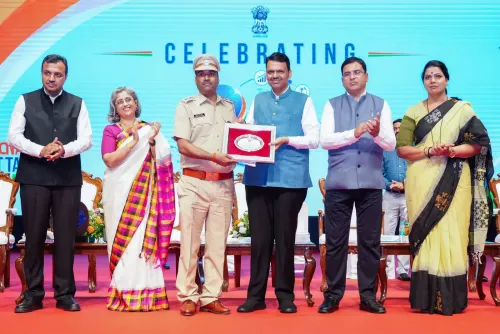
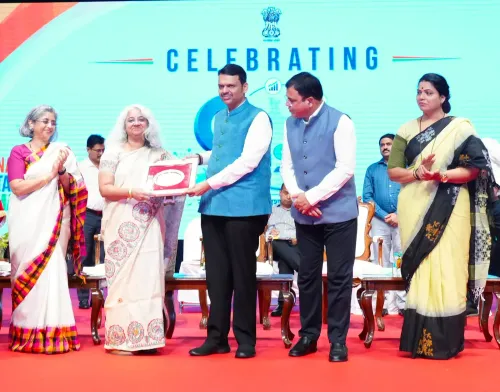
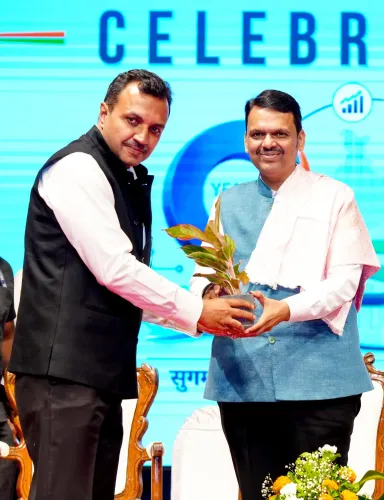
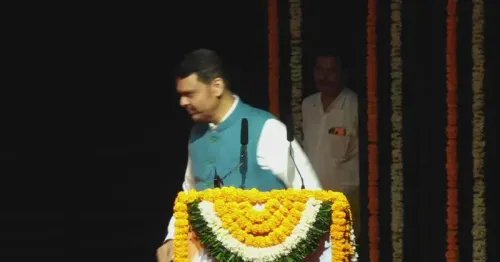
CM Fadnavis Marks 9th GST Day in Mumbai
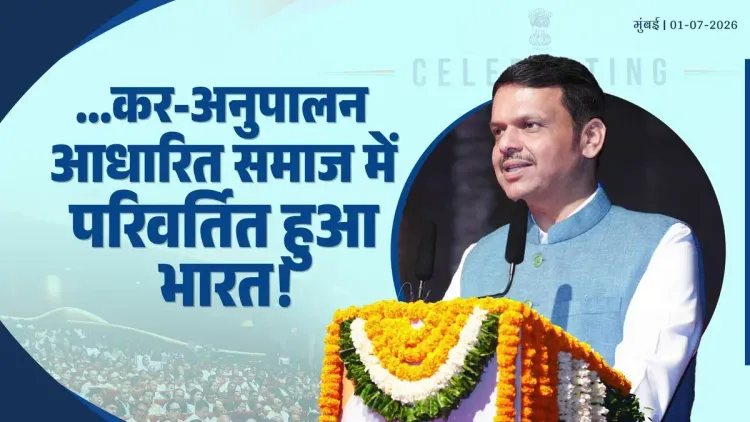
Synopsis
Maharashtra Chief Minister Devendra Fadnavis marked the 9th GST Day in Mumbai on 1 July 2026, saying GST has turned India's indirect tax system into a compliance-based society — nine years after the landmark 2017 reform replaced a fragmented multi-levy structure.
Key Takeaways
CM Devendra Fadnavis spoke at the 9th GST Day commemoration in Mumbai on 1 July 2026 .
He declared that GST has transformed India's indirect tax regime into a tax-compliance-based system .
GST was first implemented on 1 July 2017 under the 101st Constitutional Amendment Act , replacing cascading central and state levies.
Key compliance tools introduced alongside GST include e-way bills , the GSTN common portal , and input tax credit mechanisms.
Maharashtra is among India's largest contributors to indirect tax revenue, giving the state a direct stake in GST's performance.
Further GST Council deliberations on rate slabs and e-invoicing mandates are expected in the months ahead.
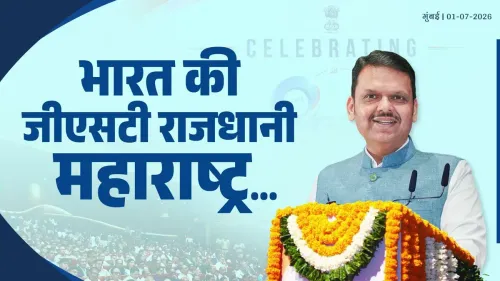
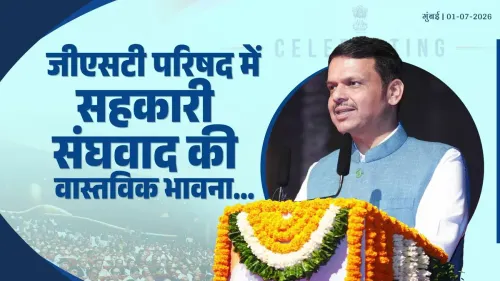
Maharashtra Chief Minister Devendra Fadnavis on Wednesday, 1 July 2026 marked the 9th GST Day at a commemoration event in Mumbai, declaring that the Goods and Services Tax has transformed India's indirect tax system into a compliance-based society.
Addressing the event, Fadnavis stated: 'जीएसटीमुळे भारताची अप्रत्यक्ष करव्यवस्था कर-अनुपालनावर आधारित व्यवस्थेत रूपांतरित झाली आहे' ('Because of GST, India's indirect tax system has been transformed into a tax-compliance-based system'). He made the remark in both Marathi and Hindi, underscoring the reform's national reach.
Context
GST Day is observed every year on 1 July to mark the rollout of the Goods and Services Tax on 1 July 2017, following the 101st Constitutional Amendment Act. The 2026 edition marked nine years since the unified indirect tax regime replaced a fragmented, multi-layered structure of central and state levies. Mumbai, as Maharashtra's financial capital, has been a recurring venue for the annual observance.
Policy Backdrop
Before GST, India operated an origin-based taxation model riddled with cascading effects — tax on tax — that inflated costs for businesses and consumers alike. The shift to a destination-based, unified system brought with it digital infrastructure such as e-way bills, the GSTN common portal, and input tax credit mechanisms designed to incentivise voluntary compliance. Over nine years, successive GST Council decisions have focused on rate rationalisation and procedural simplification, integrating state and central tax administrations onto a single platform.
The reform sits within a broader formalisation drive that also includes expanded digital payments infrastructure. Compliance metrics — measured through registered taxpayer count, return-filing rates, and monthly revenue collections — have been cited by the government as evidence of the structural shift Fadnavis referenced on Wednesday.
Stakeholders and Impact
Taxpayers, businesses, and state governments are the primary stakeholders in the GST architecture. For businesses, the unified regime reduced the compliance burden of dealing with multiple state and central levies, while states receive a guaranteed share of collections through the GSTN settlement mechanism. Maharashtra, as one of India's largest contributor states to indirect tax revenue, has a significant stake in the health of the GST framework. Fadnavis's presence at the event signals the Maharashtra government's continued alignment with the Centre's push for deeper tax formalisation.
What's Next
Further GST Council deliberations on rate slabs and compliance thresholds are expected in the coming months. State-level rollout of updated e-invoicing mandates and audit mechanisms is also on the horizon. As GST enters its tenth year, the policy conversation is likely to shift toward addressing remaining exemptions, expanding the taxpayer base, and streamlining dispute resolution — areas where Maharashtra's administrative experience will be relevant.
Point of View
' he is reinforcing a narrative that positions GST not merely as a revenue tool but as a civilisational shift in how Indians relate to taxation. For Maharashtra — a state that contributes disproportionately to national indirect tax collections — the Chief Minister's endorsement carries both symbolic and administrative weight. The statement also sets the tone ahead of anticipated GST Council deliberations, signalling Maharashtra's support for deeper formalisation measures.
NationPress
30 Sept 2026
Frequently Asked Questions
What is GST Day and why is it celebrated on 1 July?
GST Day is observed on 1 July every year to mark the launch of the Goods and Services Tax on 1 July 2017 , when India replaced its fragmented indirect tax structure with a unified, destination-based regime under the 101st Constitutional Amendment Act .
What did CM Devendra Fadnavis say at the 9th GST Day event?
Fadnavis stated that GST has transformed India's indirect tax system into a tax-compliance-based society , making the remark in both Marathi and Hindi at the 9th GST Day commemoration in Mumbai on 1 July 2026 .
Where was the 9th GST Day 2026 event held?
The 9th GST Day 2026 event was held in Mumbai , the financial capital of Maharashtra.
How has GST changed India's indirect tax system?
GST replaced a multi-layered, cascading tax structure with a single destination-based system supported by digital tools such as e-way bills , the GSTN portal , and input tax credit , which together incentivise voluntary compliance by businesses and taxpayers.
What are the next steps for GST reform in India?
The GST Council is expected to deliberate on rate rationalisation and compliance thresholds in the coming months, alongside state-level rollout of updated e-invoicing mandates and audit mechanisms as GST enters its tenth year.