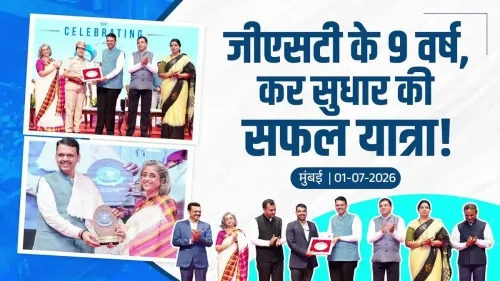
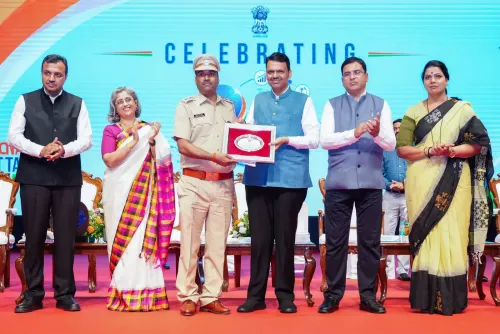
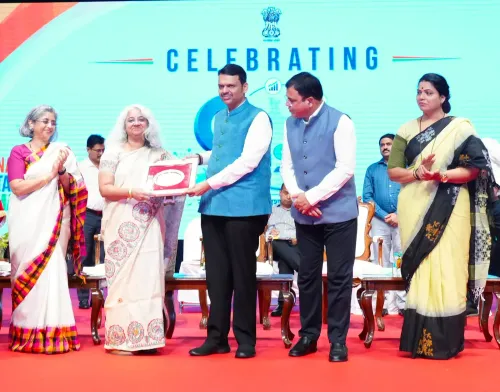
CM Fadnavis Marks 9 Years of GST on One Nation One Tax Day
Synopsis
Maharashtra Chief Minister Devendra Fadnavis marked the ninth anniversary of the Goods and Services Tax on 1 July 2026, crediting the 'One Nation, One Tax' reform with bringing transparency and trade ease, and thanking taxpayers, professionals and administration staff for their role in strengthening the Indian economy.
Key Takeaways
GST Day 2026 marks nine years since the Goods and Services Tax was launched on 1 July 2017 .
Maharashtra CM Devendra Fadnavis greeted taxpayers, professionals and policymakers on the occasion.
GST replaced more than a dozen central and state levies under the principle of One Nation, One Tax .
The constitutional framework was laid by the Constitution (101st Amendment) Act, 2016 , which also established the GST Council .
Maharashtra is consistently among the top GST revenue-contributing states in India.
Upcoming GST Council meetings are expected to address rate rationalisation and the possible inclusion of petroleum products.
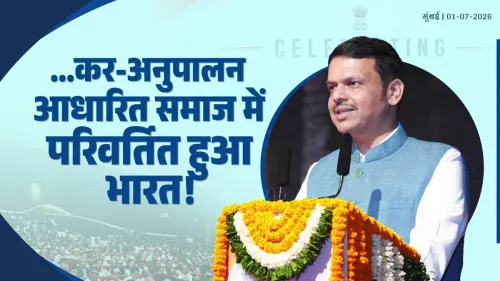
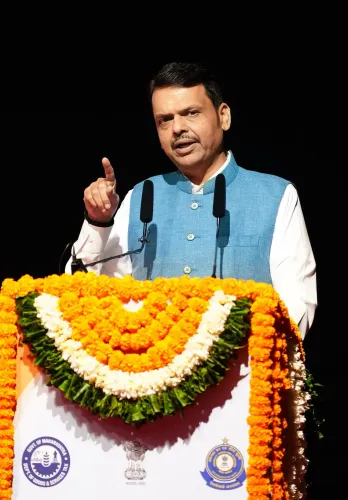
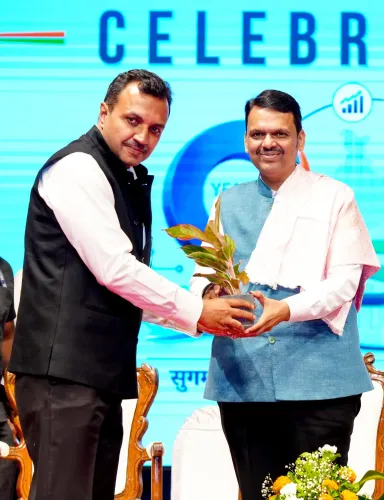
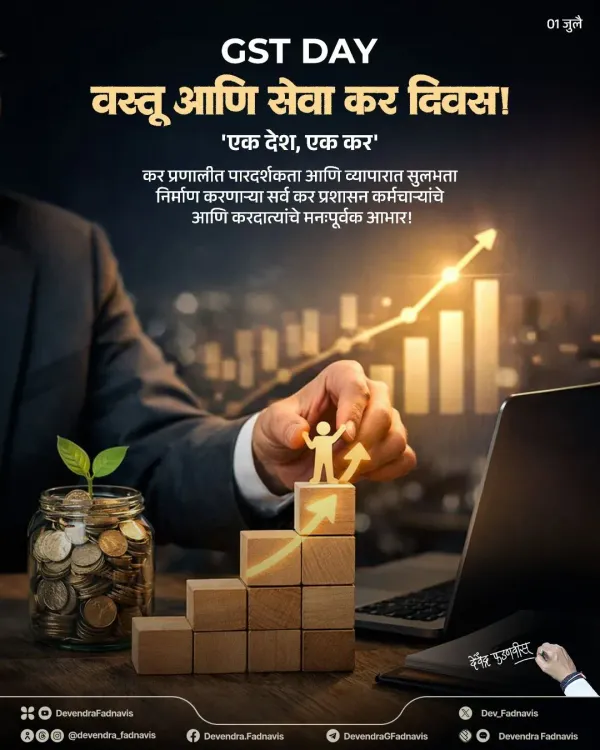
Maharashtra Chief Minister Devendra Fadnavis on Tuesday, 1 July 2026 extended greetings to taxpayers, professionals and policymakers on the occasion of GST Day, marking nine years since the Goods and Services Tax came into force across India. The Chief Minister credited the unified tax regime with bringing transparency to the tax system and ease to trade, and called on all stakeholders who contribute to building a transparent economy.
Context
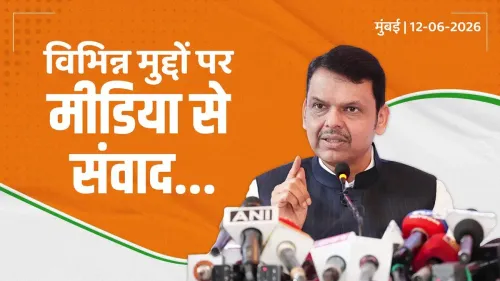
Fadnavis posted in both English and Marathi, writing: 'कर प्रणालीत पारदर्शकता आणि व्यापारात सुलभता निर्माण करून, भारतीय अर्थव्यवस्थेला बळकटी देणाऱ्या सर्व कर प्रशासन कर्मचाऱ्यांचे आणि करदात्यांचे मनःपूर्वक आभार!' ['Heartfelt thanks to all tax administration employees and taxpayers who have strengthened the Indian economy by bringing transparency to the tax system and ease to trade!']. The post was tagged #GSTDay, #OneNationOneTax, #9YearsOfGST and #Maharashtra, signalling a deliberate state-level acknowledgement of the milestone.
The Goods and Services Tax was launched on 1 July 2017 under Prime Minister Narendra Modi, replacing a fragmented web of central excise duty, service tax, state VAT and dozens of other levies with a single destination-based tax. The constitutional basis was the Constitution (101st Amendment) Act, 2016, which also created the GST Council — a federal body of central and state finance ministers that decides rates and rules by consensus.
Policy Backdrop
GST subsumed more than a dozen central and state taxes, eliminating the cascading effect that had long inflated costs for businesses and consumers alike. The reform was designed to unify India's fragmented internal market, reduce inter-state trade barriers and bring informal-sector transactions into the formal economy through digital compliance infrastructure.
Maharashtra, as one of India's largest industrial and services hubs, has been among the top contributors to national GST revenue since the tax's inception. The state's large manufacturing base, financial services sector and retail economy make its compliance trends closely watched by the GST Council and central revenue authorities.
Stakeholders and Impact
The primary beneficiaries called out in Fadnavis's post are taxpayers, tax professionals and tax administration staff — the three pillars of day-to-day GST compliance. Traders and small businesses, who bore the heaviest adjustment burden in the early years of the regime, have gradually been accommodated through rate rationalisation rounds and simplified return-filing systems.
For Maharashtra specifically, GST collections feed both the state's own revenue pool and its share of the divisible central pool. Sustained high collection figures have allowed the state to fund infrastructure and social spending without proportionate increases in borrowing.
What's Next
The GST Council is expected to take up further rate rationalisation on remaining goods and services in upcoming meetings, with the possible inclusion of petroleum products in the GST net remaining a long-debated policy question. State-level compliance data from Maharashtra for the 2025-26 fiscal year is also anticipated to be released in the coming weeks, which will offer a clearer picture of how the tax base has evolved nine years into the regime. Fadnavis's public acknowledgement of GST Day underscores the BJP-led state government's alignment with the Centre's narrative of economic reform through tax simplification.
Point of View
He broadens the tribute beyond citizens to include the bureaucratic machinery — a signal of administrative appreciation that carries weight in a state with one of India's largest tax departments. The bilingual format, blending English and Marathi, reflects a dual audience strategy: national visibility on the reform's legacy and local resonance with Maharashtra's business and professional community. The post fits a broader BJP pattern of marking GST Day as a reform anniversary comparable to Independence Day milestones, reinforcing the narrative that indirect tax simplification is a generational achievement.
NationPress
29 Sept 2026
Frequently Asked Questions
When is GST Day celebrated in India?
GST Day is celebrated on 1 July every year to mark the launch of the Goods and Services Tax on 1 July 2017 .
How many years of GST are being celebrated in 2026?
2026 marks nine years of GST, as the unified indirect tax regime was introduced on 1 July 2017 .
What did Maharashtra CM Devendra Fadnavis say on GST Day 2026?
Fadnavis extended greetings to taxpayers, professionals and policymakers, crediting GST with bringing transparency to the tax system and ease to trade, and thanked all tax administration employees for strengthening the Indian economy.
What is the meaning of One Nation One Tax?
'One Nation, One Tax' is the guiding principle of GST, which replaced multiple central and state levies with a single unified indirect tax applicable across all of India.
What is Maharashtra's role in GST collections?
Maharashtra is consistently one of the top contributors to national GST revenue, driven by its large manufacturing base, financial services sector and retail economy.