CM Sai Marks Janjatiya Gaurav Diwas, Cites PM Modi's Bastar Diwali Visit
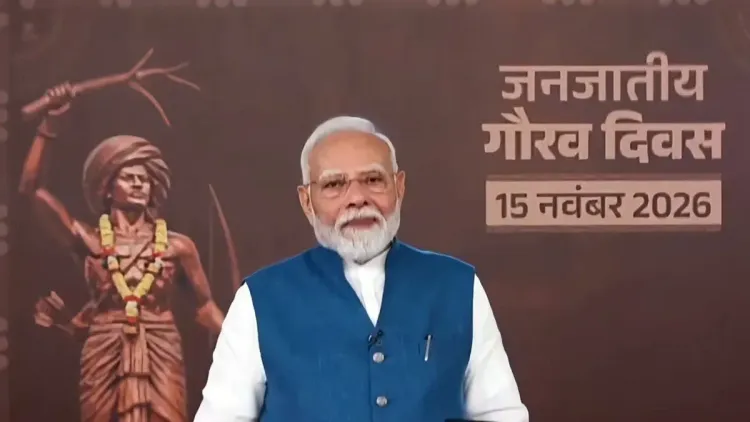
Synopsis
On Janjatiya Gaurav Diwas, Chhattisgarh CM Vishnu Deo Sai quoted PM Modi highlighting his Diwali visit with security forces in Bastar — once India's most feared Maoist heartland — marking the region's remarkable security transformation.
Key Takeaways
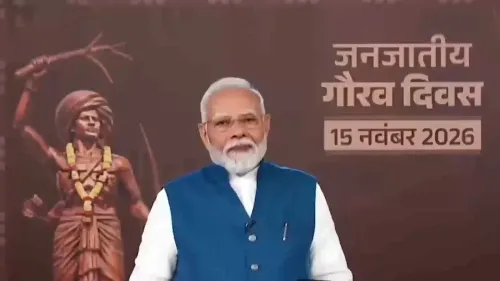
Janjatiya Gaurav Diwas (15 November) honours tribal icons including Birsa Munda and is observed annually as a national day.
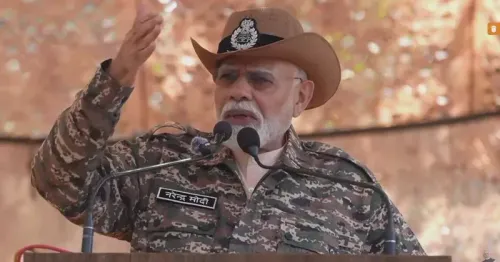
CM Vishnu Deo Sai quoted PM Narendra Modi describing a Diwali celebration with security forces at the heart of Bastar .
Bastar in southern Chhattisgarh was for decades a core zone of Maoist insurgency, restricting access to officials and civilians alike.
Since 2014 , coordinated security operations and development investment have contributed to a sustained decline in violent incidents across the region.
Tribal communities constitute roughly 30 per cent of Chhattisgarh's population, giving Bastar's transformation both security and social significance.
The post carries the hashtag #जोहार_नितिन_जी , signalling an intra-party tribute alongside the broader tribal-pride messaging.
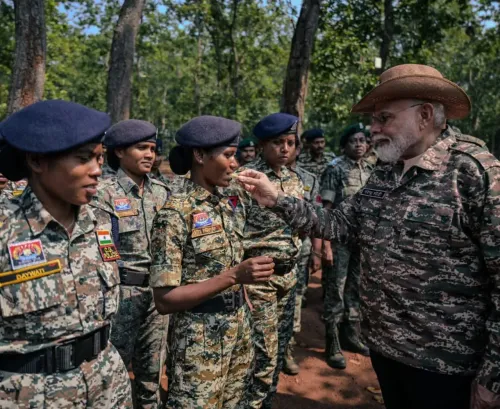
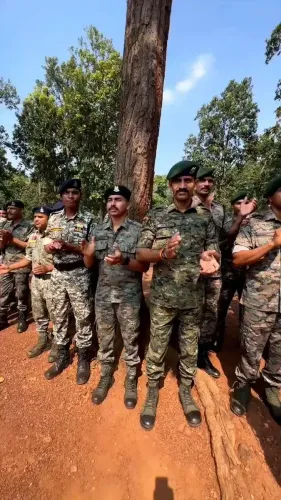
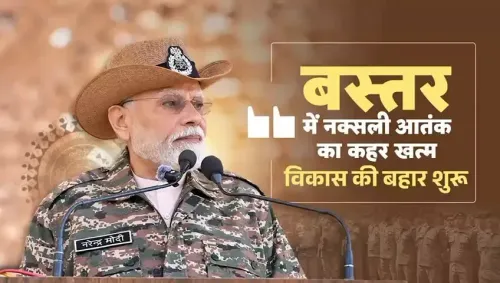
A region that once kept even security personnel on edge is now a place where India's Prime Minister celebrated Diwali — standing among the troops in its very heartland. On Janjatiya Gaurav Diwas, 15 November 2026, Chhattisgarh Chief Minister Vishnu Deo Sai invoked those words of Prime Minister Narendra Modi to mark the transformation of Bastar from a no-go zone to a symbol of hard-won peace.
Modi's Diwali in Bastar's core — the moment CM Sai highlighted
Quoting the Prime Minister directly, CM Sai wrote: 'Chhattisgarh mein Bastar jaisa ilaqa, jahaan ek samay log jaane se darte the. Abhi kuch samay pehle maine us ilaake ke kendrubindu mein hamare suraksha balon ke saath Diwali manayi.' — 'A region like Bastar in Chhattisgarh, where people once feared to go. Not long ago I celebrated Diwali with our security forces at the very centre of that area.' The choice to surface this quote on Janjatiya Gaurav Diwas is deliberate: it stitches together two narratives the BJP has cultivated — tribal dignity and security restoration — into a single image.
Bastar's long road from Maoist stronghold to senior-leader visits
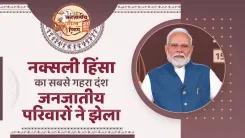
Bastar, spread across southern Chhattisgarh and home to a large tribal population, spent decades at the epicentre of Left-Wing Extremist violence. Maoists controlled vast forest corridors, disrupted elections, and made large swathes inaccessible to administrators and journalists alike. A Prime Minister visiting its core — not from a fortified periphery, but its 'kendrubindu' — would have been unthinkable a decade ago.
Since 2014, coordinated counter-insurgency operations backed by central paramilitary deployments have been paired with an infrastructure push — roads, schools, and mobile connectivity reaching villages that were off the map. The cumulative effect has been a steady decline in violent incidents across south Chhattisgarh's red-corridor districts. Senior political figures visiting forward areas is now part of a deliberate signalling strategy: normalcy is being asserted, not just claimed.
Why Janjatiya Gaurav Diwas makes this more than a security story
Janjatiya Gaurav Diwas is observed every 15 November — the birth anniversary of tribal icon Birsa Munda — to honour tribal leaders and their contributions to India's freedom movement and cultural heritage. The Central Government institutionalised the observance as a national day. For a state like Chhattisgarh, where tribal communities make up roughly 30 per cent of the population and Bastar is their historic heartland, the day carries enormous emotional weight. CM Sai's post — with the hashtag #जोहार_नितिन_जी alongside #JanjatiyaGauravDiwas — signals both a tribute to the tribal legacy and a political salute within party ranks.
Placing a security milestone at the centre of a tribal-pride observance is a carefully constructed message: the people of Bastar are free from fear not just in aspiration but in lived reality — or so the government's framing goes. Whether the ground reality fully matches that frame remains a question for independent assessors, but the political architecture is unmistakable.
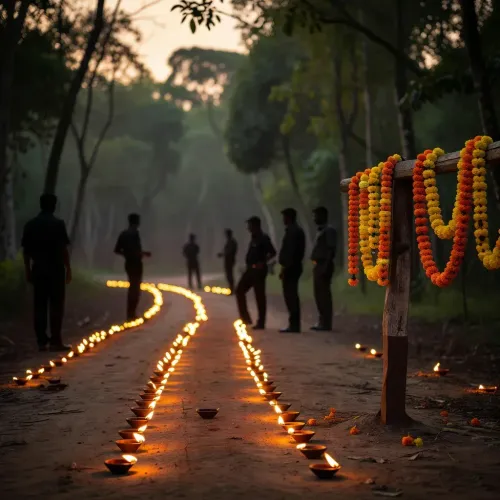
For the security forces who spent years in those forests, a Prime Minister's Diwali visit — firelight in a place that was once pitch dark with conflict — is as pointed a symbol as any official announcement. That is exactly the image CM Sai has chosen to lead with today.
Point of View
He deploys a security milestone to reinforce the BJP's dual brand of welfare and order in Chhattisgarh. Anchoring the narrative in PM Modi's own words elevates the symbolic weight while keeping state-level accountability at arm's length. The Bastar transformation, if sustained, is a genuine policy achievement — decades in the making — but framing it exclusively through a festival visit risks reducing a complex counter-insurgency story to a photo-op. The harder test for Chhattisgarh's government is whether the development pipeline in former red-corridor districts translates into lasting tribal economic inclusion, not just reduced violence statistics.
NationPress
15 Nov 2026
Frequently Asked Questions
What is Janjatiya Gaurav Diwas and why is it celebrated on 15 November?
Janjatiya Gaurav Diwas is observed on 15 November every year to mark the birth anniversary of tribal freedom fighter Birsa Munda and to honour the contributions of tribal communities across India. The Central Government declared it a national day of observance.
Why was Bastar considered dangerous and how has the situation changed?
Bastar in southern Chhattisgarh was a stronghold of Maoist (Naxalite) insurgency for decades, with armed groups controlling forest areas and attacking security forces. Sustained coordinated operations and development investment since 2014 have led to a significant decline in violent incidents, allowing senior officials to visit areas once considered inaccessible.
What did PM Modi say about Bastar that CM Sai quoted?
CM Sai quoted PM Narendra Modi as saying that Bastar was once a region people feared to enter, but that he recently celebrated Diwali with security forces at the very centre of that area — using it as evidence of the region's transformation.
What is the tribal population share in Chhattisgarh?
Tribal communities make up approximately 30 per cent of Chhattisgarh's total population, making tribal welfare and security in areas like Bastar a significant political and policy priority for the state government.
Who is Vishnu Deo Sai and what is his role in Chhattisgarh?
Vishnu Deo Sai is the Chief Minister of Chhattisgarh and a senior BJP leader who has focused on state security and tribal welfare, taking office after the BJP's return to power in the state.