CM Sai Welcomes PM Modi to Bastar on Diwali
Synopsis
Chhattisgarh CM Vishnu Deo Sai formally welcomed PM Modi to Bastar on Diwali 2026, framing the Prime Minister's visit with security forces as an honour to their sacrifice and a symbol of Bastar's transformation from violence-scarred region to one on the path of peace and development.
Key Takeaways
CM Vishnu Deo Sai posted a formal welcome address for PM Modi's Diwali visit to Bastar on 8 November 2026 .
Modi's presence among security forces on Diwali is described as honouring their courage and boosting morale in a former conflict zone.
Bastar, long the epicentre of Naxalite insurgency in India, has seen accelerated peace and development efforts since the BJP returned to power in Chhattisgarh in December 2023 .
The Aspirational Districts Programme (post-2014) underpins the Centre's twin-track approach of security operations and infrastructure delivery in Left Wing Extremism-affected districts.
Tight BJP alignment between the Sai state government and the Modi Centre has reduced bureaucratic friction on key development projects in Bastar.
Future Naxal incident data, surrender figures, and infrastructure completion rates will be the real test of Bastar's claimed transformation.
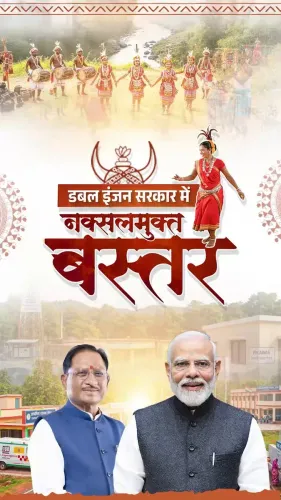
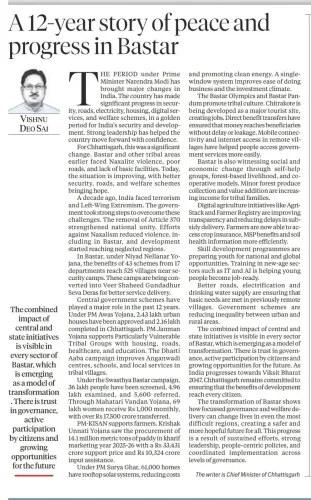
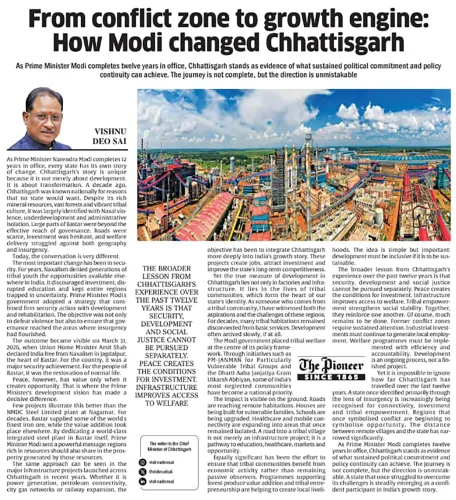
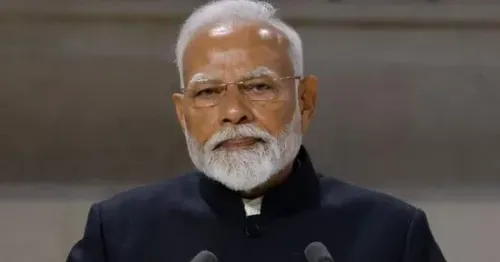
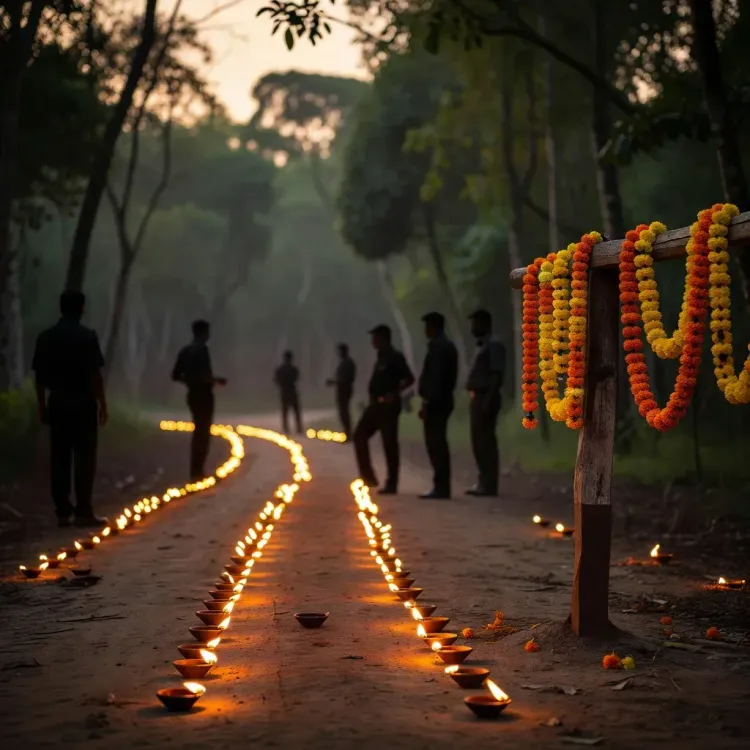
On a Diwali unlike most, Prime Minister Narendra Modi chose the conflict-scarred forests of Bastar over the floodlit corridors of power — and Chhattisgarh Chief Minister Vishnu Deo Sai was there to receive him with a formal welcome that carried the weight of a region slowly reclaiming its peace.
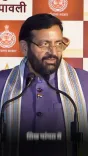
Posting on Sunday, 8 November 2026, CM Sai wrote in Hindi: 'Bastar ki pavan dhara par aapka hardik swagat evam abhinandan hai' — 'A heartfelt welcome to you on the sacred soil of Bastar.' The message was more than ceremonial; it placed Modi's visit squarely in the context of a region that for decades lived under the shadow of Naxalite violence, and framed the Prime Minister's presence among security personnel as a tribute to their 'indomitable courage, sacrifice, and dedication.'
Bastar's Long Road from Gunfire to Groundbreaking
Bastar, the sprawling southern division of Chhattisgarh, has been the epicentre of Left Wing Extremism in India for more than four decades. At its worst, the region saw near-daily encounters, mass displacement, and an almost total absence of basic infrastructure. Roads ended where the forest began. Schools sat empty. The state apparatus was, in many districts, a theoretical concept.
That picture has been shifting — and the pace has accelerated since December 2023, when the BJP swept back into power in Chhattisgarh and CM Sai took office with an explicit mandate to end Naxal violence. His government aligned tightly with the Centre's counter-insurgency and development push, reinforcing what security analysts describe as a twin-track approach: clear the ground militarily, then fill the vacuum with roads, telecom connectivity, and welfare delivery.
Modi Among the Jawans — A Festival Tradition with Strategic Weight
The Prime Minister's decision to spend Diwali with security forces in a forward area is itself a recurring signal — a practice that blends genuine morale-building with unmistakable political messaging. For the jawans posted in remote jungle outposts, a Prime Ministerial visit on the festival of lights is not a photo opportunity; it is an acknowledgment that their postings are seen and their sacrifices counted.
CM Sai's post captured exactly that register. 'Your presence among our brave soldiers on the auspicious occasion of Diwali,' he wrote, 'honours their indomitable courage and will boost their morale.' The phrasing was deliberate — manobal badhane wali, morale-elevating — the language of a state government that has staked much of its identity on restoring order in Bastar.
State-Centre Alignment as Chhattisgarh's Governing Strategy
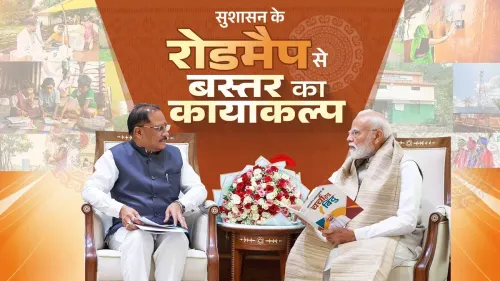
What the welcome address also signals is the degree to which the Sai government has embedded its governance narrative inside the Modi umbrella. The Aspirational Districts Programme, launched post-2014 by the NDA government, earmarked Bastar's most underdeveloped blocks for intensive investment in health, education, nutrition, and connectivity — combining the Centre's development bandwidth with the state's local administration.
That alignment is now tighter than ever. With both governments run by the BJP, the bureaucratic and political friction that often slows delivery in Centre-state schemes has been reduced. Projects that once stalled at inter-departmental handoffs are, by all accounts, moving faster — though independent verification of specific 2026 metrics remains pending.
The months ahead will tell the fuller story: official incident counts, surrender figures, and project completion rates in Bastar's most sensitive blocks will either validate the narrative CM Sai offered on Sunday, or complicate it. For now, the symbolism of a Diwali visit — a Prime Minister lighting up a region that spent decades in darkness — lands with a clarity that needs no translator.
Point of View
Every such visit reinforces its core claim: that Chhattisgarh under BJP is safer, better-connected, and more confident than under its predecessor. The strategic value is as much domestic — signalling to voters in Bastar's tribal belt — as it is administrative. The harder question, one the welcome address naturally sidesteps, is whether the pace of verified, on-ground change in Bastar's most remote blocks is matching the speed of the messaging.
NationPress
8 Nov 2026
Frequently Asked Questions
Why did PM Modi visit Bastar on Diwali 2026?
PM Modi visited Bastar to celebrate Diwali with security forces deployed in the region, a gesture CM Vishnu Deo Sai described as honouring the soldiers' courage, sacrifice, and dedication. Festival visits to forward security postings are a recurring practice under the Modi government.
What is the security situation in Bastar today?
Bastar has historically been India's most affected Left Wing Extremism zone, but state and central governments report a significant reduction in Naxal violence since the BJP returned to power in Chhattisgarh in December 2023. Independent verification of 2026-specific figures is still pending.
Who is Vishnu Deo Sai and what is his role in Bastar's development?
Vishnu Deo Sai is the BJP Chief Minister of Chhattisgarh since December 2023. His government has focused on ending Naxal violence and aligning with the Centre's Aspirational Districts Programme to deliver infrastructure and welfare in Bastar's underdeveloped blocks.
What is the Aspirational Districts Programme and how does it apply to Bastar?
The Aspirational Districts Programme was launched by the NDA government after 2014 to fast-track development in India's most underdeveloped districts. Several blocks in Bastar are covered under the programme, receiving targeted investment in health, education, nutrition, and connectivity alongside security operations.
What will indicate real progress in Bastar going forward?
Key indicators to watch include official data on Naxal incidents and surrenders, progress on road and telecom connectivity projects, and welfare delivery metrics in Bastar's most conflict-affected blocks in the coming months.