CM Sai unveils tribal freedom museum in Nava Raipur on Janjatiya Gaurav Diwas
Synopsis
On Janjatiya Gaurav Diwas 2026, Chhattisgarh CM Vishnu Deo Sai announced the construction of the Shaheed Veer Narayan Singh Memorial and Tribal Freedom Fighters Museum in Nava Raipur, honouring tribal heroes of India's independence struggle.
Key Takeaways
Chhattisgarh CM Vishnu Deo Sai posted on 15 November 2026 — Janjatiya Gaurav Diwas — to announce the new museum.
The institution is named after Shaheed Veer Narayan Singh , the tribal chieftain executed during the 1857 revolt and regarded as Chhattisgarh's first martyr.
The museum is located in Nava Raipur , the state's planned capital city.
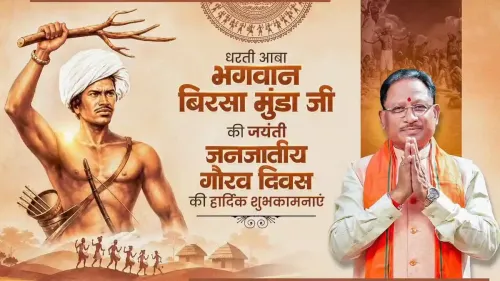
Janjatiya Gaurav Diwas was instituted by the Government of India in 2021 on the birth anniversary of Birsa Munda to honour tribal freedom fighters.
The project aligns with a broader BJP effort to build tribal heritage memorials in states with large Scheduled Tribe populations.
On the day India honours its tribal freedom fighters, Chhattisgarh Chief Minister Vishnu Deo Sai marked Janjatiya Gaurav Diwas, 15 November 2026, by spotlighting a new memorial that puts the state's tribal warriors at the centre of the independence story — not its margins.
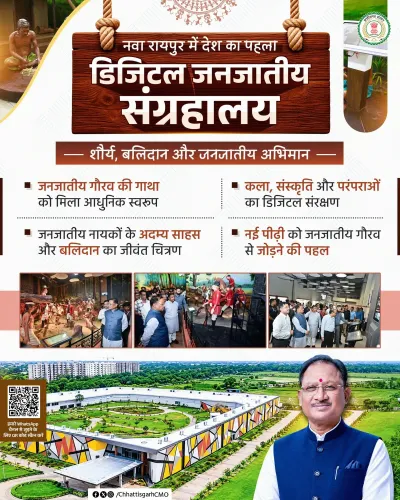
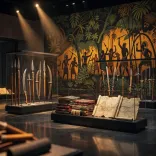
Posting on X, CM Sai wrote: 'Desh ki azaadi ki ladai mein hamare janjatiya veeron ne adamya sahas, shaurya aur balidaan ke saath mahatvapurn yogdan diya.' — 'In the fight for India's independence, our tribal heroes made an important contribution with indomitable courage, valour, and sacrifice.' He announced that the state government has constructed the 'Shaheed Veer Narayan Singh Smarak Sah-Janjatiya Swatantrata Sangram Senani Sangrahalaya' (Martyr Veer Narayan Singh Memorial and Tribal Freedom Fighters Museum) in Nava Raipur, Chhattisgarh's planned capital.
Who was Veer Narayan Singh — and why this museum carries his name
Veer Narayan Singh is widely regarded as Chhattisgarh's first martyr of the 1857 revolt. A tribal chieftain, he led an uprising against British authority and was publicly executed in Raipur — a moment that became a defining wound in the region's collective memory. Naming the museum after him is a deliberate act of reclamation: the colonial-era narrative long sidelined tribal participation in 1857, and the memorial is designed to correct that in vivid, permanent form.
Janjatiya Gaurav Diwas: from a 2021 resolve to a state-level rollout
The day itself was instituted by the Government of India in 2021, fixed on 15 November — the birth anniversary of Birsa Munda, the Jharkhand tribal icon who defied British rule in the late nineteenth century. The observance was designed to give formal national recognition to tribal freedom fighters whose contributions were absent from mainstream history syllabuses. Chhattisgarh, with one of India's largest Scheduled Tribe populations, sits at the heartland of this reclamation project.
The Nava Raipur museum fits a broader pattern: BJP governments at both the central and state levels have invested in memorials, heritage corridors, and museums that foreground tribal roles in the 1857 uprising and subsequent revolts — particularly concentrated in tribal-majority states. The projects serve a dual purpose: cultural restitution and political outreach in constituencies that have historically swung on welfare and identity.
What the museum is meant to do
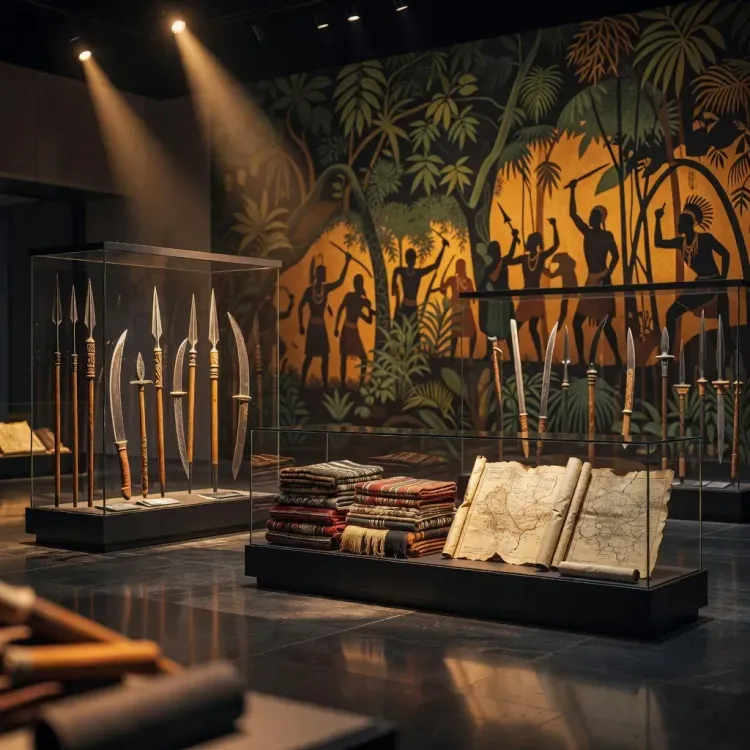
CM Sai described the institution as presenting the 'glorious history and contribution' of tribal fighters in a 'sajiv roop' — a 'living, vivid form'. The framing signals an experiential, immersive design intent rather than a traditional display-case archive. Nava Raipur, as the state's planned administrative capital, gives the museum a high-visibility address accessible to officials, students, and visitors arriving for state functions.
With Janjatiya Gaurav Diwas now an established annual touchstone, the states that host the most credible, well-resourced tribal heritage infrastructure will shape how the next generation understands India's freedom struggle. Chhattisgarh has just staked its claim.
Point of View
Whose 1857 martyrdom predates the Congress-era nationalist canon, is a pointed historiographic move: it asserts a pre-Congress, tribal lineage to the freedom struggle. As competitive identity politics intensifies in Scheduled Tribe-dominated states, the race to build credible, visible tribal memory institutions will become a template replicated across BJP-ruled states. The question is whether the museum's programming and accessibility will match the symbolism of its announcement.
NationPress
15 Nov 2026
Frequently Asked Questions
What is the Shaheed Veer Narayan Singh Museum in Nava Raipur?
It is the 'Shaheed Veer Narayan Singh Smarak Sah-Janjatiya Swatantrata Sangram Senani Sangrahalaya' — a memorial and museum built by the Chhattisgarh government in Nava Raipur to honour Veer Narayan Singh and other tribal freedom fighters who contributed to India's independence struggle.
Who was Veer Narayan Singh?
Veer Narayan Singh was a tribal chieftain from Chhattisgarh who participated in the 1857 revolt against British rule. He was publicly executed in Raipur and is widely regarded as the region's first martyr of the independence struggle.
What is Janjatiya Gaurav Diwas and when is it observed?
Janjatiya Gaurav Diwas is an annual national observance held on 15 November, the birth anniversary of tribal icon Birsa Munda. It was instituted by the Government of India in 2021 to formally recognise the contributions of tribal communities to India's freedom struggle.
Where is Nava Raipur located?
Nava Raipur is the planned new capital city of Chhattisgarh, developed adjacent to the existing city of Raipur. It serves as the state's administrative hub and is the site of the new tribal freedom museum.
Why is the BJP building tribal museums in states like Chhattisgarh?
BJP governments at the central and state levels have prioritised tribal heritage memorials in states with large Scheduled Tribe populations as part of a broader effort to highlight tribal contributions to India's freedom struggle and strengthen political engagement with tribal communities.