CM Sai Marks Janjatiya Gaurav Diwas With Tribal Welfare Push
Synopsis
On the eve of Janjatiya Gaurav Diwas, Chhattisgarh's CMO reaffirmed CM Vishnu Deo Sai's three-pillar tribal agenda — cultural preservation, livelihood expansion, and permanent housing — framing tribal upliftment as the foundation of state prosperity.
Key Takeaways
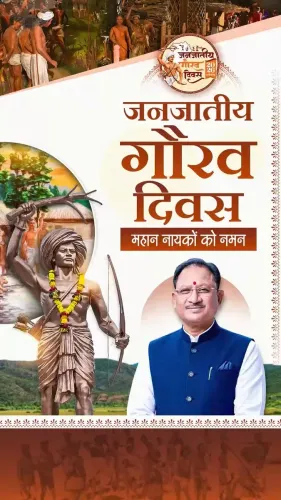
Chhattisgarh's Chief Minister's Office posted a Janjatiya Gaurav Diwas message on 14 November 2026 , the eve of the annual observance.
Janjatiya Gaurav Diwas falls on 15 November , the birth anniversary of tribal icon Birsa Munda , and was instituted nationally in 2021 .
The post outlines three pillars under CM Vishnu Deo Sai : tribal heritage preservation, livelihood expansion, and pucca housing for every family.
Chhattisgarh has one of India's highest Scheduled Tribe population proportions and operates under constitutional Fifth Schedule protections.
CM Sai, who took office in December 2023 , is himself from a tribal community, giving the welfare messaging added political significance.
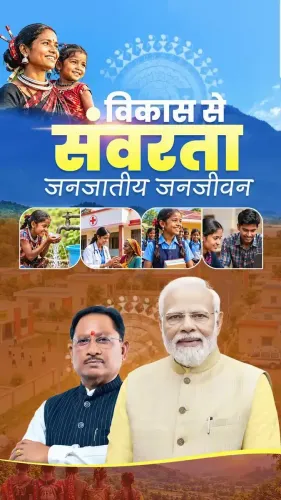
On the eve of Janjatiya Gaurav Diwas, the Chief Minister's Office of Chhattisgarh reaffirmed the state government's commitment to tribal dignity, cultural preservation, and economic empowerment under Chief Minister Vishnu Deo Sai — a message that lands with particular weight in a state where tribal communities form one of the largest Scheduled Tribe populations in the country.
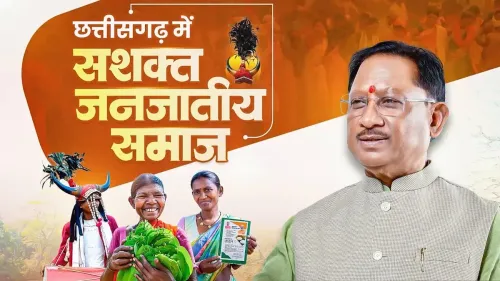
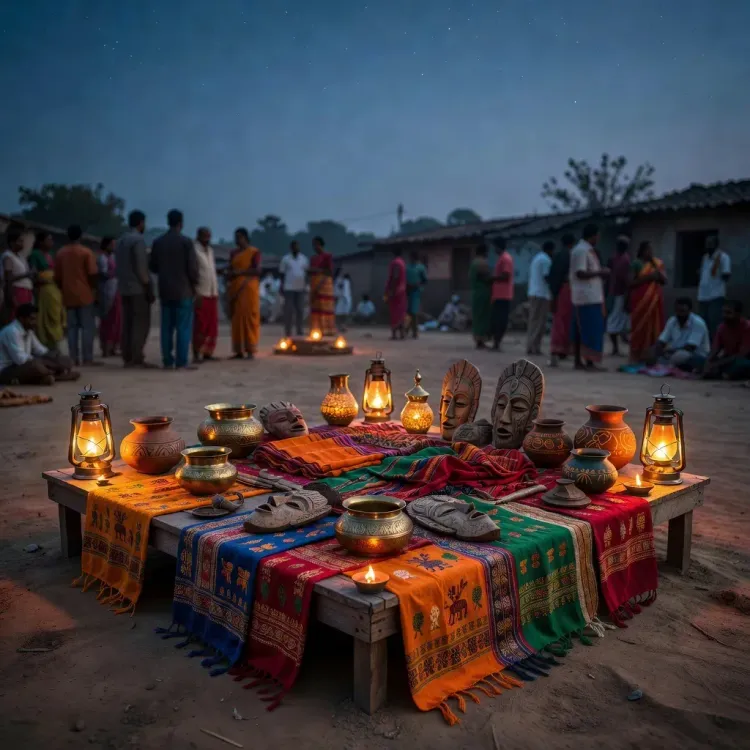
The post, shared on Saturday, 14 November 2026, declared: 'Janjatiya gaurav ka samman, sanskriti ka sanrakshan aur samaj ka sashaktikaran' — 'Honour for tribal pride, preservation of culture, and empowerment of society.' It described the Sai-led 'Sushasan Sarkar' (Good Governance Government) as continuously working to safeguard tribal heritage, expand livelihood opportunities, and ensure every family has a pucca (permanent) roof over its head.
Why November 15 Matters for Tribal India
Janjatiya Gaurav Diwas falls on 15 November every year — the birth anniversary of freedom fighter and tribal icon Birsa Munda. The Government of India formally instituted the annual observance in 2021 to honour tribal leaders and spotlight the contributions of indigenous communities to the nation's history and identity. For Chhattisgarh, a state operating under the constitutional protections of the Fifth Schedule, the day carries both symbolic and administrative significance.
Chhattisgarh consistently ranks among states with the highest proportion of Scheduled Tribe residents. That demographic reality has shaped governance priorities across successive administrations — framing tribal welfare not as a peripheral concern but as the central spine of state development strategy.
Housing, Livelihoods, and the Heritage Triad
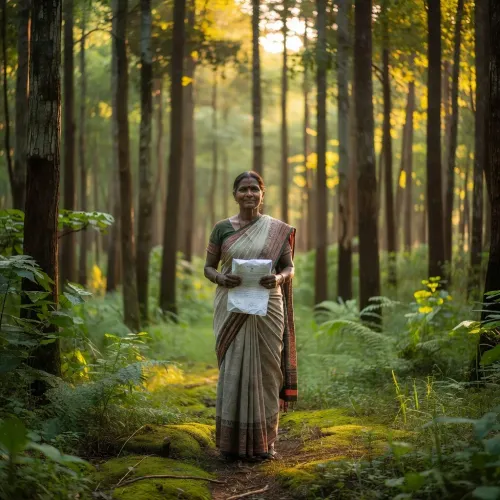
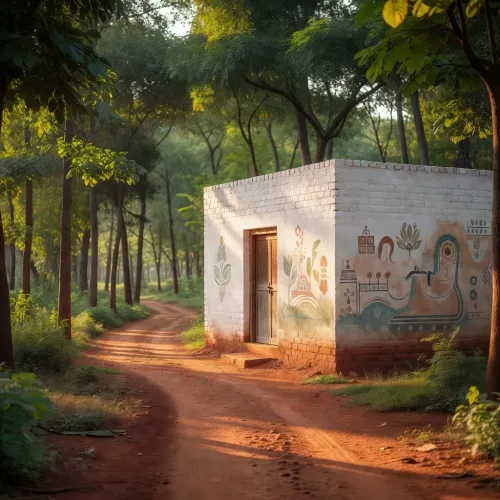
The CMO's post outlines three interlocking pillars: preserving tribal heritage, expanding livelihood avenues, and delivering permanent housing to every tribal family. The emphasis on pucca housing echoes a long-running national and state priority to eliminate kutcha (temporary) dwellings in tribal-dominated districts, where infrastructure gaps have historically been sharpest.
Linking cultural preservation with material development is a deliberate political and policy signal — that identity and economic security are not trade-offs but twin goals. 'Janjatiya utthan se samridh Chhattisgarh ka nirman' — 'Building a prosperous Chhattisgarh through tribal upliftment' — was the closing declaration in the post, framing tribal advancement as the engine of the state's broader prosperity.
Sai Government's Tribal Mandate
Vishnu Deo Sai, who took office in December 2023 after the BJP's victory in Chhattisgarh's assembly elections, is himself from a tribal community — a biographical detail his party has consistently foregrounded. His government has positioned tribal welfare as a cornerstone of its governance identity, and the Janjatiya Gaurav Diwas message is part of a pattern of high-visibility reaffirmations on that front.
The state's implementation of housing and livelihood schemes in the run-up to and following each annual observance will be the real measure of these commitments — and the ones tribal families across Chhattisgarh are watching most closely.
Point of View
Livelihoods — is a smart policy frame that pre-empts critiques of symbolism-without-substance. The real test, as with every annual observance cycle, lies in verifiable scheme coverage data on the ground. With assembly elections still some years away, this government has time to convert pledges into the kind of visible infrastructure that shifts perceptions durably.
NationPress
14 Nov 2026
Frequently Asked Questions
What is Janjatiya Gaurav Diwas and when is it celebrated?
Janjatiya Gaurav Diwas is a national observance held on 15 November every year to honour tribal heritage and leaders. It was instituted by the Government of India in 2021 to mark the birth anniversary of tribal freedom fighter Birsa Munda .
Who is the Chief Minister of Chhattisgarh in 2026?
Vishnu Deo Sai is the Chief Minister of Chhattisgarh. He took office in December 2023 after the BJP won the state assembly elections, and is himself from a tribal community.
What are the tribal welfare commitments made by the Chhattisgarh government?
The Chhattisgarh government under CM Vishnu Deo Sai has pledged to preserve tribal cultural heritage, expand livelihood opportunities for tribal communities, and ensure every tribal family has a permanent pucca house.
Why does Chhattisgarh prioritise tribal welfare in its governance?
Chhattisgarh has one of the highest proportions of Scheduled Tribe residents among Indian states and operates under constitutional Fifth Schedule protections. Tribal communities are central to the state's demographic and political landscape, making their welfare a core governance priority.
What is the significance of Birsa Munda for tribal communities in India?
Birsa Munda was a 19th-century tribal freedom fighter from the Jharkhand-Bihar region who led resistance against colonial land encroachment. His birth anniversary on 15 November is now observed as Janjatiya Gaurav Diwas to honour his legacy and tribal contributions to India's independence movement.