CM Vishnu Deo Sai's Diwali Message: Light for Every Village
Synopsis
Chhattisgarh Chief Minister Vishnu Deo Sai marked Diwali 2026 with an Upanishadic invocation and a four-part development compact — farmer prosperity, women's self-reliance, youth opportunity and bright futures for children — pledging that progress must illuminate every village in the state.
Key Takeaways
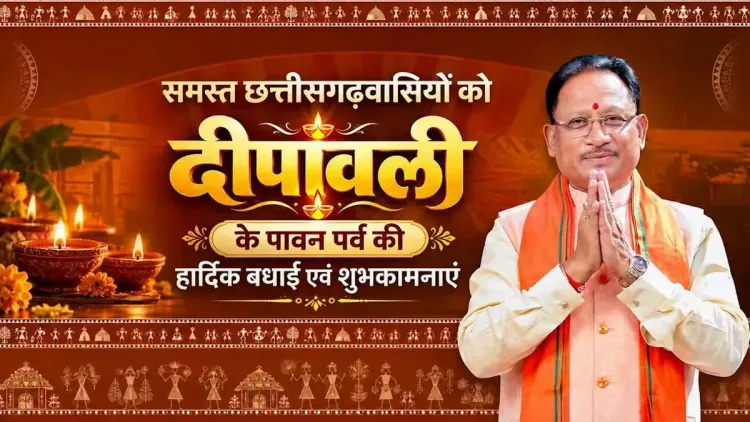
CM Vishnu Deo Sai posted Diwali greetings on 8 November 2026 , opening with the Sanskrit verse Asato maa sadgamaya, tamaso maa jyotirgamaya .
He pledged that 'the light of development and prosperity must reach every village and every home in Chhattisgarh .' Four groups were explicitly named as priorities: farmers ( annadata ), women ( matrishakti ), youth, and children.
The message ended with the tribal salutation Jai Johar!
Jai Chhattisgarh! , a culturally significant sign-off in the state.
Sai, in office since the 2023 Chhattisgarh assembly elections , has consistently anchored his administration around rural welfare and women's economic independence.
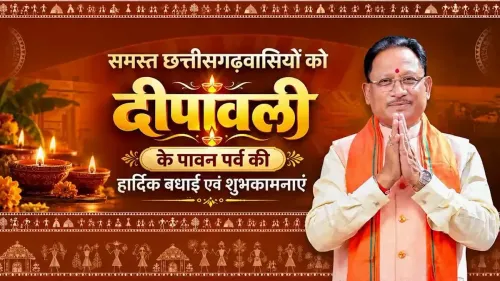
Light over darkness — that ancient Upanishadic invocation opened Chhattisgarh Chief Minister Vishnu Deo Sai's Diwali message on Sunday, 8 November 2026, as he extended festival greetings to every resident of the state and paired them with a pointed development pledge: that the glow of progress must reach every village and every home in Chhattisgarh.
From the Upanishads to governance: what the CM said
Sai opened with the Sanskrit verse 'Asato maa sadgamaya, tamaso maa jyotirgamaya' — 'Lead me from the unreal to the real, from darkness to light' — before offering what amounted to a four-pronged social compact. Farmers should prosper, he said; women should become self-reliant; youth should find opportunity; and every child's future should be bright. He closed with the distinctly Chhattisgarhi salutation 'Jai Johar! Jai Chhattisgarh!' — a nod to the state's tribal heritage — alongside invocations of Goddess Lakshmi and Lord Ganesha.
Why BJP-ruled states lean on Diwali for development messaging
Chhattisgarh is a state where agriculture anchors livelihoods and a significant tribal population makes rural connectivity a perennial political priority. Chief Ministers across India routinely use Diwali greetings to restate governance themes — but in Chhattisgarh the symbolism of 'light reaching every village' carries concrete weight in a state still expanding rural infrastructure. Vishnu Deo Sai, who took office after the 2023 state assembly elections, has aligned his administration around themes of farmer welfare, women's economic independence and youth employment — the same four pillars he restated in this message. The festival provides a culturally resonant moment to remind constituents that those promises remain live.
The four constituencies Sai named
Farmers (annadata — literally 'givers of food'), women (matrishakti), youth, and children are the four groups Sai explicitly addressed. Each maps to a known pressure point in Chhattisgarh's development picture: agrarian distress in paddy-growing districts, low female workforce participation in rural areas, graduate unemployment, and child nutrition outcomes. By invoking them on a high-visibility festival day, Sai signals that these remain his administration's measuring sticks — the ones to watch when state budget allocations and scheme implementation reports land in the months ahead.
Diwali lasts a day; the pledges made on it are what linger. Chhattisgarh's villages will mark whether the lamp of development actually reaches their doorstep.
Point of View
But their content reveals real governance priorities. Sai's decision to frame his message around four specific constituencies — farmers, women, youth and children — rather than a generic prosperity wish, reinforces the BJP's post-2023 narrative in Chhattisgarh: that the party won by promising tangible rural uplift, not just stability. The Upanishadic opening and the tribal sign-off together signal an attempt to straddle cultural authority across both Hindu and indigenous Chhattisgarhi identities — a balancing act central to the party's electoral coalition in the state. The real test will come in budget sessions and scheme delivery reports, where these festival pledges either find fiscal expression or quietly fade.
NationPress
8 Nov 2026
Frequently Asked Questions
What did Chhattisgarh CM Vishnu Deo Sai say on Diwali 2026?
CM Vishnu Deo Sai offered Diwali greetings on 8 November 2026, opening with the Upanishadic verse 'Asato maa sadgamaya, tamaso maa jyotirgamaya' and pledging that the light of development would reach every village and home in Chhattisgarh, with specific focus on farmers, women, youth and children.
What does 'Jai Johar' mean and why did Sai use it?
'Jai Johar' is a traditional greeting used among tribal communities in Chhattisgarh and Jharkhand, expressing respect and solidarity. CM Sai used it to acknowledge the state's large tribal population and its cultural heritage.
When did Vishnu Deo Sai become Chief Minister of Chhattisgarh?
Vishnu Deo Sai became Chief Minister of Chhattisgarh after the BJP won the 2023 state assembly elections.
What are CM Sai's key governance priorities for Chhattisgarh?
Based on his public statements including this Diwali message, Sai has consistently prioritised farmer welfare, women's economic self-reliance, youth employment and children's development as the pillars of his administration.
What is the Sanskrit verse CM Sai quoted in his Diwali message?
He quoted 'Asato maa sadgamaya, tamaso maa jyotirgamaya' from the Brihadaranyaka Upanishad, which translates as 'Lead me from the unreal to the real, from darkness to light' — a verse traditionally associated with the spirit of Diwali.