HP CM Office Marks Children's Day With Sukh Aashray Yojana Push
Synopsis
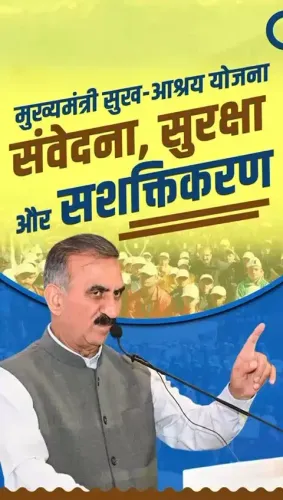
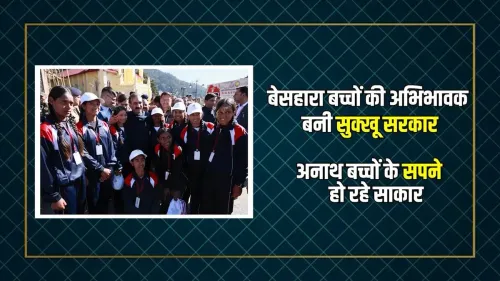
The Chief Minister's Office of Himachal Pradesh marked Children's Day 2026 by quoting Nehru and spotlighting the Mukhya Mantri Sukh Aashray Yojana, a 2023 scheme that grants orphaned children formal 'Children of the State' status and makes the government their legal guardian.
Key Takeaways
The Chief Minister's Office of Himachal Pradesh posted on 14 November 2026 — Children's Day — to highlight the Mukhya Mantri Sukh Aashray Yojana .
The post quoted Jawaharlal Nehru : 'Children are the delicate buds of a garden, who must be nurtured with love and tenderness.' The scheme, launched in 2023 , grants orphan children the formal legal status of 'Children of the State' in Himachal Pradesh.
Under the scheme, the state government assumes direct responsibility for the care, upbringing, education, and health of orphaned children.
The initiative aligns with the Juvenile Justice (Care and Protection of Children) Act and reflects a broader national shift toward direct state guardianship for vulnerable children.
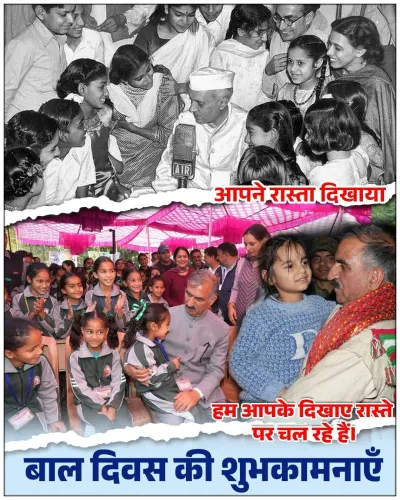
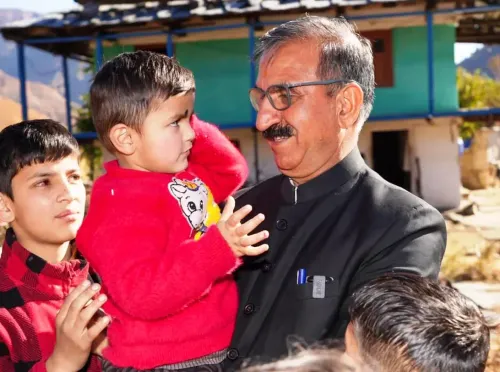
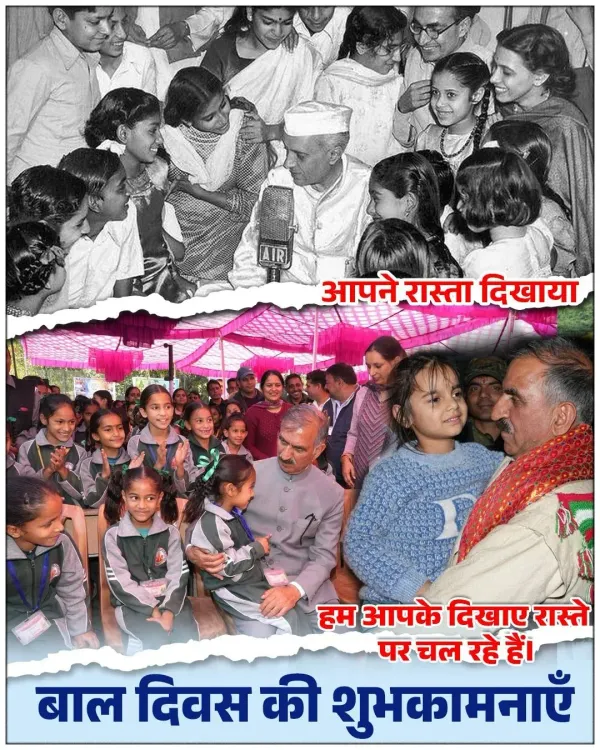
On Children's Day, 14 November 2026, the Chief Minister's Office of Himachal Pradesh invoked one of independent India's most enduring images — Jawaharlal Nehru bending down to meet a child at eye level — to spotlight a scheme that goes far beyond symbolism. The post quotes Nehru: 'Bachche baag ki naazuk kali hain, jinhe pyar aur komalta se sanwaarna chahiye' ('Children are the delicate buds of a garden, who must be nurtured with love and tenderness'), then pivots immediately to policy: the Mukhya Mantri Sukh Aashray Yojana and its landmark grant of 'Children of the State' status to orphans across Himachal Pradesh.
What 'Children of the State' actually means
The phrase is not decorative. Under the Mukhya Mantri Sukh Aashray Yojana, launched in 2023, the Himachal Pradesh government formally assumes legal and moral guardianship of children who have lost both parents — stepping into a role that the state had previously left largely to institutions or distant relatives. The shift aligns with the framework of the Juvenile Justice (Care and Protection of Children) Act, which already recognises children in need of care and protection, but Himachal's scheme adds a layer of direct state ownership over their upbringing, education, and health.
That is a meaningful distinction. Institutional care and ad-hoc financial transfers exist across many states. A formal legal status, by contrast, creates accountability — a child can point to the state as their guardian, not just their benefactor.
Nehru's legacy as a policy frame on Children's Day
November 14 — Nehru's birth anniversary — has been observed as Children's Day in India since 1964, the year of his death. Successive governments, regardless of political stripe, have used the occasion to announce or amplify child-welfare measures. What the Himachal Pradesh CMO's post does is thread Nehru's own words directly into the rationale for a living scheme — a rhetorical move that roots a 2023 policy in a decades-old constitutional promise. It is a reminder that child welfare in India has always carried both an emotional and a foundational-law dimension.
A broader state-level shift in child guardianship
Himachal Pradesh is not alone. Multiple Indian states have expanded guardianship and direct financial support for orphans in recent years, reflecting a national move toward closing the gap between the Juvenile Justice Act's intent and its on-the-ground reality. What distinguishes schemes like Sukh Aashray is the combination: legal status change, plus care, plus education and health coverage — a bundled responsibility rather than a single cash transfer.
For a small hill state with limited fiscal headroom, the political signal is as important as the rupee figure: the government is saying that no child in Himachal Pradesh should navigate the world without a recognised guardian.
On the day India pauses to remember Nehru's fondness for children, Himachal Pradesh is making the case that the most fitting tribute is not a speech — it is a scheme with teeth.
Point of View
A distinction that could eventually be tested in courts or audited in budget sessions. For a Congress-led state government, invoking Nehru on Children's Day also reinforces a party-identity signal without abandoning the policy's genuine merit. The scheme's real test will come in implementation data — beneficiary numbers, per-child expenditure, and educational outcomes — none of which the post discloses.
NationPress
14 Nov 2026
Frequently Asked Questions
What is the Mukhya Mantri Sukh Aashray Yojana in Himachal Pradesh?
The Mukhya Mantri Sukh Aashray Yojana is a Himachal Pradesh government scheme launched in 2023 that grants orphaned children the formal legal status of 'Children of the State,' making the state their guardian and responsible for their care, education, and health.
What does 'Children of the State' status mean for orphans in HP?
'Children of the State' is a formal legal designation under the Sukh Aashray Yojana that makes the Himachal Pradesh government the official guardian of orphaned children, going beyond cash transfers to assume comprehensive responsibility for their upbringing.
Why is Children's Day celebrated on November 14 in India?
Children's Day is observed on November 14 in India to mark the birth anniversary of the country's first Prime Minister, Jawaharlal Nehru, who was known for his affection for children and his emphasis on their welfare and education.
When was the Sukh Aashray Yojana launched?
The Mukhya Mantri Sukh Aashray Yojana was announced and launched by the Himachal Pradesh government in 2023.
How does the Sukh Aashray Yojana relate to the Juvenile Justice Act?
The scheme aligns with the Juvenile Justice (Care and Protection of Children) Act, which provides a national framework for protecting children in need of care, but Himachal Pradesh's scheme adds a direct legal guardianship layer where the state formally owns responsibility for orphaned children.