HP CM Sukhu on 'Children of the State' welfare drive
Synopsis
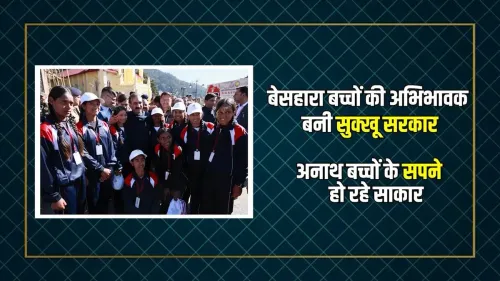
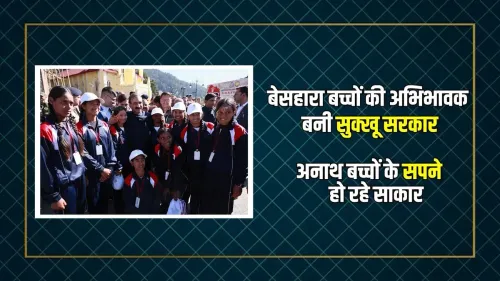
Chief Minister Sukhvinder Singh Sukhu of Himachal Pradesh has announced that children living informally with relatives have been granted 'Children of the State' status, with the state providing education, accommodation, livelihood support, and travel opportunities to ensure no child feels like a burden.
Key Takeaways
The Chief Minister's Office of Himachal Pradesh shared remarks by CM Sukhu on 9 July 2026 about a child welfare initiative.
Children living with uncles or other relatives without formal support have been designated 'Children of the State' .
The state has committed to providing accommodation, education, livelihood assistance, and travel opportunities to these children.
The initiative aims to ensure no child feels like a burden while living in informal kinship arrangements.
The move aligns with the national Juvenile Justice (Care and Protection of Children) Act, 2015 framework.
Implementation details, including beneficiary numbers and budget, are expected to emerge in upcoming state budget sessions.
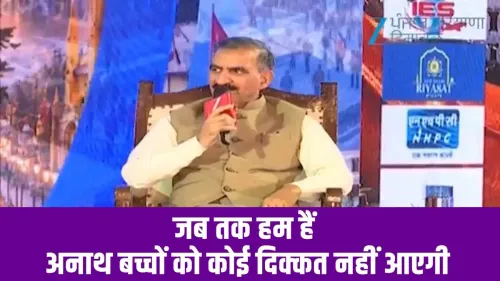
The Chief Minister's Office of Himachal Pradesh shared remarks by Chief Minister Sukhvinder Singh Sukhu on 9 July 2026, highlighting a state initiative that confers the status of 'Children of the State' on vulnerable children who were previously living with uncles or other relatives without formal support.
In the post, CM Sukhu stated — translated from Hindi — that 'many children were spending their lives living with their uncles or other relatives. So that no child feels like a burden, we gave them the status of Children of the State.' He added that the government has made 'proper arrangements for their accommodation, education, livelihood, and other necessary facilities,' and has also provided them with opportunities for travel and excursions.
Context
The remarks address a specific category of children — those who are not technically orphaned but lack stable parental care and are informally placed with extended family members. Such children often fall outside the ambit of institutional child-protection systems, making them vulnerable to social and economic marginalisation. CM Sukhu framed the 'Children of the State' designation as a corrective to this gap.
The initiative reflects a broader concern that children living informally with relatives may internalise a sense of being a burden — a psychological dimension the Chief Minister explicitly addressed in his remarks, using the phrase 'koi bhi bachcha khud ko bojh na samjhe' (so that no child considers himself a burden).
Policy Backdrop
India's Juvenile Justice (Care and Protection of Children) Act, 2015 provides the national framework under which states are mandated to identify and support children in need of care and protection. The Act envisages a range of support mechanisms beyond institutional care, including kinship placements and foster arrangements.
Himachal Pradesh's 'Children of the State' model aligns with a wider pattern seen across Indian states of expanding state guardianship to children living with extended family — particularly in Himalayan and hill states where economic migration and family disruptions are common. The approach is designed to prevent unnecessary institutionalisation while ensuring children receive entitlements for education, nutrition, and overall welfare.
Stakeholders and Impact
The primary beneficiaries are children who were living in informal arrangements with relatives, often with no formal recognition of their status or entitlement to state support. By conferring a formal designation, the state creates a legal and administrative basis for channelling benefits — including education support, accommodation, and livelihood assistance — directly to these children.
Extended family members who were informally bearing the cost of raising these children may also see relief, as the state assumes a more active role in providing for the children's needs. Civil society organisations working in child welfare in Himachal Pradesh are key stakeholders in monitoring implementation.
What's Next
The specifics of the scheme — including the number of children covered, the budget allocation, and the administrative mechanism — are expected to be detailed in forthcoming state budget sessions or child protection scheme reviews. Observers of Himachal Pradesh welfare policy will watch for formal government orders and implementation reports that translate this stated commitment into measurable outcomes.
As the state continues to develop its child welfare architecture, the 'Children of the State' initiative could serve as a model for other hill states grappling with similar challenges of informal kinship care and the absence of formal safety nets for non-orphaned vulnerable children.
Point of View
Positioning the state as a formal guardian rather than a passive bystander to informal kinship care. This matters in a hill state like Himachal Pradesh where economic migration frequently leaves children in grey-zone care arrangements that existing welfare systems do not adequately address. The initiative also carries an implicit social message, targeting the stigma that children in such situations often internalise. Whether the scheme delivers on its promise will depend on the administrative machinery and budget backing that follow these stated intentions.
NationPress
10 Oct 2026
Frequently Asked Questions
What is the 'Children of the State' scheme in Himachal Pradesh?
The 'Children of the State' scheme in Himachal Pradesh grants formal state guardianship status to children who were living with uncles or other relatives without official support, entitling them to accommodation, education, livelihood assistance, and travel opportunities provided by the state government.
Who announced the Children of the State initiative in Himachal Pradesh?
Chief Minister Sukhvinder Singh Sukhu announced the initiative, with his office sharing his remarks on 9 July 2026 via the official CMOFFICEHP account on X.
Which law governs child welfare schemes like this in India?
The Juvenile Justice (Care and Protection of Children) Act, 2015 is the primary national legislation that provides the framework for state responsibility towards children in need of care and protection, under which initiatives like Himachal Pradesh's scheme operate.
How does the Himachal Pradesh scheme help children living with relatives?
By granting them 'Children of the State' status, the government creates a formal administrative basis to provide these children with education support, accommodation, livelihood facilities, and excursion opportunities, removing the informal burden from extended family members.
Which other Indian states have similar child welfare programmes?
Several Indian states, particularly in the Himalayan and hill regions, have expanded kinship care and state guardianship mechanisms under the Juvenile Justice Act framework to support children living with extended family due to economic migration or family disruptions.