HP CM Office: 6,000 Destitute Kids Get 'Children of the State' Status
Synopsis
The Himachal Pradesh government has conferred 'Children of the State' status on nearly 6,000 destitute children, committing state institutions to bear the full cost of their coaching, study materials, and educational needs — a significant child welfare intervention anchored in the Juvenile Justice Act framework.
Key Takeaways
The Chief Minister's Office of Himachal Pradesh announced on 7 June 2026 that approximately 6,000 destitute children have been granted 'Children of the State' status.
Designated institutions will bear the full cost of coaching, study materials, and other academic requirements for these children.
The state government has formally assumed responsibility for the education and future of these children under the scheme.
The initiative is aligned with the Juvenile Justice (Care and Protection of Children) Act, 2015 , which provides the legal framework for state care of vulnerable children.
The scheme reflects a broader national trend of Indian states operationalising formal guardianship programmes for orphaned and destitute children.
Implementation details — including institutional identification, funding mechanisms, and monitoring — are expected to be the next focus area for the programme.
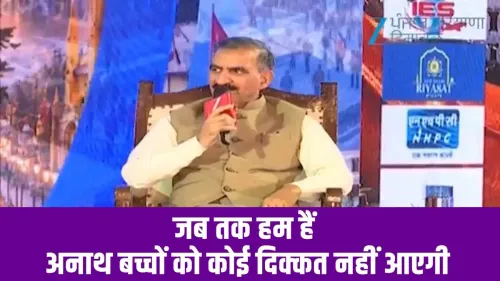
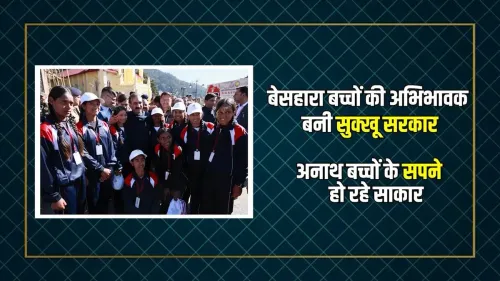
The Chief Minister's Office of Himachal Pradesh announced on Sunday, 7 June 2026 that the state government has conferred 'Children of the State' status on approximately 6,000 destitute children, assuming full responsibility for their education and future. Under the initiative, designated institutions will bear the complete cost of coaching, study materials, and other academic needs for these children.
The official post stated: 'coaching, adhyayan samagri tatha anya shaikshnik aavashyaktaon ka pura kharch sansthan vahann karega' — meaning 'the institution will bear the full cost of coaching, study materials, and other educational requirements.' It further noted that the government has taken on the responsibility of the education and future of nearly 6,000 destitute children by granting them the status of 'Children of the State.'
Context
The 'Children of the State' designation is a formal status under which the Government of Himachal Pradesh assumes a guardian-like role for children who lack parental or family support. By conferring this status, the state commits to funding their educational journey — from coaching classes to study materials — through identified institutions. The announcement underscores the government's intent to treat destitute children not as beneficiaries of charity but as wards of the state with enforceable entitlements.Policy Backdrop
The initiative draws from the framework established by the Juvenile Justice (Care and Protection of Children) Act, 2015, which created the legal basis for states to assume care and protection of children in need across India. Several state governments have operationalised similar schemes granting official status and comprehensive support to orphaned or destitute children, covering coaching fees, study materials, and allied costs through designated institutions. Himachal Pradesh's effort reflects a broader national pattern of states stepping in to fill the gap left by absent guardians, ensuring that economic vulnerability does not translate into educational exclusion.Stakeholders and Impact
The primary beneficiaries are the approximately 6,000 destitute children now recognised as 'Children of the State' across Himachal Pradesh. Educational institutions designated under the scheme will receive funding to cover coaching, study materials, and other academic expenses, reducing the financial burden on individual children and their caregivers. The move is also significant for child welfare bodies, district administration units, and non-governmental organisations working with vulnerable children in the state, as it provides a formal institutional channel for support delivery.What's Next
Attention will now turn to the mechanics of implementation — specifically, how institutions will be identified, funded, and monitored to ensure that the expense-coverage commitment reaches each of the 6,000 children. Observers will also watch whether the scheme receives a dedicated budget line in forthcoming Himachal Pradesh assembly proceedings or the next state budget, which would signal the government's long-term fiscal commitment to the programme. A robust institutional framework will be essential to translate the policy declaration into sustained, measurable educational outcomes for the state's most vulnerable children.Point of View
000 destitute children as 'Children of the State' is more than a welfare announcement — it is a shift in the state's legal and moral posture toward its most vulnerable citizens. By routing support through institutions rather than individual cash transfers, the model attempts to create structural accountability rather than discretionary charity. This approach mirrors successful state-level experiments elsewhere in India, though the real test will lie in budgetary follow-through and the robustness of institutional monitoring. If implemented with fidelity, the scheme could become a replicable template for other hill states grappling with similar child vulnerability challenges.
NationPress
22 Oct 2026
Frequently Asked Questions
What is the 'Children of the State' scheme in Himachal Pradesh?
'Children of the State' is a designation granted by the Himachal Pradesh government to destitute children, under which the state assumes guardianship responsibilities and institutions are mandated to cover all educational costs including coaching and study materials.
How many children are covered under Himachal Pradesh's Children of the State scheme?
The Himachal Pradesh government has granted 'Children of the State' status to approximately 6,000 destitute children , according to the Chief Minister's Office announcement on 7 June 2026.
What expenses does the Himachal Pradesh government cover for Children of the State?
Under the scheme, designated institutions will bear the full cost of coaching, study materials, and other educational requirements for children who have been granted 'Children of the State' status.
What is the legal basis for India's state guardianship schemes for destitute children?
The Juvenile Justice (Care and Protection of Children) Act, 2015 provides the national legal framework enabling state governments to assume care and protection responsibilities for children in need, which schemes like Himachal Pradesh's 'Children of the State' draw upon.
Which Indian states have similar schemes for orphaned or destitute children?
Several Indian states have introduced programmes granting official status and comprehensive state support — including coaching fees and study materials — to orphaned or destitute children, with Himachal Pradesh's initiative being among the recent examples of this broader national trend.