CM Sukhu Reaffirms 'Children of the State' Pledge for HP Orphans
Synopsis
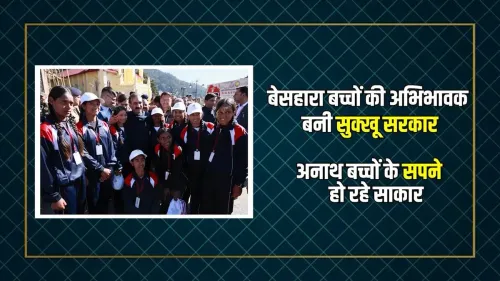
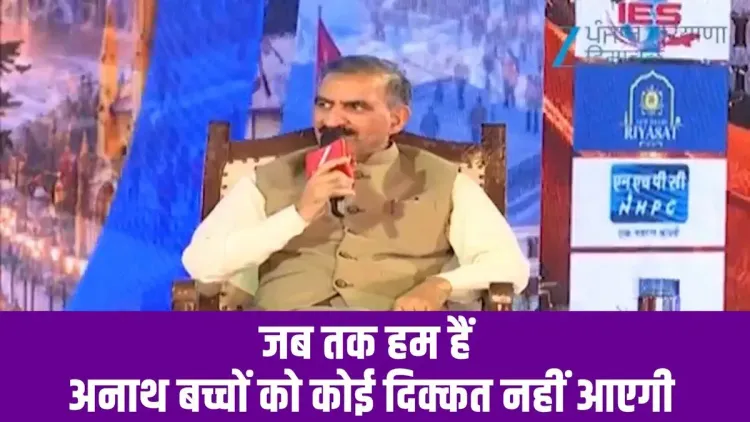
HP Chief Minister Sukhvinder Singh Sukhu has reaffirmed his government's 'Children of the State' initiative, recalling the inadequate conditions orphaned children faced when he visited them after his December 2022 oath and outlining state-arranged shelter, education, and emotional support provided since.
Key Takeaways
CM Sukhvinder Singh Sukhu publicly reaffirmed the 'Children of the State' scheme for orphans in Himachal Pradesh on 9 July 2026 .
He visited orphaned children immediately after his December 2022 swearing-in at Ridge Maidan, Shimla , and found them without adequate shelter or facilities.
Many children were living with uncles or other relatives with no formal state support before the scheme was introduced.
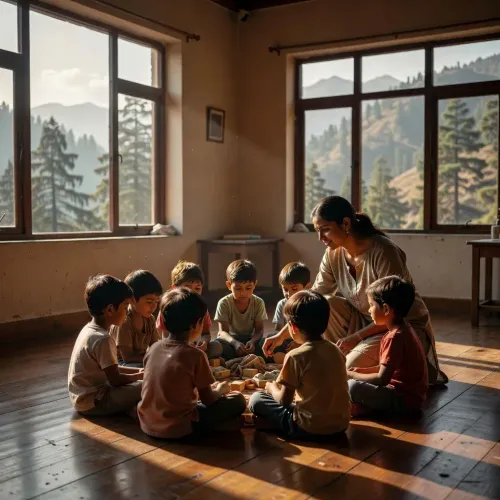
The 'Children of the State' status provides enrolled children with shelter, education, daily living support, and travel opportunities.
The initiative is framed as an emotional as well as material commitment — the state acting as a surrogate parent.
The scheme builds on the national Juvenile Justice (Care and Protection of Children) Act, 2015 framework.
Himachal Pradesh Chief Minister Sukhvinder Singh Sukhu on Thursday, 9 July 2026, reaffirmed his government's commitment to orphaned children across the state, describing the emotional and material conditions he witnessed shortly after taking oath and outlining the steps his administration has taken to provide them state-backed care, education, and shelter under the 'Children of the State' framework.
Context
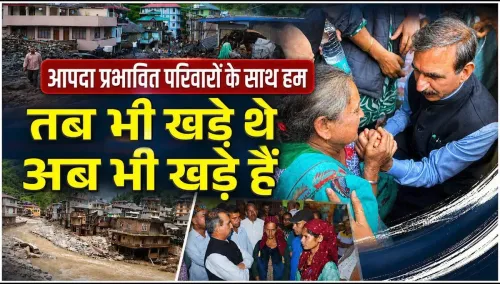
In his post, CM Sukhu recalled visiting orphaned children immediately after his swearing-in ceremony at Ridge Maidan, Shimla in December 2022. He described the conditions he found: 'न उनके रहने की उचित व्यवस्था थी और न ही अन्य जरूरी सुविधाएँ' — 'there was neither adequate shelter nor other essential facilities.' Many children, he noted, were living with uncles or other relatives, with no structured support.
Sukhu wrote that no child should feel like a burden — 'कोई भी बच्चा खुद को बोझ न समझे' — and that this conviction drove the government's decision to confer on them the status of 'Children of the State,' a designation intended to make the state itself a surrogate guardian.
Policy Backdrop
The 'Children of the State' initiative is rooted in the broader national framework established by the Juvenile Justice (Care and Protection of Children) Act, 2015, which created legal pathways for both institutional and community-based care of orphaned and abandoned children across Indian states. Himachal Pradesh's approach under the Sukhu-led Congress government builds on that foundation by combining residential support, educational provision, and travel opportunities into a single state-level programme.
Such guardianship-style schemes have periodically been adopted by state governments seeking to reduce the documented gap between institutional capacity and the actual number of children in need. The Himachal model reflects a pattern seen in several states where governments move away from pure institutional placements toward integrated community and state-supported arrangements.
Stakeholders and Impact
The primary beneficiaries are orphaned children in Himachal Pradesh who previously had no formal state support and depended entirely on extended family members. Under the scheme, the state social welfare machinery is responsible for arranging accommodation, daily living expenses, schooling, and recreational travel for enrolled children.
CM Sukhu acknowledged the limits of state action even as he underlined its purpose: 'We cannot bring their parents back, but we can certainly give them the affection, belonging, and security of parents' — 'उन्हें माता-पिता जैसा स्नेह, अपनापन और सुरक्षा जरूर दे सकते हैं।' The statement signals that the programme is framed not merely as welfare delivery but as an emotional compact between the state and its most vulnerable children.
What's Next
Scrutiny of the scheme is likely to intensify in the next Himachal Pradesh Legislative Assembly session, where opposition members and civil society groups may seek data on beneficiary numbers, facility standards, and budget allocations. Annual reviews of educational and residential outcomes for enrolled children will be a key indicator of whether the 'Children of the State' status translates into measurable improvements in life trajectories.
With the Congress government in Shimla continuing to highlight welfare initiatives, the scheme is expected to remain a political and policy reference point as the state approaches its next budget cycle.
Point of View
Which is a communication strategy increasingly common among chief ministers seeking to differentiate their administrations on social spending. By linking the scheme directly to the moment of his oath-taking, he frames it as a founding commitment rather than a routine programme, lending it symbolic durability. The 'Children of the State' framing is also politically significant: it positions the Congress government in Himachal as a moral guardian at a time when child welfare remains an underfunded priority in many states. Whether the initiative's implementation matches its rhetoric will depend on budget allocations and independent outcome data — both of which remain to be publicly established.
NationPress
10 Oct 2026
Frequently Asked Questions
What is the 'Children of the State' scheme in Himachal Pradesh?
'Children of the State' is a status granted by the Himachal Pradesh government to orphaned children, under which the state arranges their shelter, education, daily living expenses, and travel opportunities, effectively acting as a surrogate guardian.
When did CM Sukhu first meet orphaned children after becoming Chief Minister?
CM Sukhvinder Singh Sukhu visited orphaned children shortly after his swearing-in ceremony at Ridge Maidan, Shimla in December 2022 , where he found them without adequate accommodation or facilities.
What benefits do children get under Himachal Pradesh's 'Children of the State' scheme?
Enrolled children receive state-arranged accommodation, educational support, daily living provisions, and opportunities for travel, with the government committing to provide them affection and security akin to parental care.
Which law underpins child welfare schemes like the one in Himachal Pradesh?
The Juvenile Justice (Care and Protection of Children) Act, 2015 provides the national legal framework for both institutional and community-based care of orphaned children, on which state-level schemes like Himachal's are built.
Why did Sukhu say no child should feel like a burden?
CM Sukhu noted that many orphaned children were living with relatives and had no formal support, risking feelings of dependency and marginalisation. The 'Children of the State' designation was specifically designed so that no child feels like a burden on family members.