Lebanon's Aoun proposes rebuilding 3 damaged areas to bring back displaced residents
Synopsis
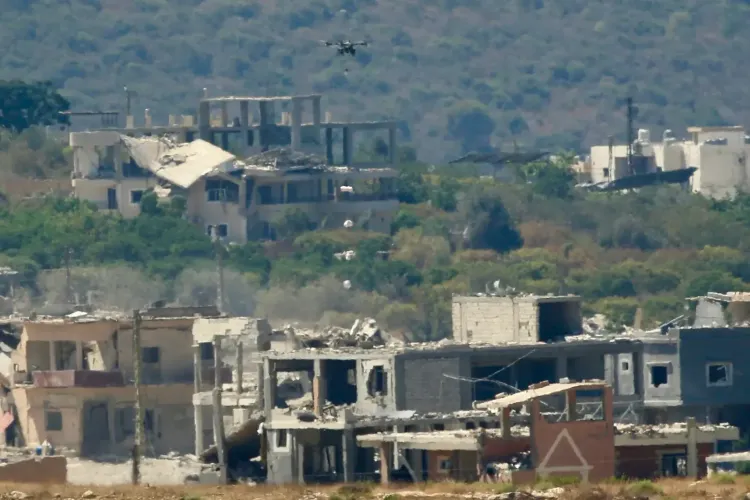
Lebanese President Joseph Aoun has put a concrete reconstruction proposal on the table — three partially damaged areas, relatively low cost, potentially high impact on residents returning home. With UNIFIL's mandate expiring at end-2026 and no successor mechanism yet agreed, Beirut is racing to show it can fill the security and governance vacuum in the south before international attention moves on.
Key Takeaways
Lebanese President Joseph Aoun proposed rebuilding three partially damaged areas on 14 November to encourage displaced residents to return.
Aoun described the financial cost of rehabilitation as 'relatively limited' while projecting a significant impact on public confidence in state institutions.
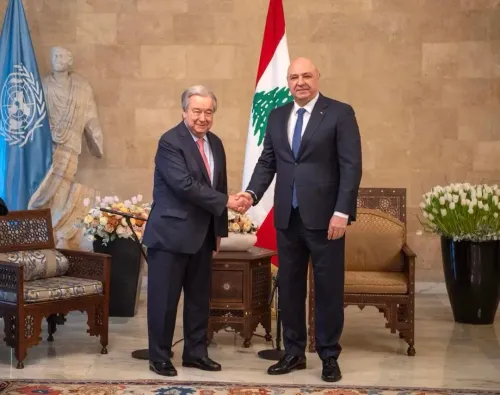
The proposal was presented to UN Deputy Secretary-General Amina Mohammed during a meeting in Beirut .
Lebanon's National Council for Scientific Research provided detailed destruction maps of southern Lebanon villages, roads, and infrastructure to guide reconstruction.
UNIFIL 's mandate runs until 31 December 2026 ; Aoun expressed openness to an alternative UN mechanism if the mission cannot continue beyond 2027 .
UN Deputy Secretary-General Mohammed stressed that no security vacuum should be allowed in southern Lebanon.
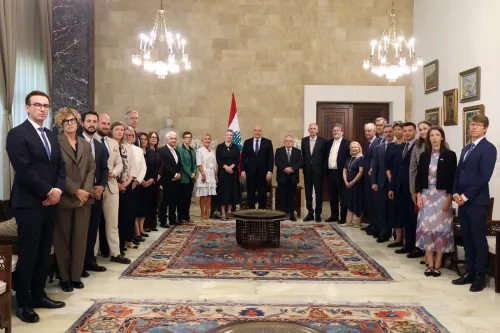
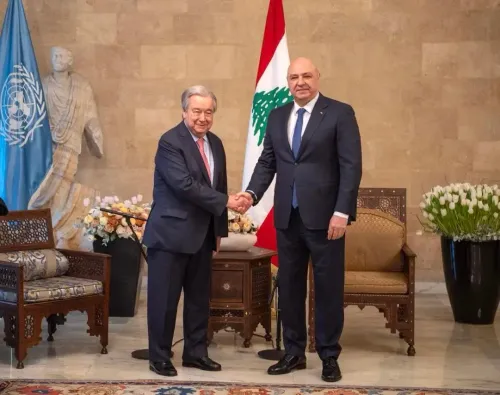
Lebanese President Joseph Aoun on Saturday, 14 November raised the prospect of rebuilding three partially damaged areas as a means of encouraging displaced residents to return and restoring public trust in state institutions, according to a statement from the Lebanese Presidency. The proposal was put forward during a meeting with UN Deputy Secretary-General Amina Mohammed in Beirut.
What Aoun Proposed
'The financial cost of rehabilitating these areas remains relatively limited, while the impact of this step could be significant in encouraging residents to return and strengthening their confidence in the state,' Aoun said at the meeting.
He framed the reconstruction initiative as one element of a broader strategy aimed at placing weapons exclusively under state authority — a long-standing challenge in Lebanon's post-conflict political landscape. Aoun argued that a durable resolution would require reinforcing public confidence in state institutions, guaranteeing security, delivering public services, and improving living conditions, rather than depending solely on military measures.
Scientific Mapping of Southern Lebanon's Destruction
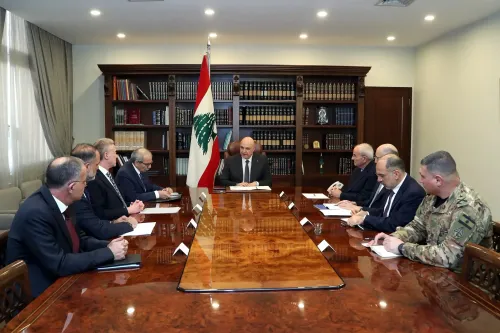
On Thursday, ahead of the meeting with Mohammed, Aoun had met with a delegation from Lebanon's National Council for Scientific Research. The council presented detailed maps and data documenting destruction to villages, roads, and infrastructure in southern Lebanon, intended to serve as a scientific reference framework for organising the reconstruction phase.
Notably, the mapping exercise signals an effort to move the rebuilding process from ad hoc relief to structured, evidence-based planning — a shift observers say is critical if international donors are to commit funds.
The Future of UNIFIL in Southern Lebanon
Aoun also addressed the future of the United Nations Interim Force in Lebanon (UNIFIL), stating that Lebanon's priority remained renewing its mandate and preserving its presence in the south. Should the mission be unable to continue in its current form beyond 2027, he indicated Beirut's openness to establishing an alternative UN mechanism to prevent a security vacuum from emerging.
Mohammed echoed this concern, stressing that no security vacuum should be permitted in southern Lebanon and underscoring the need to support residents' return, reconstruction efforts, and the strengthening of state institutions.
UNIFIL: Background and Mandate Timeline
UNIFIL was first established in 1978 to confirm Israeli withdrawal from Lebanon. Following the 2006 war between Hezbollah and Israel, its mandate was significantly expanded under UN Security Council Resolution 1701 to monitor the cessation of hostilities and accompany the deployment of Lebanese armed forces in the south as Israeli troops withdrew.
In August 2025, the UN Security Council extended UNIFIL's mandate for a final time until 31 December 2026, with a drawdown and full withdrawal to follow within one year. The approaching deadline lends urgency to Aoun's call for an alternative mechanism, as the window to negotiate any successor arrangement is narrowing.
What Comes Next
The reconstruction proposal and the UNIFIL succession question are now intertwined: without a credible security framework in southern Lebanon, international financing for rebuilding is likely to remain constrained. How Beirut navigates both tracks in the months ahead will be closely watched by regional governments and multilateral institutions alike.
Point of View
He is attempting to recast Lebanon's chronic governance deficit as solvable through institutions rather than force — a narrative that will need international buy-in to hold. The UNIFIL deadline at end-2026 is the harder constraint: without a credible security successor, donor money for reconstruction is unlikely to flow at scale. Mainstream coverage has focused on the humanitarian angle, but the real story is whether Beirut can close both tracks — security transition and reconstruction financing — before the mandate clock runs out.
NationPress
14 Nov 2026
Frequently Asked Questions
What reconstruction plan has Lebanese President Aoun proposed?
President Joseph Aoun has proposed rebuilding three areas partially damaged by attacks in Lebanon, arguing the financial cost is relatively limited while the impact on encouraging displaced residents to return could be significant. He presented the plan during a meeting with UN Deputy Secretary-General Amina Mohammed on 14 November.
Why does Aoun link reconstruction to state authority over weapons?
Aoun has presented the rebuilding initiative as part of a comprehensive strategy to place weapons exclusively under state control. He argued that lasting stability requires strengthening public confidence in state institutions, ensuring security, and improving living conditions — not military means alone.
What is UNIFIL and when does its current mandate expire?
UNIFIL, the United Nations Interim Force in Lebanon, was established in 1978 and its mandate was expanded after the 2006 Hezbollah-Israel war under Resolution 1701. The UN Security Council extended its mandate for a final time in August 2025, running until 31 December 2026, after which a drawdown and withdrawal are to follow within one year.
What alternative has Lebanon proposed if UNIFIL cannot continue after 2027?
President Aoun indicated Beirut's openness to establishing an alternative UN mechanism to prevent a security vacuum in southern Lebanon if UNIFIL cannot continue in its current form beyond 2027. No specific details of such a mechanism have been publicly outlined yet.
How is Lebanon documenting destruction in the south to plan reconstruction?
Lebanon's National Council for Scientific Research presented Aoun with detailed maps and data documenting destruction to villages, roads, and infrastructure in southern Lebanon. The data is intended to serve as a scientific reference for organising and prioritising the reconstruction phase.