Lebanese President Aoun calls for alternative force if UNIFIL withdraws
Synopsis
Lebanese President Joseph Aoun has put a contingency on the table: if UNIFIL cannot be renewed at the UN Security Council, an alternative international force must step in to help the Lebanese army hold the south. With 86 MPs simultaneously lobbying for UNIFIL's continuation, Beirut is hedging — signalling both its preference for the status quo and its readiness to pivot if global politics force a change.
Key Takeaways
Lebanese President Joseph Aoun called on 25 July 2025 for an alternative international force if UNIFIL cannot remain in southern Lebanon.
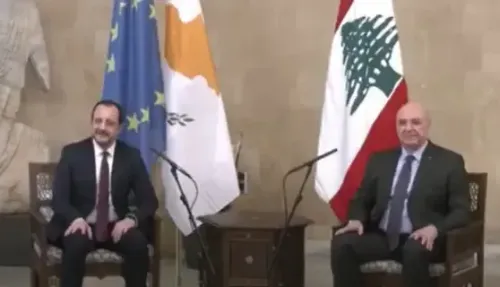
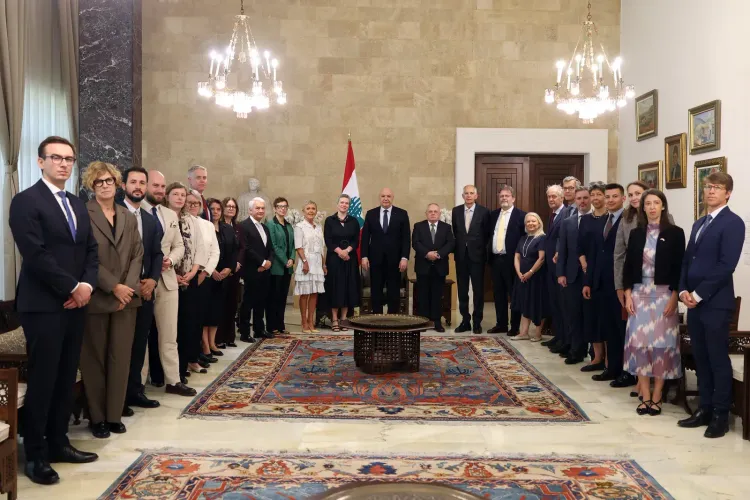
Aoun made the statement during a meeting with EU Ambassador Sandra De Waele in Beirut .
The proposed force would help the Lebanese army clear unexploded ordnance and implement the US-brokered Lebanon-Israel framework agreement signed in June 2025 .
A delegation of Lebanese lawmakers delivered a letter signed by 86 parliament members to UN Special Coordinator Jean Arnault , urging UNIFIL's renewal.
Lawmakers cited UN Security Council Resolution 1701 and ongoing border violations as reasons to maintain UNIFIL's full operational mandate.
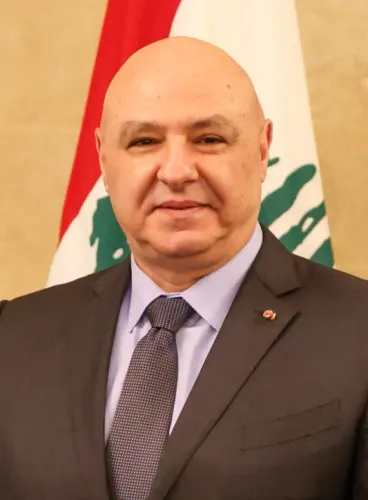
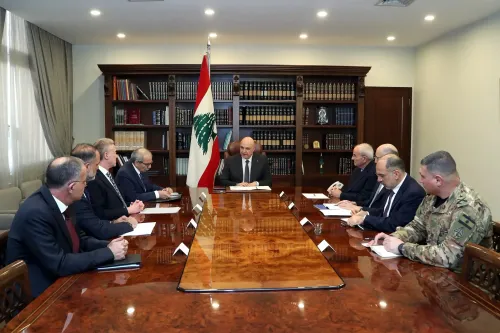
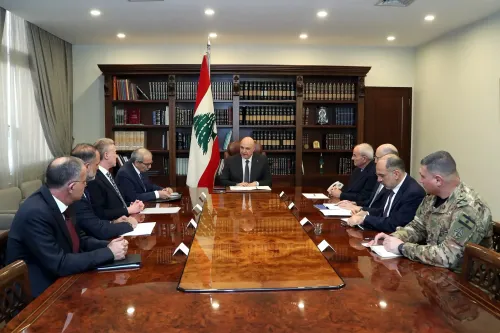
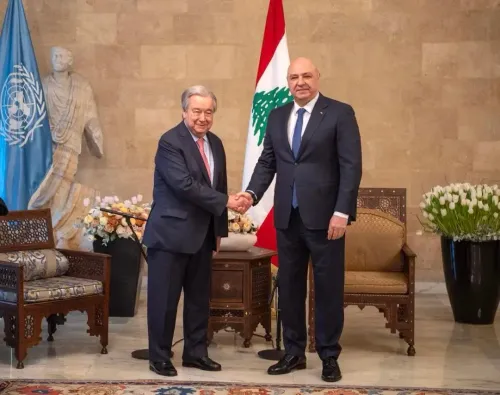
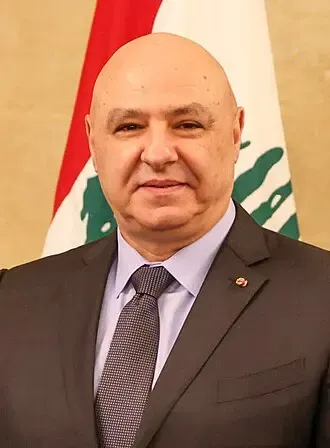
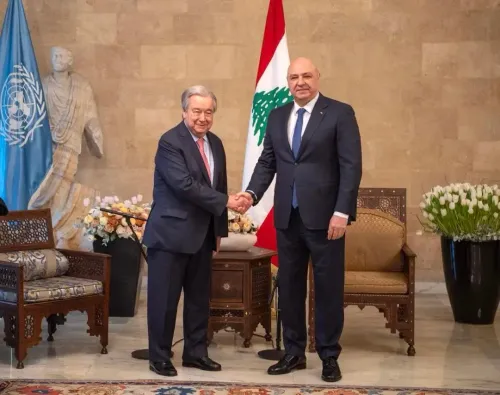
Lebanese President Joseph Aoun on Friday, 25 July 2025, called for the establishment of an alternative international force to support the Lebanese army in the country's south, should the United Nations Interim Force in Lebanon (UNIFIL) be unable to continue its mission. The statement came during Aoun's meeting with European Union Ambassador to Lebanon, Sandra De Waele, in Beirut.
What Aoun Said
'Lebanon considers the continued presence of the international forces in the south to be the best option for the next phase. If that proves impossible because of procedures required at the UN Security Council, an alternative international force should be established to replace them,' the Lebanese presidency quoted Aoun as saying.
Aoun said such a replacement force would assist the Lebanese army in clearing southern areas of unexploded ordnance and support the implementation of the US-brokered framework agreement signed between Lebanon and Israel in June 2025.
EU Ambassador's Position
Ambassador De Waele said Lebanon stands at a crossroads, with its future dependent on stronger security, rebuilt institutions, and structural reform. She added that reaching an agreement with the International Monetary Fund (IMF) would unlock international funding and help attract foreign investment — a signal that Beirut's security posture is directly tied to its economic recovery prospects.
Parliament Backs UNIFIL Renewal
In a parallel development, a delegation of Lebanese lawmakers on Thursday delivered a letter — signed by 86 parliament members — to UN Special Coordinator for Lebanon Jean Arnault, urging the renewal and continued presence of UNIFIL. The letter was handed over in Beirut as part of a parliamentary initiative backing the mission.
According to Lebanon's official National News Agency (NNA), the lawmakers described the broad cross-party support as reflecting a national consensus on the importance of maintaining UNIFIL's presence in southern Lebanon. They cited the force's role in preserving security and stability, monitoring the implementation of UN Security Council Resolution 1701, and helping prevent further escalation.
Why the Stakes Are High
The delegation argued that the conditions that originally led to UNIFIL's establishment remain in place, pointing to continuing ceasefire violations and a fragile security situation along the Lebanon-Israel border. Lawmakers called for the peacekeeping force to retain its full operational mandate, particularly during what they described as a critical period for Lebanon and the wider region.
This comes amid ongoing international debate over UNIFIL's mandate renewal at the UN Security Council, where procedural disagreements could complicate the mission's continuation. The outcome will have direct implications for southern Lebanon's stability and for the broader implementation of the June ceasefire framework.
Point of View
Not a retreat from UNIFIL. By framing it as a contingency rather than a preference, Beirut is acknowledging the real risk that Security Council dynamics — particularly friction over mandate terms — could stall renewal. The simultaneous parliamentary push, backed by 86 MPs across party lines, underscores that Lebanese political consensus on UNIFIL is unusually broad. What is less clear is whether any credible coalition of nations would actually constitute and fund a replacement force on short notice, or whether the 'alternative' framing is primarily leverage to press Security Council members toward renewal. The EU ambassador's linking of security to IMF access adds a further layer: Lebanon's economic lifeline is now explicitly conditional on its security architecture holding together.
NationPress
23 Oct 2026
Frequently Asked Questions
Why is Lebanese President Aoun calling for an alternative international force?
President Aoun is calling for an alternative force as a contingency in case UNIFIL cannot be renewed due to procedural hurdles at the UN Security Council. He said such a force would help the Lebanese army clear southern Lebanon of unexploded ordnance and support the implementation of the US-brokered Lebanon-Israel ceasefire framework signed in June 2025.
What is UNIFIL and why does it matter to Lebanon?
UNIFIL, the United Nations Interim Force in Lebanon, is a UN peacekeeping mission deployed in southern Lebanon to monitor the ceasefire line with Israel and support the implementation of UN Security Council Resolution 1701. Lebanese lawmakers argue that the conditions that originally necessitated UNIFIL — including border violations and a fragile security situation — remain in place.
How many Lebanese MPs have backed UNIFIL's renewal?
A total of 86 Lebanese parliament members signed a letter delivered to UN Special Coordinator for Lebanon Jean Arnault, urging the renewal and continued presence of UNIFIL. Lawmakers described the cross-party support as reflecting a national consensus.
What did the EU Ambassador say about Lebanon's future?
EU Ambassador Sandra De Waele said Lebanon is at a crossroads, with its future dependent on stronger security, rebuilt institutions, and structural reform. She noted that reaching an agreement with the IMF would unlock international funding and help attract foreign investment.
What is the US-brokered framework agreement between Lebanon and Israel?
The framework agreement is a ceasefire-related accord brokered by the United States and signed between Lebanon and Israel in June 2025. President Aoun cited it as a key document that any international force — whether UNIFIL or a replacement — would need to help implement in southern Lebanon.