Tharoor revisits 'The Great Indian Novel' with Delhi's diplomatic spouses
Synopsis
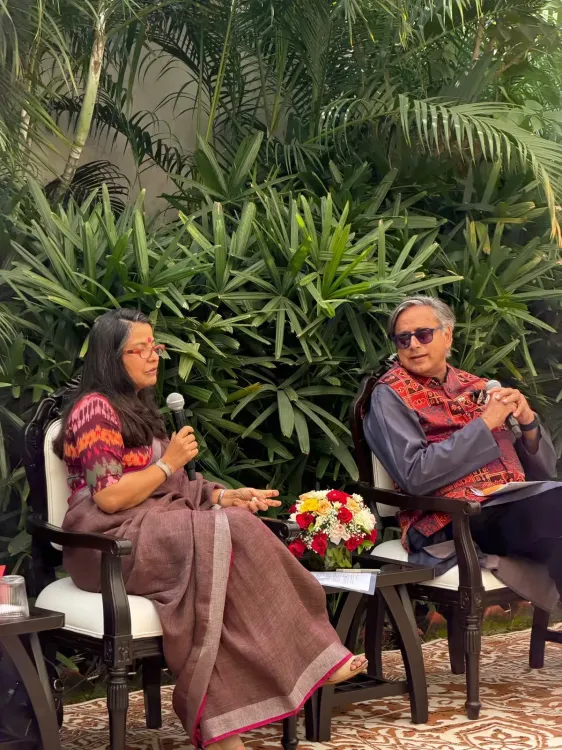
Congress MP and author Dr. Shashi Tharoor spent an afternoon discussing 'The Great Indian Novel' with over 75 diplomatic spouses at a joint EASA-SHOM event in New Delhi, moderated by Aradhana Kapoor and followed by a lunch hosted by Dolly Misri, wife of Foreign Secretary Vikram Misri.
Key Takeaways
The event was held on Thursday, October 22, 2026 , in New Delhi , attended by over 75 diplomatic spouses.
The discussion was jointly hosted by the External Affairs Spouses' Association (EASA) and the Spouses of Heads of Mission (SHOM) .
Conversation was moderated by Aradhana Kapoor , wife of the Deputy National Security Adviser.
A lunch hosted by Dolly Misri , wife of Foreign Secretary Vikram Misri , followed the literary discussion. 'The Great Indian Novel' , first published in 1989 , is Tharoor's satirical retelling of the Mahabharata mapped onto modern Indian political history.
Tharoor described the occasion as providing 'the satisfaction every writer seeks, of being read.'
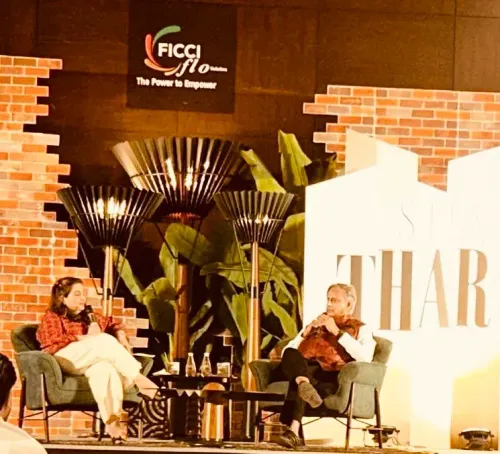
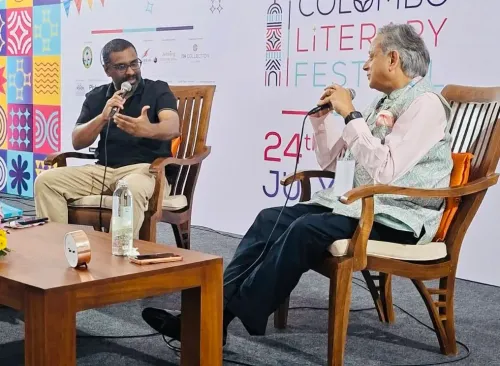
A literary afternoon unfolded in the heart of New Delhi's diplomatic world on Thursday, October 22, 2026, as Congress MP Dr. Shashi Tharoor spent a couple of hours discussing his celebrated debut novel 'The Great Indian Novel' with an audience of over 75 spouses drawn from India's most rarefied foreign-policy circles.
'The Great Indian Novel' meets New Delhi's diplomatic drawing room
The event was jointly hosted by the External Affairs Spouses' Association (EASA) — comprising spouses of Ministry of External Affairs officials — and the Spouses of Heads of Mission (SHOM), the group of ambassadors' and heads of mission spouses based in New Delhi. The conversation was moderated by Aradhana Kapoor, wife of the Deputy National Security Adviser, lending the gathering a distinctly senior diplomatic flavour. A lunch hosted by Dolly Misri, wife of Foreign Secretary Vikram Misri, followed the discussion.
Tharoor, who described the experience as 'the satisfaction every writer seeks, of being read,' noted the pleasure of revisiting his own work through 'thoughtful questions and fresh perspectives.' Books were signed, selfies were taken — a scene that blended the literary salon with the informal warmth of Delhi's diplomatic social circuit.
The novel that rewrote how India tells its own story
First published in 1989, The Great Indian Novel is a satirical retelling of the Mahabharata mapped onto the political history of modern India — a work that established Tharoor as one of the country's most ambitious literary voices long before his political career took shape. The book draws on both classical Sanskrit epic structure and sharp postcolonial wit, making it a natural conversation piece for a multilingual, internationally minded audience of diplomatic insiders.
Tharoor has since published well over a dozen books spanning fiction, history, and political commentary, but The Great Indian Novel remains the work that defines him as a writer. For a room full of people who navigate the intersection of culture, nationhood, and international relations daily, the choice of text was anything but accidental.
Where literature and diplomacy share a table
Literary events involving Delhi's diplomatic spouse community are a recurring feature of the capital's cultural calendar — informal yet influential gatherings where ideas circulate across national boundaries and hierarchies soften over good books and good food. That the Foreign Secretary's household hosted the lunch signals the esteem with which Tharoor's literary legacy is regarded even within the country's foreign-policy establishment — a community he once served as UN Under-Secretary-General before entering Indian politics.
For a politician whose identity as a writer remains inseparable from his public persona, afternoons like this are not a departure from the work — they are part of it.
Point of View
Positioning literature as a bridge between India's domestic political class and its international interlocutors. It is a reminder that in Delhi's layered establishment, a well-timed book discussion can carry as much relational weight as a formal meeting.
NationPress
23 Oct 2026
Frequently Asked Questions
What is 'The Great Indian Novel' by Shashi Tharoor about?
'The Great Indian Novel,' first published in 1989 , is a satirical novel that retells the ancient Sanskrit epic the Mahabharata as an allegory for modern Indian political history, blending classical structure with postcolonial wit.
Who attended the literary event with Shashi Tharoor in Delhi?
Over 75 spouses from the External Affairs Spouses' Association (EASA) and the Spouses of Heads of Mission (SHOM) attended the discussion on October 22, 2026 , in New Delhi.
Who moderated the Shashi Tharoor book discussion?
The discussion was moderated by Aradhana Kapoor , wife of the Deputy National Security Adviser of India.
What is the External Affairs Spouses' Association (EASA)?
The External Affairs Spouses' Association (EASA) is an association comprising the spouses of officials in India's Ministry of External Affairs , active in New Delhi's diplomatic and cultural circuit.
Is Shashi Tharoor still writing books?
Yes. Dr. Shashi Tharoor , the Congress MP from Thiruvananthapuram, has published well over a dozen books on fiction, history, and political commentary and continues to participate in literary events alongside his parliamentary work.