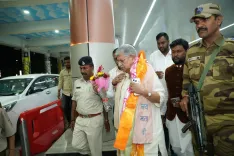
Dr. Jitendra Singh Flags Delhi–Amritsar–Katra Expressway
Synopsis
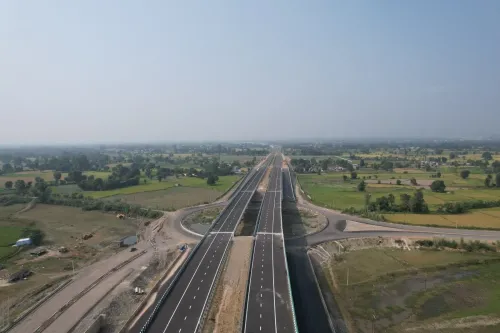
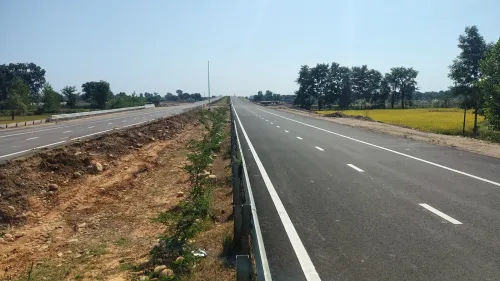
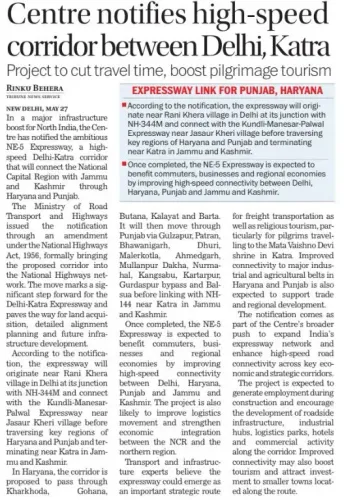
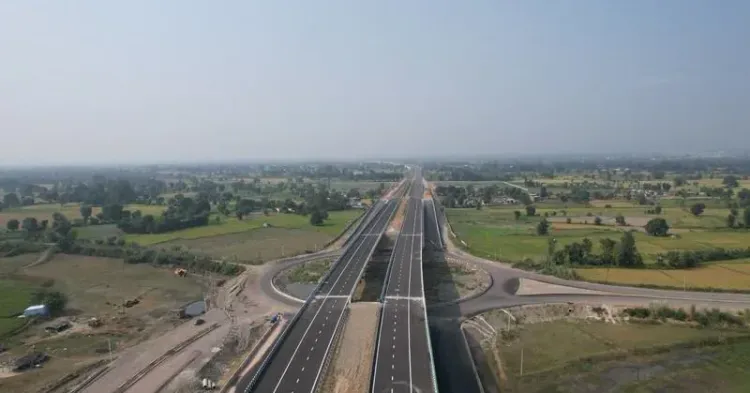
Union Minister Dr. Jitendra Singh posted about the Delhi–Amritsar–Katra Expressway, spotlighting the 670-km Bharatmala corridor designed to connect the capital to the Vaishno Devi shrine town of Katra via Amritsar, reviving public attention on the project's delivery.
Key Takeaways
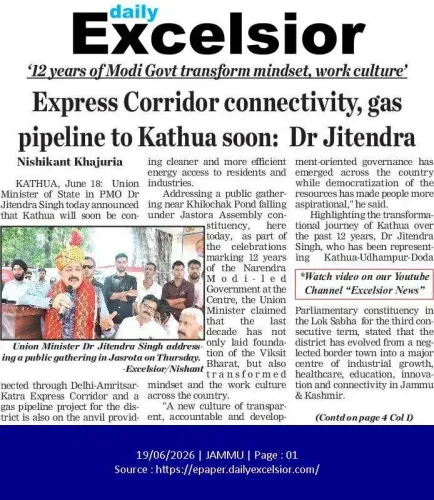
Jitendra Singh , Union Minister of State for Science & Technology and MoS in the PMO, posted about the Delhi–Amritsar–Katra Expressway on 23 October 2026 .
The expressway spans 670 km , linking Delhi to Katra (Jammu) via Amritsar .
It falls under Bharatmala Pariyojana , launched in 2015 to build 34,800 km of national highways.
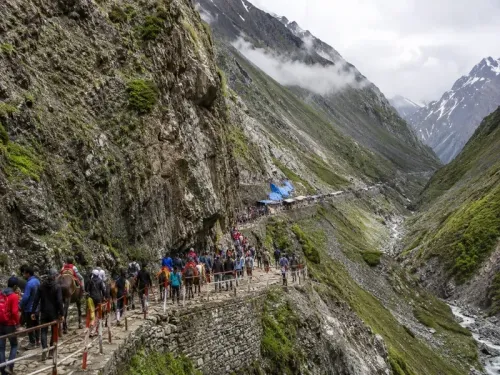
The corridor is designed to ease access for the millions of pilgrims who visit the Vaishno Devi shrine each year.
Key outstanding variables include phased construction milestones and land acquisition across Haryana, Punjab, and Jammu & Kashmir .
A single hashtag chain — #Delhi–#Amritsar–#Katra Expressway — posted by Union Science and Technology Minister Dr. Jitendra Singh on Friday, 23 October 2026, has reignited public attention on one of northern India's most ambitious road infrastructure projects: a 670-kilometre expressway that would link the national capital to the Vaishno Devi shrine town of Katra in Jammu, passing through Amritsar.
What the Delhi–Amritsar–Katra corridor promises pilgrims and commuters
The expressway is conceived under the Bharatmala Pariyojana, the central government's flagship highway-building programme that set out in 2015 to construct 34,800 km of national highways including greenfield expressways. The Delhi–Amritsar–Katra corridor is among its most symbolically charged projects, threading together a commercial megacity, a city sacred to Sikhs, and the base camp for millions of Hindu pilgrims who trek annually to the Vaishno Devi shrine.
Once operational, the route would dramatically slash travel time across a stretch that currently tests the patience of every driver navigating the congested NH-44 corridor. For the tens of millions who make the Vaishno Devi pilgrimage each year, faster, safer road access carries both logistical and emotional weight.
Dr. Jitendra Singh's stake in the northern connectivity push
As a minister with roots in Jammu and Kashmir and a consistent presence in the PMO, Dr. Jitendra Singh has repeatedly spotlighted infrastructure investments in the region — from rail links to road corridors — as markers of integration and development. His post, though brief, signals continued ministerial interest in the project's progress and keeps it in the national conversation.
Successive central governments have treated high-traffic religious corridors in the north as priority infrastructure, recognising that pilgrimage routes are also economic arteries for the states they pass through.
What still needs to land: land, timelines, and milestones
The corridor's phased construction milestones and state-level land acquisition updates remain the critical variables. Large greenfield expressways of this scale routinely encounter delays tied to land clearances across multiple districts and states — Haryana, Punjab, and Jammu and Kashmir all fall along the alignment. The pace at which those hurdles are cleared will determine when the expressway moves from a political talking point to a physical reality on the map.
With a senior minister amplifying the project afresh, the spotlight is back on delivery — and pilgrims, commuters, and northern-corridor freight operators will be watching for concrete milestone announcements next.
Point of View
Making this worth tracking. The real test, however, is land acquisition velocity across three states — the variable that has historically separated expressway announcements from expressway inaugurations in India.
NationPress
23 Oct 2026
Frequently Asked Questions
What is the Delhi–Amritsar–Katra Expressway?
It is a proposed 670-km greenfield expressway under the Bharatmala Pariyojana that will connect Delhi to Katra in Jammu — the base for the Vaishno Devi pilgrimage — via Amritsar in Punjab.
What is Bharatmala Pariyojana?
Bharatmala Pariyojana is a central government highway-building programme launched in 2015 with a target of constructing 34,800 km of national highways, including greenfield expressways across India.
Why is the Delhi–Katra Expressway important for pilgrims?
Millions of devotees travel to the Vaishno Devi shrine in Katra each year; the expressway would significantly cut travel time compared to the existing congested NH-44 route.
Which states does the Delhi–Amritsar–Katra Expressway pass through?
The corridor is aligned through Haryana, Punjab, and Jammu & Kashmir, requiring land acquisition and clearances across all three regions.
Why did Dr. Jitendra Singh post about the Delhi–Amritsar–Katra Expressway?
As a Union Minister with strong ties to Jammu and Kashmir, Dr. Jitendra Singh regularly highlights infrastructure projects in the region; his post renews public and political attention on the corridor's progress.