Dr. Jitendra Singh announces Katra-Delhi Express Road Corridor route notified
Synopsis
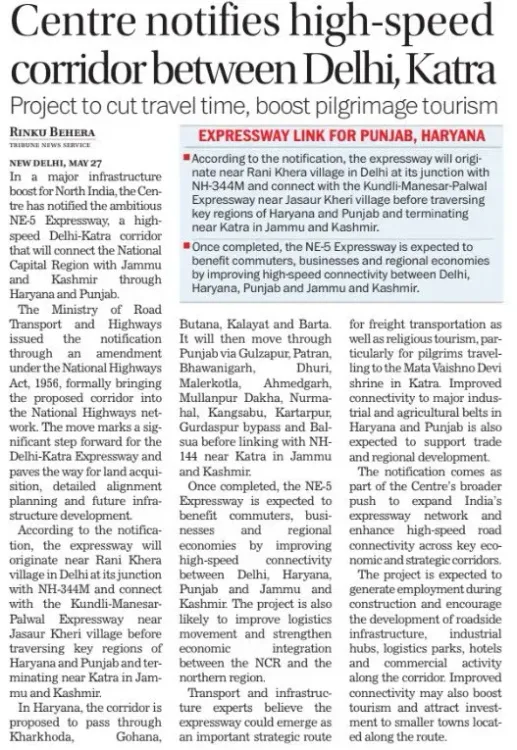
Union Minister Dr. Jitendra Singh announced the official notification of the Katra-Delhi Express Road Corridor route on 28 May 2026. The corridor will link the Mata Vaishno Devi base camp in Jammu and Kashmir to the national capital, benefiting millions of pilgrims and traders under the Bharatmala Pariyojana framework.
Key Takeaways
The route for the Katra-Delhi Express Road Corridor has been officially notified, as announced by Dr.
Jitendra Singh on 28 May 2026 .
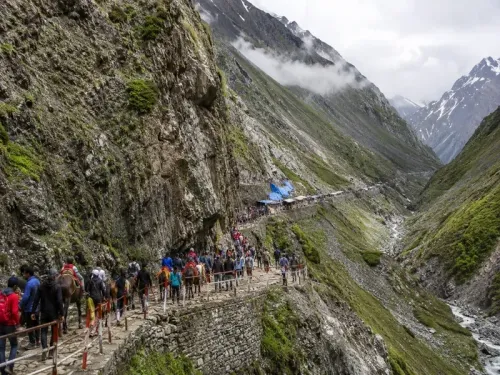
Katra in Reasi district, Jammu and Kashmir, is the base camp for the Mata Vaishno Devi shrine , visited by millions of pilgrims annually.
The corridor falls under the Bharatmala Pariyojana , the Central government's highway programme targeting approximately 34,800 km of national highways.
NHAI is the executing agency; the next steps involve tendering and land acquisition along the notified alignment.
The project is part of a broader push since 2019 to improve all-weather road connectivity between Jammu and Kashmir and the national capital region.
Key beneficiaries include Vaishno Devi pilgrims , J&K traders, freight operators, and northern India commuters.
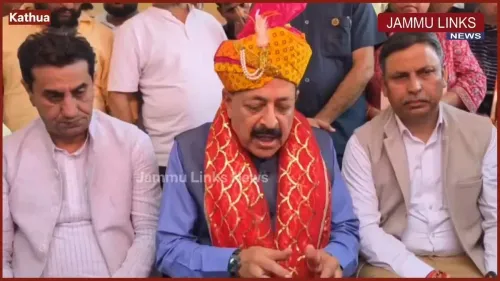
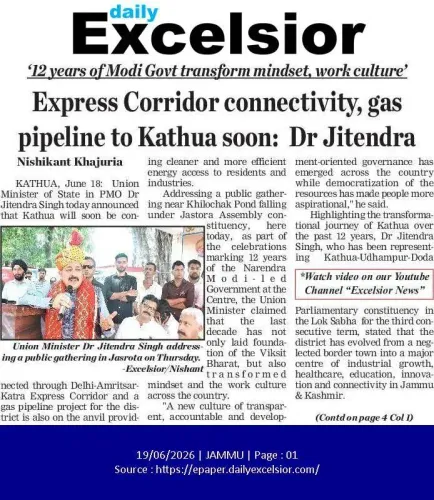
Union Minister of State (Independent Charge) for Science and Technology Dr. Jitendra Singh announced on Thursday, 28 May 2026 that the route for the Katra-Delhi Express Road Corridor has been officially notified, marking a significant milestone in connecting Jammu and Kashmir to the national capital through a dedicated high-speed road link.
Context
The notification of the Katra-Delhi Express Road Corridor route is a formal regulatory step that precedes land acquisition and tendering, signalling that the project has cleared a critical planning threshold. Katra, located in the Reasi district of Jammu and Kashmir, serves as the base camp for the Mata Vaishno Devi shrine, one of India's most visited pilgrimage destinations attracting millions of devotees every year. A dedicated express corridor would dramatically reduce travel time between the shrine town and New Delhi, currently connected by a mix of national highways that pass through hilly terrain.
Policy Backdrop
The corridor aligns with the Bharatmala Pariyojana, the Central government's flagship highway construction programme approved in 2015 targeting approximately 34,800 km of national highways and express corridors across India. The programme specifically emphasises last-mile connectivity to pilgrimage centres and economic hubs. The PM Gati Shakti National Master Plan, launched in 2021, further integrated multimodal infrastructure planning to accelerate projects of this nature by coordinating land, environment, and financial clearances across ministries.
Post the 2019 reorganisation of Jammu and Kashmir into a Union Territory, successive Union Budgets have prioritised all-weather road connectivity between the UT and the national capital region. The National Highways Authority of India (NHAI), the statutory body responsible for development and maintenance of national highways, is the executing agency for such corridors under Bharatmala.
Stakeholders and Impact
The corridor is expected to benefit a broad cross-section of stakeholders. Vaishno Devi pilgrims — numbering in the millions annually — stand to gain the most directly through reduced journey times and improved road safety on an access-controlled expressway. Traders and businesses in Jammu and Kashmir will benefit from faster freight movement to markets in Delhi and the wider National Capital Region.
Northern India commuters and the highway construction and logistics sector are also among the key beneficiaries. The project fits a well-established Central government pattern of pairing religious tourism routes with broader economic integration goals for the Union Territory, reinforcing the strategic importance of robust road infrastructure in the region.
What's Next
With the route officially notified, the next steps are expected to include NHAI's tendering schedule and the initiation of land acquisition proceedings along the notified alignment. These processes will determine the pace at which construction can begin. Observers will also watch for references to the corridor in upcoming Union Budget allocations and parliamentary committee reports on national highway progress. The project's momentum will depend on how swiftly land acquisition and environmental clearances are concluded, given the challenging terrain between Jammu and Kashmir and the plains of northern India.
Point of View
Given Katra's centrality to Hindu pilgrimage and Dr. Jitendra Singh's representation of the Udhampur constituency in Jammu and Kashmir. It reinforces the Central government's post-2019 narrative of mainstreaming the Union Territory through infrastructure investment, tying religious tourism to economic integration. The move also advances the Bharatmala Pariyojana's deliverables ahead of what will be a closely watched infrastructure scorecard. However, the real test will come at the land acquisition and tendering stage, where J&K's terrain and administrative complexity have historically slowed project execution.
NationPress
11 Oct 2026
Frequently Asked Questions
What is the Katra-Delhi Express Road Corridor?
The Katra-Delhi Express Road Corridor is a proposed access-controlled expressway linking Katra in Jammu and Kashmir — the base camp for the Mata Vaishno Devi shrine — to New Delhi, aimed at reducing travel time and improving connectivity for pilgrims and freight.
What does 'route notified' mean for the Katra-Delhi corridor?
'Route notified' means the government has formally published the alignment of the corridor, which is a mandatory regulatory step that enables land acquisition proceedings and NHAI tendering to begin.
Which scheme does the Katra-Delhi corridor fall under?
The corridor falls under the Bharatmala Pariyojana, the Central government's flagship highway programme approved in 2015 to build approximately 34,800 km of national highways and express corridors across India.
Who announced the Katra-Delhi Express Road Corridor route notification?
Union Minister of State (Independent Charge) for Science and Technology Dr. Jitendra Singh announced the route notification on 28 May 2026 via a post on X.
How will the Katra-Delhi corridor benefit pilgrims?
The corridor will provide a faster, safer, access-controlled road link between Katra and Delhi, significantly reducing travel time for the millions of devotees who visit the Mata Vaishno Devi shrine each year.