CM Gujarat: Bharatmala Turns State Highways Into Progress Corridors
Synopsis
The Chief Minister's Office of Gujarat says 1,068 km of the 1,557-km Bharatmala Phase-1 network in the state is complete, with key projects including the Amritsar-Jamnagar corridor, Ahmedabad-Dholera Expressway, and recently inaugurated Vadodara-Mumbai packages underscoring PM Modi's highway push.
Key Takeaways
45 projects totalling 1,557 km were approved under Bharatmala Phase-1 in Gujarat at a cost of ₹65,000 crore .
1,068 km of road construction under the scheme in Gujarat has been completed.
A 125-km six-lane greenfield expressway from Sanchore (Rajasthan) to Santalpur, Patan is among the key projects.
The Amritsar-Jamnagar Economic Corridor spans approximately 1,256 km , linking Punjab with Gujarat's industrial and port regions.
Packages 6 and 7 of the Vadodara-Mumbai Expressway were recently inaugurated by Prime Minister Modi .
The programme was launched in 2017 under PM Modi's direction to ensure 'ease of transportation' for citizens and industry.
The Chief Minister's Office of Gujarat on Friday, 12 June 2026 highlighted the transformative impact of the Bharatmala Pariyojana on the state's road network, crediting Prime Minister Narendra Modi's 12 years of leadership for an unprecedented scale and speed of highway development across India.
Context
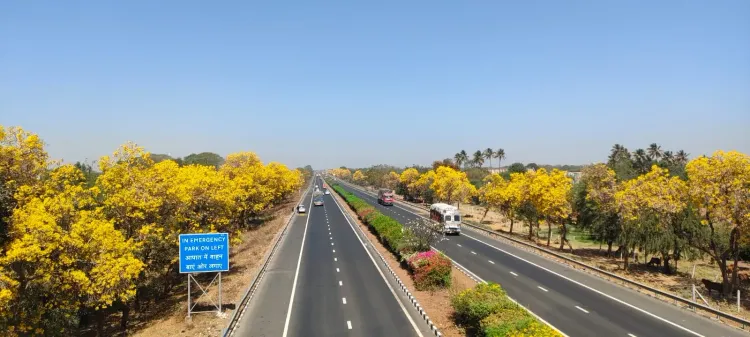
The post, shared under the hashtag #GujaratSuccessDiary, describes Gujarat's highways under Bharatmala as 'pragatina dhorimar g' — 'corridors of progress.' It states that under Phase 1 of the scheme in Gujarat, 45 projects spanning 1,557 kilometres were approved at an estimated cost of ₹65,000 crore, of which 1,068 kilometres of road construction has been completed.
The announcement comes as the Central government continues to push the Bharatmala programme — approved by the Union Cabinet in October 2017 — as the flagship successor to the earlier National Highways Development Project, with a focus on economic corridors, expressways, and border connectivity.
Policy Backdrop
Bharatmala Pariyojana was conceived to reduce logistics costs by linking production centres, ports, and border crossings through access-controlled, high-speed corridors. Gujarat, with its long western coastline and dense industrial clusters, was identified as a priority state from the outset.
Key projects cited in the post include a 125-km six-lane greenfield expressway from Sanchore, Rajasthan to Santalpur, Patan district, Gujarat; the approximately 1,256-km Amritsar-Jamnagar Economic Corridor; the Ahmedabad-Dholera Expressway; and the Delhi-Mumbai Expressway. The post also notes that Packages 6 and 7 of the Vadodara-Mumbai Expressway were recently inaugurated by Prime Minister Modi.
Stakeholders and Impact
The improved road network directly benefits Gujarat's freight transporters, port users, and industrial sector, which together form one of India's most active export ecosystems. Faster, wider corridors lower per-unit logistics costs and cut transit times between factories, ports such as Kandla and Mundra, and consumer markets in northern India.
The Amritsar-Jamnagar Economic Corridor in particular is designed to stitch together the agricultural surplus of Punjab with the port-facing industrial belt of Gujarat, offering multimodal freight options and reducing dependence on congested older national highways. Citizens along these routes also gain safer, faster inter-city connectivity.
The post frames these developments within the broader national vision of 'Viksit Bharat, Viksit Gujarat' — 'Developed India, Developed Gujarat' — positioning road infrastructure as a foundational enabler of that goal.
What's Next
With roughly 489 kilometres of the approved Phase-1 network in Gujarat still under construction, attention will turn to timelines for completing the remaining stretches. Any revision to Bharatmala's overall budget or an announcement of Phase-2 corridors in an upcoming Union Budget would be the next major signpost for the programme's trajectory in the state.
As Gujarat's port-led and manufacturing economy expands, the quality and density of its expressway grid will remain a key variable in its competitiveness — making the completion of pending Bharatmala packages a closely watched policy milestone.
Point of View
Linking the state's infrastructure gains directly to PM Modi's 12-year tenure ahead of what remains a competitive electoral and governance narrative. By anchoring the 'Viksit Bharat, Viksit Gujarat' slogan to hard kilometre counts and rupee figures, the ruling establishment seeks to convert abstract policy into a tangible voter-facing record. The emphasis on freight corridors and port connectivity also signals that Gujarat's identity as India's industrial and export powerhouse is being actively reinforced through infrastructure investment. Whether the remaining 489 km of Phase-1 work is completed on schedule will determine how durable this narrative proves to be.
NationPress
26 Oct 2026
Frequently Asked Questions
What is Bharatmala Pariyojana and when was it launched?
Bharatmala Pariyojana is a Central government highway development programme approved by the Union Cabinet in October 2017. It was designed to build economic corridors, expressways, and border roads across India to reduce logistics costs and improve connectivity.
How many kilometres of Bharatmala roads have been completed in Gujarat?
According to the Chief Minister's Office of Gujarat, 1,068 kilometres of road construction out of a Phase-1 target of 1,557 kilometres across 45 projects has been completed in the state.
What are the key Bharatmala projects in Gujarat?
Major Bharatmala projects in Gujarat include the 125-km six-lane Sanchore-Santalpur greenfield expressway, the 1,256-km Amritsar-Jamnagar Economic Corridor, the Ahmedabad-Dholera Expressway, and Packages 6 and 7 of the Vadodara-Mumbai Expressway recently inaugurated by PM Modi.
What is the total budget for Bharatmala Phase-1 in Gujarat?
The Chief Minister's Office of Gujarat has cited an approved outlay of ₹65,000 crore for the 45 projects under Bharatmala Phase-1 in the state.
What is the Amritsar-Jamnagar Economic Corridor?
The Amritsar-Jamnagar Economic Corridor is an approximately 1,256-km multi-lane highway under Bharatmala that connects Punjab with Gujarat's industrial and port regions, aiming to ease freight movement between agricultural surplus areas and export-oriented coastal hubs.