Shekhawat Hails Cabinet Nod for Ahmedabad Metro Phase-2A
Synopsis
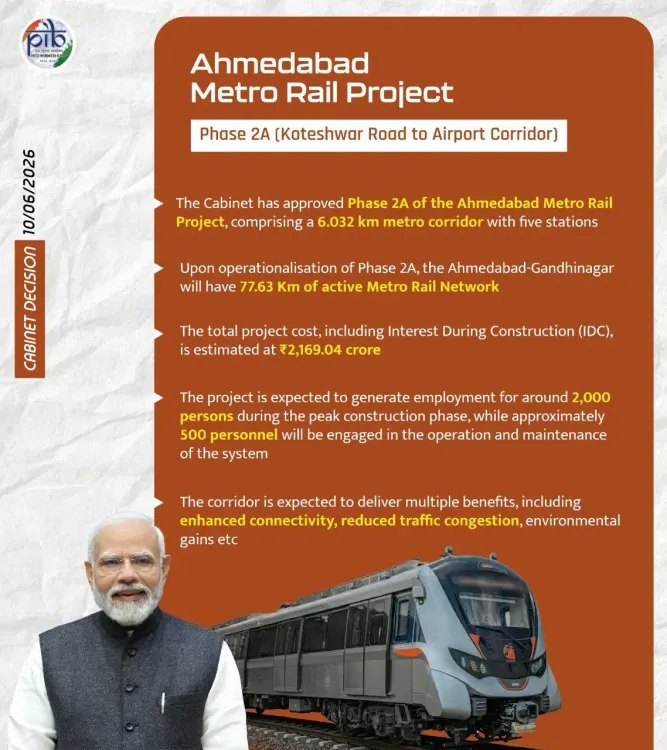
Union Culture and Tourism Minister Gajendra Singh Shekhawat has welcomed the Union Cabinet's clearance of Ahmedabad Metro Phase-2A, describing it as a vital step for Gujarat's growth and India's Viksit Bharat vision. The approval continues the Modi government's decade-long push to expand metro rail as the backbone of urban mobility in major Indian cities.
Key Takeaways
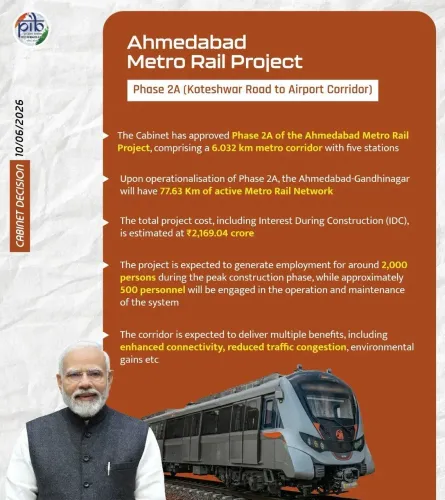
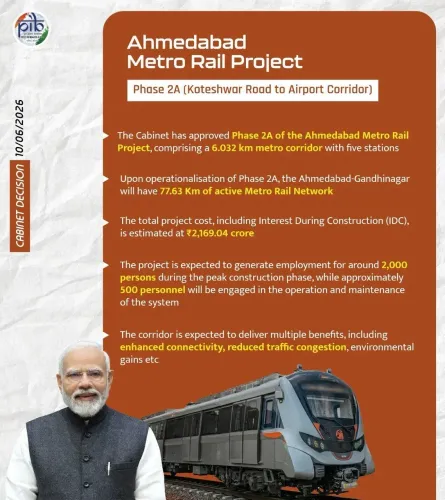
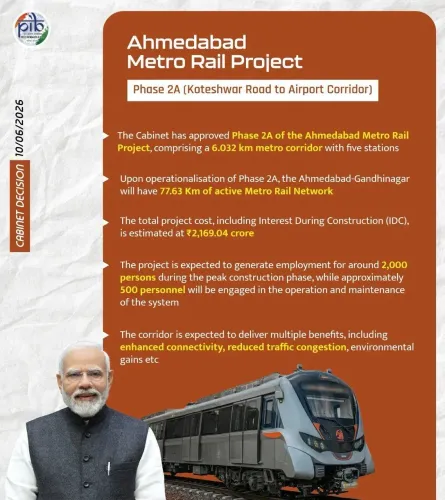
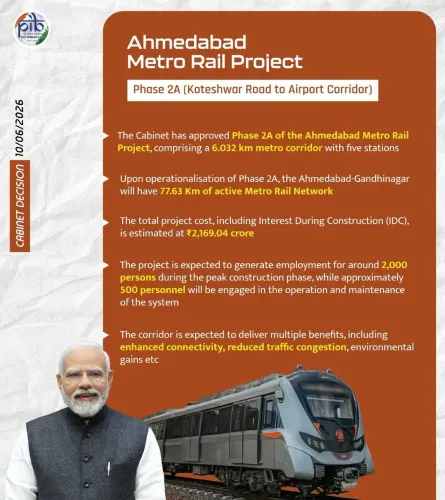
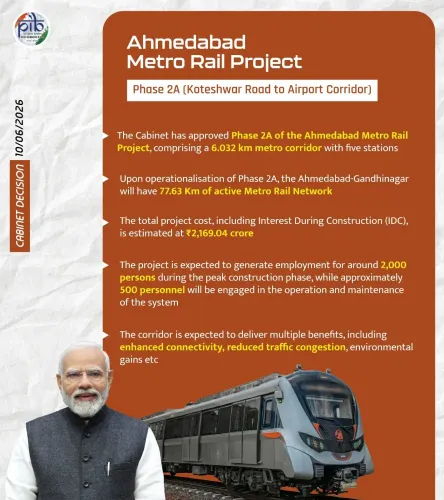
The Union Cabinet approved Ahmedabad Metro Phase-2A , a significant urban infrastructure decision announced on June 10, 2026 .
Minister Gajendra Singh Shekhawat described the clearance as a major step for Gujarat's development and the Viksit Bharat vision.
Ahmedabad Metro Phase-1 was first approved in 2014 ; Phase-2A extends a decade-long metro expansion programme.
The project is expected to benefit Ahmedabad commuters and support the city's growing industrial and residential zones.
Next steps include detailed project reports, central funding tranches, and tendering by the Gujarat Metro Rail Corporation .
The approval aligns with the government's AMRUT and Smart Cities Mission frameworks for sustainable urban mobility.
Union Culture and Tourism Minister Gajendra Singh Shekhawat on Wednesday, June 10, 2026, welcomed the Union Cabinet's approval of Ahmedabad Metro Phase-2A, calling it a significant step for Gujarat's development and the broader vision of a Viksit Bharat (Developed India).
Context
Shekhawat, a senior BJP leader and Lok Sabha MP from Jodhpur, Rajasthan, posted on X that the cabinet clearance under Prime Minister Narendra Modi represents 'vikas ki disha' — a direction of development — for Gujarat and aligns with the country's long-term growth aspirations. He stated that the approval is 'ek bahut mahatvapurn kadam' (a very important step) from the perspective of both Gujarat's progress and the Viksit Bharat vision.
The post was accompanied by a hashtag referencing Modi as the longest-serving elected Prime Minister of India, underlining the political significance the ruling party attaches to the decision.
Policy Backdrop
Ahmedabad Metro Phase-1 received in-principle approval in 2014, coinciding with the start of the Modi government's urban transport push. The Metro Rail Policy 2017 subsequently created a framework for expanding metro systems to more cities with central funding support, enabling a wave of project clearances across the country.
Between 2019 and 2024, the Union Cabinet cleared multiple Phase-2 metro extensions in Indian cities, often linking them to the AMRUT (Atal Mission for Rejuvenation and Urban Transformation) and Smart Cities Mission frameworks. Phase-2A for Ahmedabad continues this trajectory, targeting improved urban connectivity in Gujarat's largest city and a key economic hub.
The Ministry of Housing and Urban Affairs typically co-funds such projects alongside state governments, with the central share varying based on project scale and city population.
Stakeholders and Impact
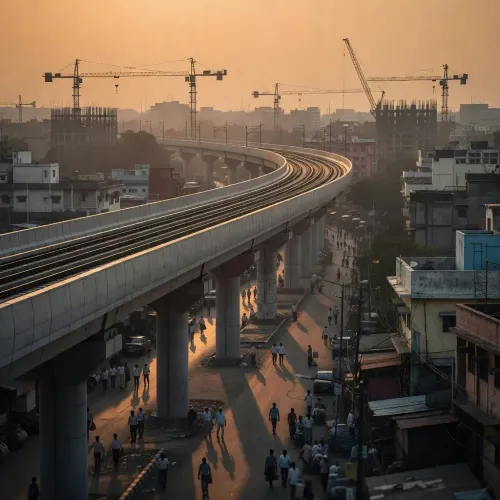
Ahmedabad's commuters stand to benefit most directly from the Phase-2A expansion, which is expected to ease congestion on existing road corridors and provide last-mile connectivity across newer urban zones. Gujarat's urban planners have long advocated for a denser metro grid to support the city's expanding industrial and residential footprint.
The project also carries economic significance: metro construction typically generates demand for steel, cement, and engineering services, while long-term operations create sustained public-sector employment. Gujarat has been a consistent focus for central infrastructure investment given its industrial base and its role as a model state in the government's development narrative.
What's Next
Following cabinet approval, the standard pipeline involves release of detailed project reports, allocation of funding tranches from the Ministry of Housing and Urban Affairs, and the launch of tendering processes for civil and systems works. State-level coordination between the Gujarat Metro Rail Corporation and central agencies will determine the pace of ground-level execution.
As urban India's metro network continues to expand, the Ahmedabad Phase-2A clearance adds momentum to the government's stated goal of making metro rail the backbone of sustainable mobility in major Indian cities — a goal that feeds directly into the Viksit Bharat 2047 framework that the ruling coalition has made central to its second-decade governance agenda.
Point of View
Decade-long pattern: the Modi government has used metro rail approvals as both a governance signal and a political statement in industrially significant states. Shekhawat's endorsement, though ceremonial in its framing, reinforces the BJP's narrative of Gujarat as a development showcase. The invocation of 'Viksit Bharat' ties a state-level infrastructure decision to a national ideological anchor, a framing the party has deployed consistently since 2023. The real test will be execution timelines — previous metro phases have faced delays between cabinet approval and actual ridership, a gap that opposition voices are likely to highlight.
NationPress
25 Oct 2026
Frequently Asked Questions
What is Ahmedabad Metro Phase-2A?
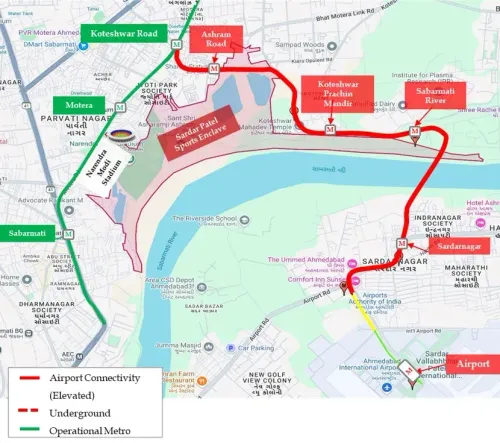
Ahmedabad Metro Phase-2A is an extension of the existing metro rail network in Ahmedabad, Gujarat's largest city, approved by the Union Cabinet to improve urban connectivity and ease road congestion.
Why did Gajendra Singh Shekhawat comment on the Ahmedabad Metro?
As a senior BJP leader and Union Minister, Shekhawat regularly welcomes major cabinet decisions; he posted on X praising the Phase-2A approval as a step forward for Gujarat's development and the Viksit Bharat vision.
When was Ahmedabad Metro Phase-1 approved?
Ahmedabad Metro Phase-1 received in-principle approval in 2014 under the Modi government's initial urban transport push.
What is Viksit Bharat and how does this metro project relate to it?
Viksit Bharat (Developed India) is the Modi government's long-term vision for making India a developed nation by 2047; metro rail expansions like Ahmedabad Phase-2A are positioned as pillars of sustainable urban mobility within that framework.
What are the next steps after cabinet approval of Ahmedabad Metro Phase-2A?
After cabinet clearance, the process involves releasing detailed project reports, securing funding tranches from the Ministry of Housing and Urban Affairs, and opening tenders for civil and systems construction work.