CM Sai Welcomes President Murmu to Bastar Dussehra's Muriya Darbar
Synopsis
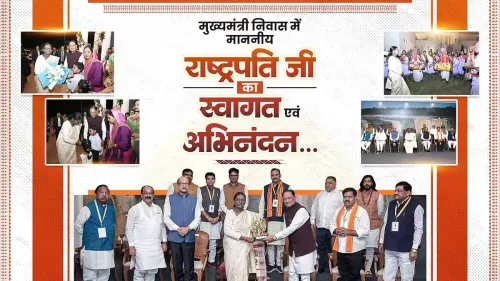
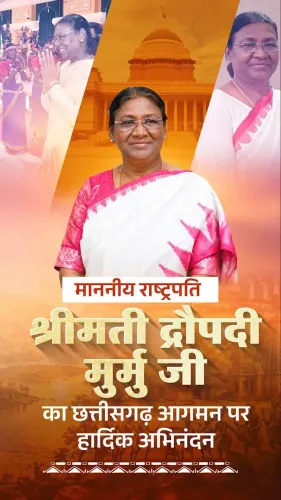
Chhattisgarh CM Vishnu Deo Sai welcomed President Droupadi Murmu to the historic Muriya Darbar at Bastar Dussehra, saying India's first tribal President attending the ancient tribal council adds new dignity to the celebrated indigenous tradition.
Key Takeaways
President Droupadi Murmu attended the Muriya Darbar assembly at the Bastar Dussehra festival in Chhattisgarh .
CM Vishnu Deo Sai described her presence as a 'special occasion' that lends new dignity to the centuries-old tribal tradition.
Droupadi Murmu , elected 15th President of India in July 2022 , is the first person from a tribal background to hold India's highest constitutional office.
Bastar Dussehra is one of India's longest tribal festivals, centred on goddess Danteshwari , distinct from the mainstream Dussehra narrative.
The Muriya Darbar is a traditional open tribal council — a living democratic assembly predating the modern Indian state.
The visit reflects a consistent pattern of constitutional office-holders engaging with Adivasi cultural events in states with large tribal populations.
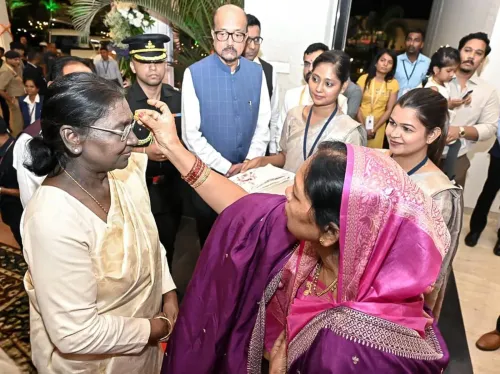
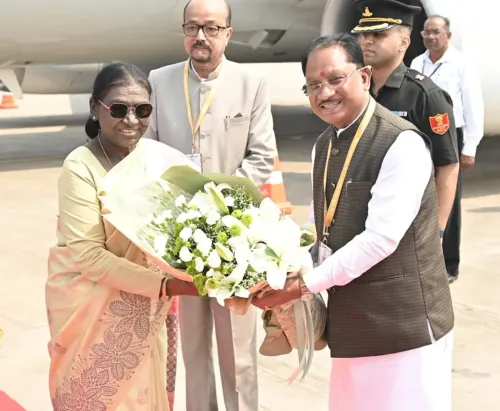
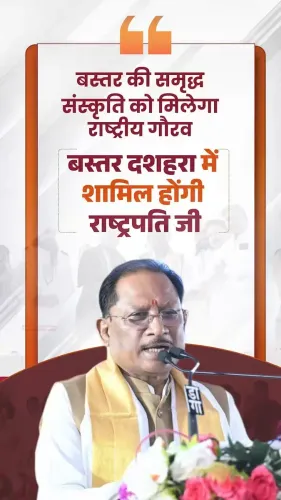
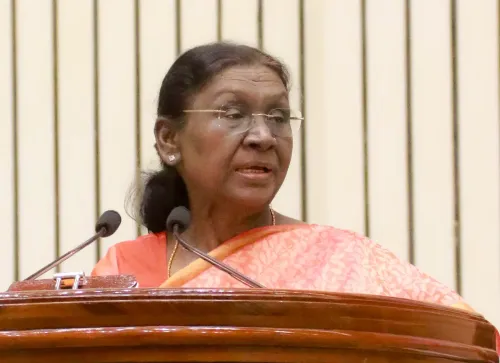
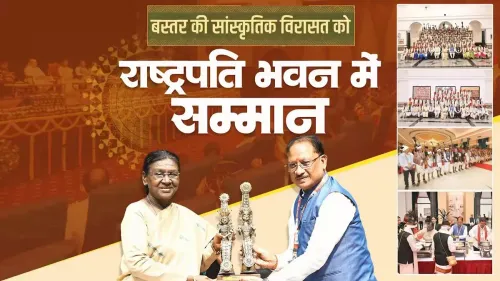
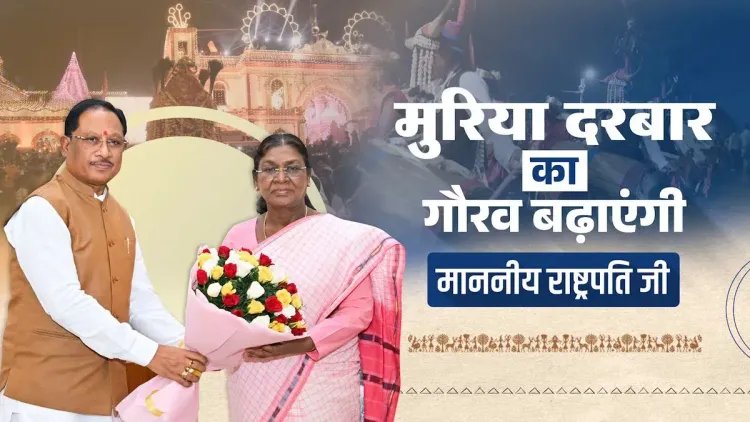
A festival rooted in centuries of Adivasi tradition is receiving its most powerful constitutional endorsement yet. Chhattisgarh Chief Minister Vishnu Deo Sai on Friday, October 23, 2026, welcomed the arrival of President Droupadi Murmu at the Muriya Darbar — the storied tribal council assembly that sits at the heart of the Bastar Dussehra festival — calling her presence a moment of rare and special significance for the living tradition.
Posting on X, CM Sai wrote: 'बस्तर दशहरा के ऐतिहासिक जनसंसद मुरिया दरबार में माननीय राष्ट्रपति श्रीमती द्रौपदी मुर्मु जी का आगमन इस गौरवशाली परंपरा के लिए विशेष अवसर है।' — 'The arrival of honourable President Smt. Droupadi Murmu at the historic public assembly Muriya Darbar of Bastar Dussehra is a special occasion for this glorious tradition.' He added that the participation of the country's highest constitutional office-holder — who is also India's first tribal woman President — would lend the gathering a new dignity.
What Makes Muriya Darbar Unique in India's Tribal Calendar
Bastar Dussehra is no ordinary festival. Celebrated in the Bastar region of Chhattisgarh across roughly 75 days, it is considered one of the longest-running tribal festivals in India, tracing its roots back several centuries. Unlike its mainland counterpart that commemorates Ram's victory over Ravana, Bastar Dussehra centres on the goddess Danteshwari and is governed by elaborate community rituals unique to the region's indigenous communities.
The Muriya Darbar — literally a 'court of the Muria tribe' — functions as a traditional open assembly where tribal representatives gather to voice concerns, preserve oral customs, and affirm collective identity. Think of it as a living parliament that predates the modern Indian state. Its continuation as a genuine community institution, not a staged spectacle, is what makes it culturally significant on a national scale.
Why Murmu's Presence Carries Particular Weight
Droupadi Murmu was elected the 15th President of India in July 2022, becoming the first person from a tribal background — and the first woman from that community — to hold the nation's highest constitutional office. She hails from the Santali community of Odisha, a state that, like Chhattisgarh, carries a deep Adivasi cultural heritage.
Her attendance at Muriya Darbar is therefore more than a ceremonial visit. It is a symbolic closing of a historic loop: the institution that has long represented the political voice of tribal India now hosting the most powerful tribal voice in the country's constitutional framework. Chhattisgarh itself was carved out as a separate state in 2000 partly to give its large Adivasi population a stronger administrative identity — context that makes this convergence all the more resonant.
A Pattern of Constitutional Outreach to Adivasi Culture
This visit fits a broader, deliberate pattern. Since statehood, successive central governments have encouraged participation of constitutional office-holders in state-level tribal cultural events to signal inclusive representation. Such engagements serve a dual purpose: they affirm the cultural legitimacy of indigenous traditions on a national stage, and they carry political weight in states — like Chhattisgarh — where tribal voters are a decisive electoral force.
Chief Minister Sai, who took office in December 2023 and is himself from a tribal background, has consistently foregrounded Adivasi identity as a pillar of his government's cultural messaging. Welcoming President Murmu to Bastar's most iconic tribal gathering sharpens that narrative considerably.
When the nation's first tribal President steps into a tribal council that has met for centuries, history does not just acknowledge itself — it accelerates.
Point of View
It signals that cultural diplomacy through tribal heritage festivals has become a durable tool of inclusive politics in BJP-governed states with significant Adivasi constituencies, rather than a one-off gesture.
NationPress
23 Oct 2026
Frequently Asked Questions
What is the Muriya Darbar at Bastar Dussehra?
The Muriya Darbar is a traditional tribal council assembly held as part of the Bastar Dussehra festival in Chhattisgarh, where indigenous community representatives gather to discuss concerns and reaffirm cultural identity. It is one of the oldest living democratic institutions among tribal communities in central India.
Why is President Droupadi Murmu attending Bastar Dussehra significant?
President Murmu is India's first President from a tribal background, elected in July 2022, making her attendance at a centuries-old tribal assembly a historic convergence of constitutional authority and indigenous tradition.
What is Bastar Dussehra and how is it different from the mainstream festival?
Bastar Dussehra is one of India's longest tribal festivals, celebrated for roughly 75 days in the Bastar region of Chhattisgarh. Unlike the mainland festival that marks Ram's victory over Ravana, Bastar Dussehra centres on the goddess Danteshwari and is defined by elaborate indigenous rituals unique to the region.
Who is Vishnu Deo Sai and why did he post about this event?
Vishnu Deo Sai is the Chief Minister of Chhattisgarh, a BJP leader who took office in December 2023 and is himself from a tribal community. He posted on X to welcome President Murmu and highlight the cultural significance of her participation in the Muriya Darbar.
What is the significance of Chhattisgarh for tribal communities in India?
Chhattisgarh was formed as a separate state in 2000 partly to give its large Adivasi population stronger administrative representation. The state is home to dozens of distinct tribal groups, and the Bastar region in particular is considered one of India's richest centres of indigenous culture.