CM Sai Welcomes President Murmu to Bastar Dussehra
Synopsis
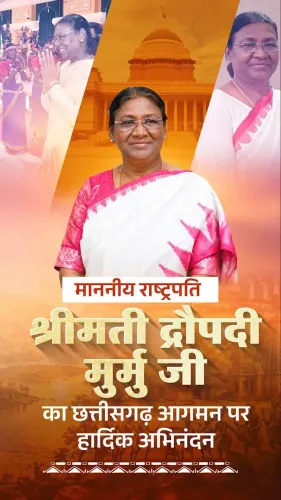
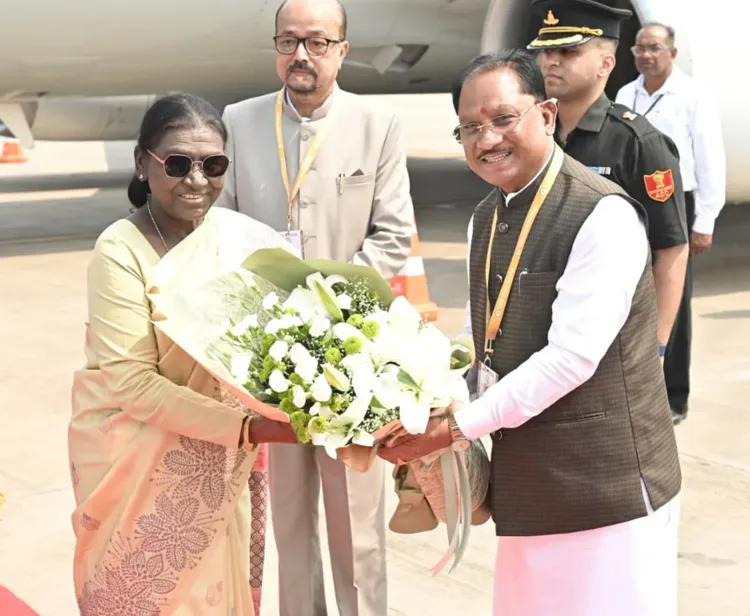
Chhattisgarh CM Vishnu Deo Sai welcomed President Draupadi Murmu — India's first tribal President — to the state on 22 October 2026, ahead of her participation in the historic Bastar Dussehra festival and the traditional Muria Darbar tribal assembly.
Key Takeaways
CM Vishnu Deo Sai extended a formal welcome to President Draupadi Murmu on behalf of all Chhattisgarh residents on 22 October 2026 .
President Murmu, who took office in 2022 , is the first person from a tribal community to serve as India's President.
She is attending the Bastar Dussehra festival, one of India's longest and most distinctive tribal cultural events rooted in Gondi traditions .
The Muria Darbar , a traditional indigenous assembly convened during Bastar Dussehra, is also part of her visit.
CM Sai framed the visit as strengthening Chhattisgarh's tribal heritage and energising the state's 'Viksit Chhattisgarh' development vision.
Chhattisgarh identifies itself as the maternal homeland of Lord Rama through its association with Mata Kaushalya .
Where legend holds that Lord Rama spent time in his mother's homeland, India's first tribal President is arriving — and Chhattisgarh Chief Minister Vishnu Deo Sai wants every resident of the state to feel the weight of that moment. On Thursday, 22 October 2026, the Chief Minister posted a formal welcome on X for President Draupadi Murmu, extending greetings on behalf of all of Chhattisgarh ahead of her attendance at the Bastar Dussehra festival and the Muria Darbar assembly.
A sacred land meets a historic guest
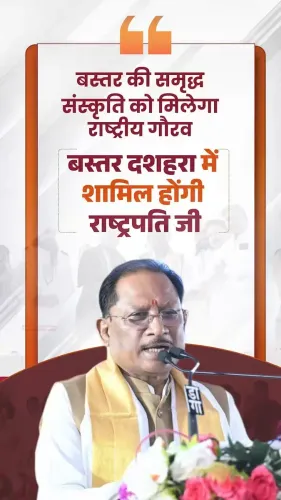
In his post, CM Sai described Chhattisgarh as 'Prabhu Shri Ram ke nanihal aur Mata Kaushalya ki pawan dhara' — 'the maternal homeland of Lord Rama and the holy land of Mother Kaushalya' — a regional identity the state has long cultivated. He expressed that President Murmu's 'dignified presence' at the festival would honour the state's 'rich tribal culture and glorious traditions' and lend fresh energy to the vision of a 'Viksit Chhattisgarh' (Developed Chhattisgarh).
The significance of the guest is hard to overstate. Draupadi Murmu, who assumed the presidency in 2022, is the first person from a tribal community to hold India's highest constitutional office. Her presence at one of the country's most distinctive indigenous festivals is not ceremonial window-dressing — it is a symbolic alignment between the nation's tribal communities and the republic's highest seat of power.
Bastar Dussehra: not your typical festival
Bastar Dussehra is among India's longest-running festivals, stretching across several weeks in southern Chhattisgarh. Unlike the more widely known Dussehra celebrations elsewhere in India, it is rooted in Gondi tribal traditions and centres on the deity Maa Danteshwari rather than the Rama-Ravana narrative. The rituals, processions, and community gatherings that define it have been passed down through generations of Bastar's indigenous communities.
Running alongside is the Muria Darbar — a traditional tribal assembly in which community leaders gather to discuss customary affairs. Together, the two events represent a living, practised cultural institution, not a reconstructed heritage show.
State building a national platform for tribal heritage
Chief ministers issuing formal presidential welcomes is standard protocol. But Chhattisgarh's framing goes further than protocol. The state has consistently positioned Bastar Dussehra as the centrepiece of its distinct indigenous identity within India's broader cultural landscape. Linking President Murmu's visit to the 'Viksit Chhattisgarh' development agenda follows an established playbook: cultural prestige and governance ambition packaged together, aimed at both the tribal heartland and a national audience.
With a tribal President attending a tribal festival in a state that anchors its identity in tribal heritage, the optics are deliberate and the stakes are genuinely cultural — not just political.
Watch now for what President Murmu says at the Muria Darbar itself: her words on tribal cultural preservation could carry far beyond Bastar.
Point of View
Which has invested heavily in tribal outreach nationally, the imagery of a tribal head of state at a tribal festival in a tribal-majority region is politically potent without needing to be explicitly partisan. CM Sai's invocation of the 'Viksit Chhattisgarh' development frame alongside the cultural welcome is a deliberate bridge between identity politics and governance delivery. How President Murmu engages at the Muria Darbar — and whether she speaks substantively on tribal rights or cultural preservation — will determine whether this visit registers as ceremonial or consequential.
NationPress
22 Oct 2026
Frequently Asked Questions
Why is President Draupadi Murmu visiting Chhattisgarh in October 2026?
President Draupadi Murmu is visiting Chhattisgarh to attend the Bastar Dussehra festival and the Muria Darbar, a traditional tribal assembly, as part of the state's major annual cultural celebrations.
What is Bastar Dussehra and how is it different from regular Dussehra?
Bastar Dussehra is a weeks-long tribal festival in southern Chhattisgarh rooted in Gondi indigenous traditions and centred on the deity Maa Danteshwari — distinct from the more widely observed Dussehra celebrations that focus on the Rama-Ravana narrative.
What is the Muria Darbar?
Muria Darbar is a traditional tribal assembly convened during Bastar Dussehra, where community leaders of the Bastar region gather to discuss customary and community affairs.
Why is President Murmu's attendance at a tribal festival significant?
Draupadi Murmu is India's first President from a tribal community, making her presence at one of the country's most prominent indigenous festivals a symbolic moment for tribal communities across the country.
What is the connection between Chhattisgarh and Lord Rama?
Chhattisgarh is traditionally associated with the maternal lineage of Lord Rama — the state is regarded as the homeland of his mother, Mata Kaushalya, a cultural identity the state actively promotes.