Goyal fires at Rahul Gandhi over double standards on EC, courts
Synopsis
Union Minister Piyush Goyal accused Congress leader Rahul Gandhi of selectively trusting the Election Commission and courts only when outcomes favour Congress, calling it a double standard the public has already seen through.
Key Takeaways
Union Minister Piyush Goyal posted in Hindi on October 22, 2026 , directly targeting Rahul Gandhi over alleged double standards on institutions.
Goyal argued Congress praises the Election Commission and voter lists after wins, then attacks them after losses — and applies the same logic to court rulings.
He addressed Rahul Gandhi by name, saying 'the public has seen through you.' The BJP has used similar framing after the 2014 and 2019 elections, positioning itself as a defender of institutional neutrality.
The Indian National Congress had not publicly responded at the time of publication.
The exchange signals that institutional credibility will remain a key fault line ahead of future state and national elections.
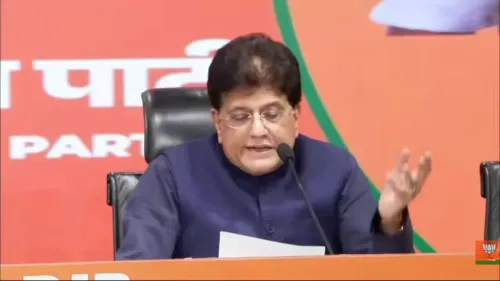
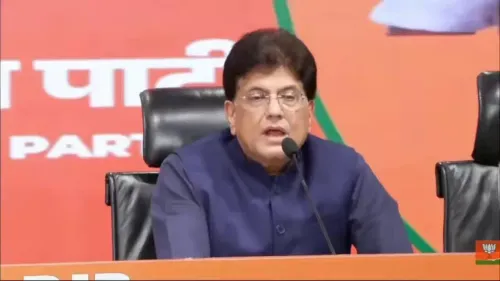
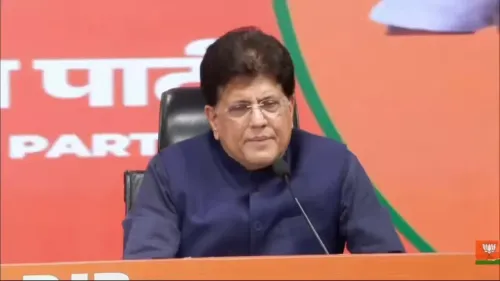
A sharp political salvo landed on Thursday, October 22, 2026, when Union Commerce and Industry Minister Piyush Goyal turned his sights on Congress leader Rahul Gandhi, accusing him of applying selective credibility to India's constitutional institutions — praising the Election Commission and courts only when outcomes favour the Congress, and attacking them when they do not.
Posting in Hindi on X, Goyal wrote: 'जब कांग्रेस चुनाव जीतें तो चुनाव आयोग और मतदाता सूची अच्छी, हारें तो गलत, फैसला पक्ष में आए तो अदालत अच्छी, विरोध में आए तो गलत…' — 'When Congress wins an election, the Election Commission and the voter list are fine; when it loses, they are wrong. When a court ruling goes in their favour, the judiciary is good; when it goes against them, it is wrong.' He closed with a direct address: 'These double standards will not work, Rahul ji — the public has seen through you.'
BJP's long-running charge against Congress and institutional credibility
The accusation is not new to Indian political theatre. After each of the 2014 and 2019 general elections — and multiple state-level contests since — whichever side lost raised questions about the Election Commission of India, voter list integrity, or electronic voting machines. The BJP, as the winning side in those cycles, has consistently positioned itself as the defender of institutional neutrality against what it calls convenient opposition scepticism.
Goyal, who also serves as the Leader of the House in the Rajya Sabha, deployed that same framing on Thursday — but with a personal edge, targeting Rahul Gandhi by name and invoking public awareness as the ultimate verdict. The rhetorical structure — 'good when you win, bad when you lose' — is designed to resonate with voters who have watched years of back-and-forth institutional criticism from both sides.
Rahul Gandhi's record of questioning electoral and judicial outcomes
As the principal face of the Indian National Congress, Rahul Gandhi has periodically raised concerns about the independence of the Election Commission and the judiciary, particularly following electoral setbacks. His supporters argue these are legitimate democratic questions about institutional accountability; his critics, Goyal prominently among them, contend the criticism is purely transactional — switched on or off depending on the result.
The Congress has not yet responded to Goyal's post as of publication time. With state elections on the horizon, exchanges like this one signal that institutional credibility — who trusts what, and when — will remain a live fault line in the run-up to future polls.
Point of View
And use it to consolidate the narrative that the opposition lacks institutional faith. The direct name-check of Rahul Gandhi — rather than 'Congress' generically — signals this is as much about delegitimising the opposition's most visible leader as it is about defending the Election Commission. In a political environment where institutional trust is itself contested terrain, the BJP's consistent defence of the EC and judiciary serves a dual purpose: it insulates the party from reform demands and reinforces its image as the guardian of democratic process. Whether this kind of sparring moves voters or simply energises each party's base is the open question as the next electoral cycle approaches.
NationPress
22 Oct 2026
Frequently Asked Questions
What did Piyush Goyal post about Rahul Gandhi on October 22 2026?
Goyal accused Rahul Gandhi of applying double standards — treating the Election Commission and courts as credible only when their decisions favour the Congress, and attacking them when they do not.
What did Goyal mean by 'double standards' against Rahul Gandhi?
Goyal argued that Congress, under Rahul Gandhi, praises electoral institutions after victories and criticises them after defeats, and does the same with judicial rulings — a pattern he called a double standard the public has now recognised.
Has Congress questioned the Election Commission before?
Yes. The Indian National Congress has periodically raised concerns about the Election Commission's independence, voter lists, and electronic voting machines, particularly after electoral setbacks in 2014, 2019, and subsequent state elections.
Who is Piyush Goyal and why does his post matter?
Piyush Goyal is India's Union Minister of Commerce and Industry, a senior BJP leader, and Leader of the House in the Rajya Sabha — making his public statements politically significant as an official government and party voice.
Did Rahul Gandhi or Congress respond to Goyal's post?
As of publication, the Indian National Congress had not issued a public response to Goyal's October 22 post.