Goyal Accuses Rahul Gandhi of Seeking Regime Change via Street Chaos
Synopsis
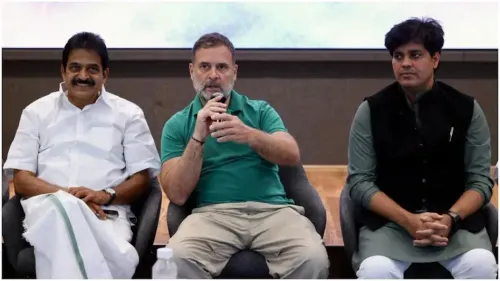
Union Minister Piyush Goyal on Friday accused Rahul Gandhi and the INDI alliance of plotting regime change through street chaos after successive electoral losses, invoking India's sovereignty and branding Congress a 'dead dynasty' in a sharp political broadside.
Key Takeaways
Piyush Goyal posted on 16 October 2026 accusing Rahul Gandhi and the INDI alliance of seeking regime change through 'street chaos' after repeated ballot-box defeats.
Goyal anchored his attack in the BJP's 2014 and 2019 Lok Sabha victories , framing them as settled democratic mandates the opposition refuses to accept.
The reference to a 'dead dynasty' is a direct jab at the Nehru-Gandhi family 's continuing grip on the Congress party.
Invoking India's sovereignty elevates the charge beyond party rivalry into the register of national interest — a deliberate rhetorical escalation.
The post arrives ahead of the winter session of Parliament and upcoming state assembly polls, signalling an aggressive BJP messaging posture against the opposition bloc.
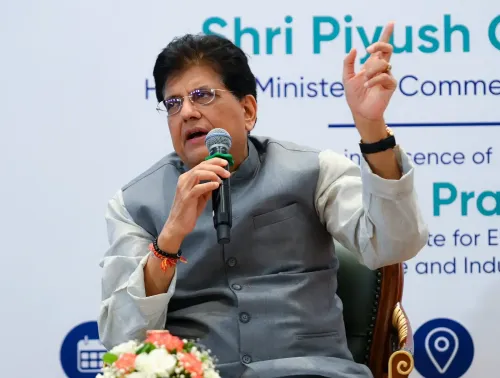
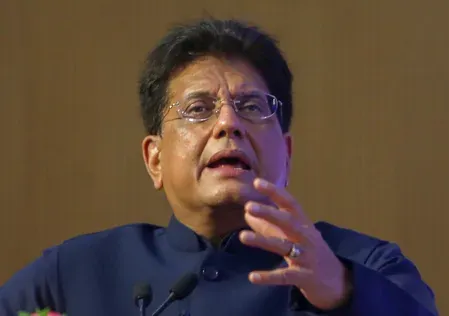
A blunt political broadside landed on Friday afternoon when Union Commerce and Industry Minister Piyush Goyal accused Rahul Gandhi and the INDI alliance of plotting 'regime change through street chaos' after repeated defeats at the ballot box — framing the opposition's post-election posture as a threat to India's democratic sovereignty.
Goyal's post pulled no punches: 'Rejected by Indian voters year after year, Rahul Gandhi and the INDI alliance now dream of forcing regime change through street chaos. Their sense of entitlement is so massive that losing a democratic vote makes them look for ways to subvert the entire system. India's sovereignty isn't up for grabs just to revive a dead dynasty.'
The Electoral Record Goyal Points To
The minister's attack is rooted in a specific electoral narrative. The BJP has dominated successive national mandates — sweeping the 2014 and 2019 Lok Sabha elections — while the Congress-led opposition absorbed heavy defeats each time. Goyal's framing treats those mandates as settled democratic verdicts, casting any extra-parliamentary mobilisation that follows as an illegitimate challenge to the will of the electorate. The phrase 'dead dynasty' is a pointed reference to the Nehru-Gandhi family's multi-generational hold over the Congress party, a line BJP leaders have deployed repeatedly to question whether the opposition's first loyalty is to a political lineage rather than to voters.The 'Street Chaos' Charge and What It Signals
Calling out 'street chaos' — without naming a specific event — is a rhetorical move with strategic weight. It pre-emptively delegitimises any opposition-organised protests or parliamentary disruptions, a tactic that gains traction ahead of assembly polls and the winter session of Parliament, where the INDIA bloc has leverage on the floor of both Houses. The INDI alliance, formally called the INDIA (Indian National Developmental Inclusive Alliance) bloc, was assembled specifically to consolidate opposition votes against the BJP. Its internal cohesion has been tested repeatedly, and Goyal's post appears designed to keep pressure on those fault lines while simultaneously rallying the BJP's base around a sovereignty message.Sovereignty as the Stakes
The sharpest escalation in Goyal's post is the invocation of 'India's sovereignty' — lifting the argument well above ordinary political rivalry into the register of national interest. By tying electoral grievance to a sovereignty threat, Goyal is signalling that the BJP intends to contest not just the opposition's policies but the legitimacy of its methods. That framing, if it sticks, could define the terms of political combat well into the next election cycle. The opposition has not yet formally responded to this specific post. Watch for a counter from the Congress communications unit and the floor dynamics when Parliament reconvenes.Point of View
It shifts the battleground from policy critique to patriotism. The 'dead dynasty' line also keeps the Congress leadership question alive in public discourse, pressuring the party ahead of assembly contests. What is notable in 2026 is the explicit use of the word 'sovereignty', a term usually reserved for external threats — deploying it against a domestic opposition signals the BJP is willing to raise the rhetorical temperature significantly. Whether the INDIA bloc can reframe the conversation around substantive policy issues, rather than fighting on the BJP's chosen terrain of legitimacy and nationalism, will define the opposition's strategic challenge in the months ahead.
NationPress
16 Oct 2026
Frequently Asked Questions
What did Piyush Goyal say about Rahul Gandhi on 16 October 2026?
Goyal posted on X accusing Rahul Gandhi and the INDI alliance of dreaming of forcing 'regime change through street chaos' after being rejected by Indian voters repeatedly, and said India's sovereignty was 'not up for grabs just to revive a dead dynasty.'
What is the INDI alliance or INDIA bloc?
The INDIA (Indian National Developmental Inclusive Alliance) bloc is an opposition coalition formed to consolidate votes against the BJP in national elections. It includes the Congress party, several regional parties, and other opposition groups.
Why does the BJP call Congress a 'dead dynasty'?
BJP leaders use the phrase to highlight the Congress party's dependence on the Nehru-Gandhi family for leadership, arguing that the party lacks democratic internal processes and is propped up by dynastic entitlement rather than voter support.
What does 'regime change through street chaos' mean in Indian politics?
It is a charge BJP leaders level at the opposition to suggest that when electoral losses occur, the opposition attempts to destabilise the government through street protests and parliamentary disruptions rather than accepting democratic verdicts.
What is the political significance of Goyal invoking India's sovereignty?
Sovereignty is typically invoked in the context of external threats; using it against a domestic opposition elevates the political conflict into a national-security register, framing opposition agitation not just as partisan activity but as a challenge to the Indian state itself.