CM Fadnavis launches 'Smart Nagrik' and 'Vidyarthi Prerna' books in Mumbai
Synopsis
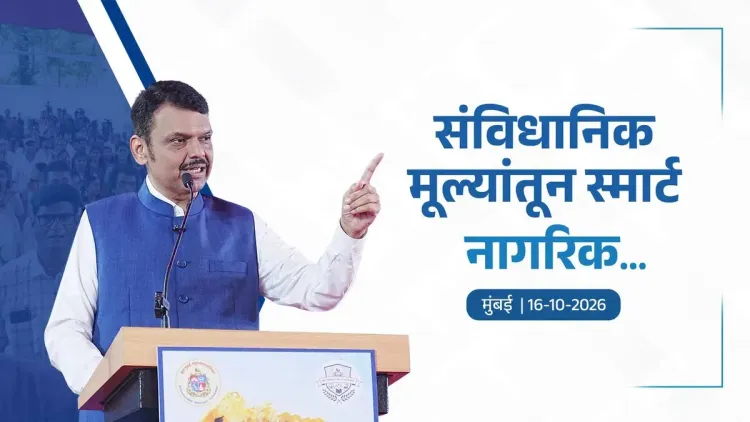
Maharashtra Chief Minister Devendra Fadnavis launched 'Smart Nagrik' and 'Vidyarthi Prerna' in Mumbai on 16 October 2026, anchoring the civic-education initiative in Dr. B. R. Ambedkar's constitutional values and the Viksit Bharat vision for 2047.
Key Takeaways
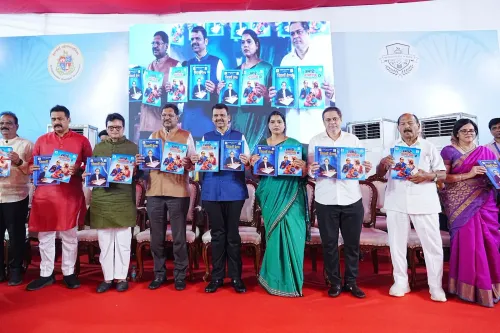
CM Devendra Fadnavis launched two books — 'Smart Nagrik' and 'Vidyarthi Prerna' — in Mumbai on 16 October 2026 .
The initiative invokes the constitutional values of Bharat Ratna Dr.
Ambedkar as the blueprint for creating informed, active citizens.
Fadnavis framed constitutional literacy as essential to realising the Viksit Bharat (Developed India) goal.
His post was bilingual — Marathi and Hindi — broadening reach across Maharashtra's diverse population.
The campaign is backed by the hashtag #SmartNagrik , suggesting a digital and civic-outreach dimension beyond the book launch itself.
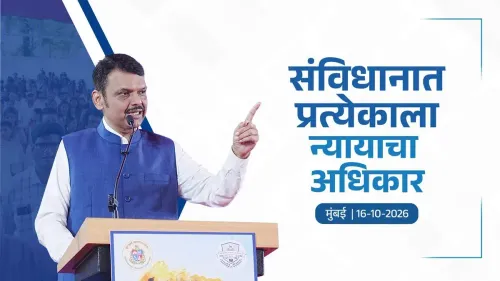
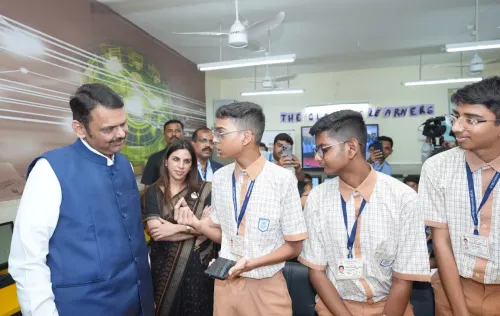
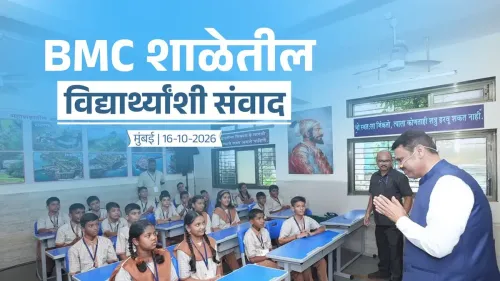
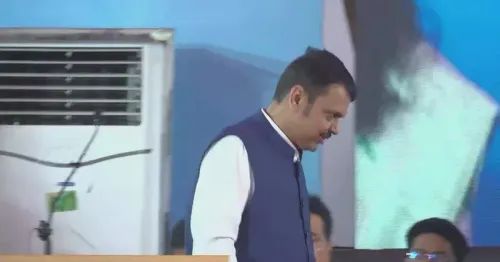
Constitutional values gifted by Bharat Ratna Dr. B. R. Ambedkar are the foundation of a smart citizen and a driver of Viksit Bharat — that was the central message as Maharashtra Chief Minister Devendra Fadnavis presided over the launch of two books, 'Smart Nagrik' and 'Vidyarthi Prerna', in Mumbai on Friday, 16 October 2026.
Posting on X after the event, CM Fadnavis underlined the spirit of the occasion in both Marathi and Hindi: 'महामानव भारतरत्न डॉ. बाबासाहेब आंबेडकर यांनी दिलेली संविधानिक मूल्ये अंगीकारली तरच स्मार्ट नागरिक बनू' — 'Only by internalising the constitutional values given by the great man Bharat Ratna Dr. Babasaheb Ambedkar can we become smart citizens and serve as the chariots of a developed India.'
Two books, one constitutional vision
The simultaneous launch of 'Smart Nagrik' and 'Vidyarthi Prerna' signals an effort to translate Ambedkar's constitutional legacy into accessible civic and educational content for young readers. The bilingual framing of the CM's message — reaching both Marathi and Hindi speakers — reflects a deliberate outreach across Maharashtra's diverse population.
The Viksit Bharat ('Developed India') framing placed the event squarely within the national vision for 2047, linking civic education rooted in constitutional values to the broader goal of an aspirational, developed nation.
Ambedkar's constitutional legacy as civic curriculum
Dr. B. R. Ambedkar, the principal architect of the Indian Constitution and recipient of the Bharat Ratna, remains a towering reference point in Maharashtra's public life. Invoking him at a book launch aimed at students and citizens carries particular weight in the state where his legacy is most deeply felt. The word 'सारथी' — charioteer or driver — used by Fadnavis is evocative: it casts ordinary citizens not as passengers but as active agents steering the nation's future.
The hashtags #SmartNagrik, #Maharashtra, and #Mumbai suggest the campaign is designed for digital amplification, with the books likely intended for school or civic-education distribution.
If constitutional literacy becomes the centrepiece of civic education in Maharashtra, the question is not whether the idea is worthy — it clearly is — but whether the books reach every classroom that needs them.
Point of View
Fadnavis is threading two powerful political needles at once: reinforcing the BJP's stated commitment to 'Viksit Bharat 2047' and simultaneously claiming Ambedkar's legacy in his home state — a symbolically charged move in Maharashtra. The bilingual rollout (Marathi and Hindi) signals an intent to maximise grassroots reach rather than restrict the message to elite circles. If the books find their way into school curricula, this could be a durable soft-power play, embedding constitutional literacy — and the BJP's brand association with it — into a generation of young Maharashtrians.
NationPress
16 Oct 2026
Frequently Asked Questions
What books did CM Devendra Fadnavis launch in Mumbai?
CM Fadnavis launched two books — 'Smart Nagrik' and 'Vidyarthi Prerna' — at an event in Mumbai on 16 October 2026, focused on civic and student education rooted in constitutional values.
What is the Smart Nagrik initiative in Maharashtra?
'Smart Nagrik' is a book launched by Maharashtra CM Devendra Fadnavis aimed at building constitutionally aware, active citizens, drawing on the legacy of Dr. B. R. Ambedkar.
Why did Fadnavis reference Dr. Ambedkar at the book launch?
Fadnavis cited Dr. Ambedkar as the source of India's constitutional values, arguing that internalising those values is the prerequisite for becoming a smart citizen and contributing to a developed India.
What does Viksit Bharat mean in the context of this launch?
'Viksit Bharat' means 'Developed India' — a national goal for 2047. Fadnavis linked constitutional civic education directly to achieving this vision.
When and where was the Smart Nagrik book launched?
The book was launched in Mumbai, Maharashtra , on 16 October 2026 , with Chief Minister Devendra Fadnavis presiding over the event.