CM Nayab Saini Secures ₹4,000 Cr Investment LOIs in Sweden
Synopsis
Chief Minister Nayab Saini's Sweden visit yields ₹4,000 crore in investment LOIs — ₹3,000 crore for Atmanirbhar Bharat-aligned manufacturing and ₹1,000 crore for retail and warehousing — plus a landmark Gurugram–Stockholm city-to-city collaboration and a bilateral Haryana–Sweden trade pact.
Key Takeaways
₹4,000 crore in Letters of Intent signed during CM Nayab Saini's Sweden visit. ₹3,000 crore targets manufacturing aligned with the Atmanirbhar Bharat self-reliance initiative. ₹1,000 crore directed at retail and warehousing infrastructure.
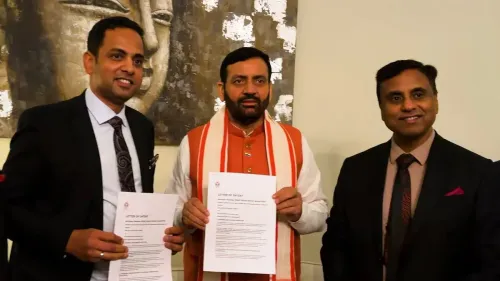
A formal City-to-City Collaboration framework established between Gurugram and Stockholm .
An overarching Haryana–Sweden bilateral trade and economic cooperation agreement was also signed.
Agreements are expected to generate skilled employment opportunities in Haryana.
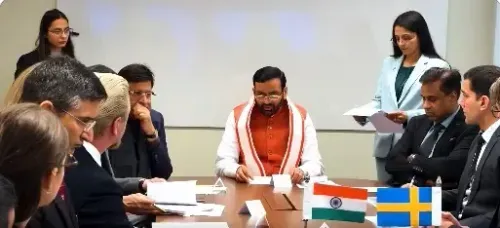
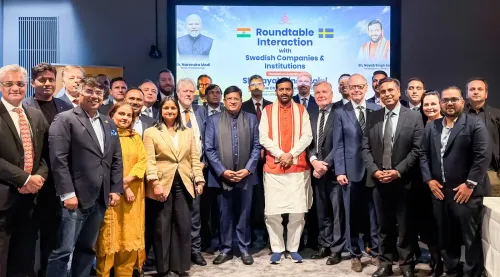
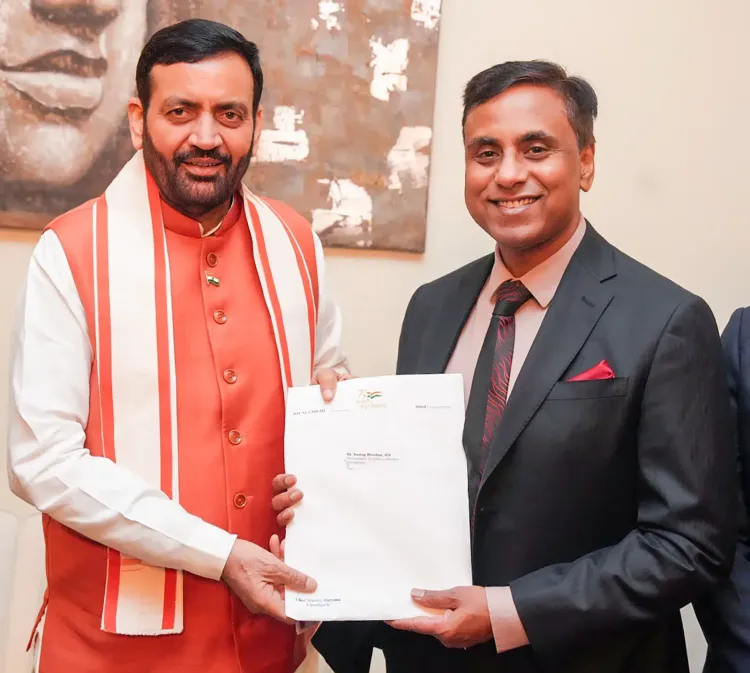
In a significant push for Haryana's industrial future, Chief Minister Nayab Saini has returned from Stockholm with Letters of Intent covering ₹4,000 crore in investment proposals — a haul that spans manufacturing aligned with the Atmanirbhar Bharat mission and a fast-growing retail and warehousing sector. The Chief Minister's Office of Haryana announced the outcomes on Friday, 16 October 2026, confirming that the Sweden visit has also produced a formal City-to-City Collaboration framework between Gurugram and Stockholm.
The ₹4,000 crore breakdown: what was signed
Of the total investment commitment, ₹3,000 crore is directed toward manufacturing and domestic-production sectors under the Atmanirbhar Bharat framework — India's 2020 national self-reliance initiative aimed at reducing import dependence and building domestic supply chains. The remaining ₹1,000 crore targets retail and warehousing, a sector where Haryana — and Gurugram in particular — has emerged as a preferred logistics corridor for the National Capital Region. Both sets of LOIs are investment proposals, not disbursements; their conversion into on-ground capital will be the metric to watch in coming quarters.
Gurugram–Stockholm: what a city-to-city pact actually means
Beyond the headline figures, the agreement to establish a City-to-City Collaboration between Gurugram and Stockholm is arguably the most structurally durable outcome of the visit. Such frameworks typically enable direct municipal exchanges on urban planning, green technology, and innovation ecosystems — bypassing the slower lanes of central-government diplomacy. Stockholm has an established reputation as a global centre for sustainability and tech, and Gurugram brings one of India's densest concentrations of multinational offices and logistics infrastructure. The pairing, on paper, is complementary.
A broader trade and economic cooperation agreement between Haryana and Sweden was also signed, providing an overarching bilateral architecture for these sector-specific deals to sit within.
State-level economic diplomacy, and why it is accelerating
Saini's Sweden visit is part of a visible pattern: Indian states have increasingly taken their investment pitch directly to foreign capitals rather than waiting for central-government trade missions. Haryana has a particular incentive — its proximity to Delhi and its concentration of industrial corridors in districts like Gurugram, Faridabad and Manesar make it a natural first pitch to foreign investors looking for NCR access. Nordic countries, Sweden included, have been a recurring target for these state-level overtures, given their strength in sustainability, advanced manufacturing, and clean-tech — sectors that align with both Atmanirbhar Bharat goals and Haryana's current industrial profile.
The CMO statement noted that the agreements are expected to 'provide new momentum to industrial cooperation in the state and create new employment opportunities for skilled youth' — kaushal yuvaon ke liye rozgaar ke naye avsar [new employment opportunities for skilled youth]. The youth employment angle carries political weight in a state where joblessness among the educated remains a pressure point.
Signed LOIs are a beginning, not a finish line. Haryana's ability to fast-track clearances and deliver on infrastructure promises will determine whether Stockholm's interest converts into Gurugram's growth.
Point of View
000 crore of the LOIs within the Atmanirbhar Bharat framework is politically astute — it aligns Haryana's investment narrative with Delhi's macro-economic doctrine, making the state a cooperative rather than competitive actor in national policy terms. The Gurugram–Stockholm city partnership is the longer-term bet: if it matures, it could plug one of India's busiest commercial hubs into a Nordic sustainability and tech network. The real test is conversion — India's investment diplomacy history is littered with LOIs that never became shovel-in-ground reality, and Haryana's clearance and infrastructure delivery record will be scrutinised closely by Swedish counterparts before capital actually moves.
NationPress
16 Oct 2026
Frequently Asked Questions
What investment did Haryana secure during CM Nayab Saini's Sweden visit?
Haryana secured Letters of Intent for ₹4,000 crore in investment proposals — ₹3,000 crore for Atmanirbhar Bharat-aligned manufacturing and ₹1,000 crore for retail and warehousing.
What is the Gurugram–Stockholm City-to-City Collaboration?
It is a formal partnership framework signed between Gurugram and Stockholm to promote direct municipal cooperation on trade, urban innovation, and economic development.
What is an LOI (Letter of Intent) in the context of investment deals?
An LOI is a formal expression of intent to invest, not a binding disbursement. It signals investor interest and sets the stage for detailed negotiations and actual capital deployment.
What is Nayab Saini's role and why is he visiting Sweden?
Nayab Saini is the Chief Minister of Haryana. He visited Sweden to attract foreign direct investment and establish bilateral trade partnerships to boost industrial growth and employment in the state.
How does the Haryana–Sweden deal connect to Atmanirbhar Bharat?
A major portion of the signed investment proposals — ₹3,000 crore — is directed toward domestic manufacturing sectors that align with the Atmanirbhar Bharat Abhiyan , India's national self-reliance initiative launched in 2020.