HP Govt Funds 'Children of the State' Till Age 27
Synopsis
The Himachal Pradesh government has designated orphaned children as 'Children of the State', pledging full financial support until age 27 — including air travel and 3-star hotel stays during educational tours — in a welfare commitment that sets a notably high benchmark.
Key Takeaways
The Himachal Pradesh government has formally designated orphaned children as 'Children of the State' .
The state covers complete expenses for these children until they reach 27 years of age .
During educational trips, beneficiaries are entitled to air travel and 3-star hotel accommodation.
The age ceiling of 27 is significantly higher than the standard welfare cut-off of 18, covering higher education and early career years.
The scheme frames the state's role as parental, not merely administrative, ensuring dignity alongside financial support.
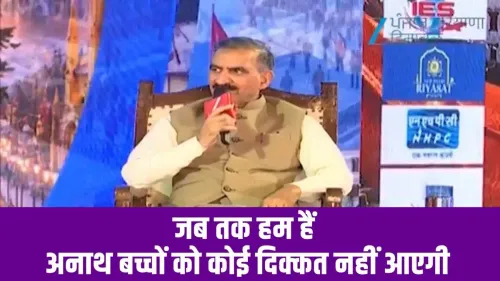
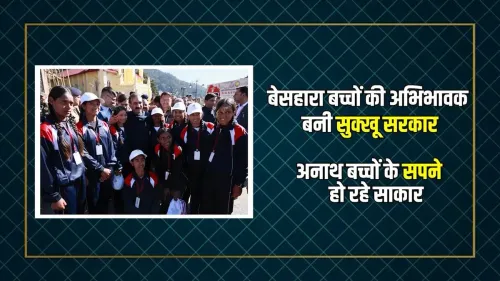
Orphaned children in Himachal Pradesh now carry a title that comes with real weight — 'Children of the State' — and a government promise to cover every rupee of their expenses until they turn 27. The Chief Minister's Office of Himachal Pradesh announced on Friday, October 16, 2026, that children who have lost both parents are not merely beneficiaries of a welfare scheme — they are wards of the state itself.
The CMO's post states: 'माता-पिता को खो चुके बच्चों को हमने चिल्ड्रन ऑफ द स्टेट का दर्जा दिया है।' ('We have accorded the status of Children of the State to children who have lost their parents.') The announcement goes further than a monthly stipend — the state government says it bears the complete expenses of these children right through to age 27, a threshold that covers not just schooling but professional education and early adult life.Air Travel and 3-Star Stays — A Welfare Benchmark
The detail that stands out most sharply is the educational-tour provision. According to the CMO's post, during educational trips, these children are entitled to air travel and accommodation in 3-star hotels. That is not standard state-welfare language — it is a deliberate signal that the government intends parity of experience, not bare-minimum survival support. The message is pointed: children who lost their parents should not lose their dignity or their opportunities along with them.
What 'Children of the State' Status Means in Practice
By formally designating orphaned children as 'Children of the State', the Himachal Pradesh government is framing the relationship as parental, not bureaucratic. Full financial coverage until 27 years of age spans the most critical educational and career-formation years — undergraduate and postgraduate study, vocational training, competitive exam preparation. The age ceiling of 27 is notably higher than most conventional child-welfare cut-offs, which typically end at 18.
The provision of air travel and upscale accommodation during educational excursions is an explicit quality-of-life equaliser — ensuring these children participate in learning experiences on the same terms as peers from stable households. It also suggests the scheme is designed to prevent the social invisibility that often shadows children who age out of institutional care.
A Mountain State Sets a High Bar
Himachal Pradesh is a relatively small, mountainous state with limited fiscal bandwidth, which makes the breadth of this commitment more striking. A state of roughly 7 million people pledging comprehensive care — housing, education, travel, and lodging — for orphaned children until age 27 goes beyond what most larger Indian states have put on record. Whether the scheme's delivery matches its announcement is the question that will define its legacy.
For every child in Himachal Pradesh who has faced the irreplaceable loss of both parents, the state has just said, plainly: we are your family now — and we will show up until you are ready to stand on your own.
Point of View
The Himachal Pradesh government is making a deliberate political statement about the state's duty of care — one that extends well into adulthood. The inclusion of air travel and upscale accommodation during educational trips is an unusually visible signal of parity, designed to prevent the stigma that often accompanies institutional welfare. Extending the support ceiling to 27 aligns with an emerging national conversation about raising the age of welfare entitlements to match the realities of longer education cycles and competitive job markets. Whether the scheme survives budget pressures and translates consistently to beneficiaries will be the true test of a promise that is, on paper, one of the most ambitious child-welfare commitments in any Indian state.
NationPress
16 Oct 2026
Frequently Asked Questions
What is the 'Children of the State' scheme in Himachal Pradesh?
'Children of the State' is a designation given by the Himachal Pradesh government to children who have lost both parents. Under the scheme, the state government bears their complete expenses until the age of 27, including educational travel with air tickets and 3-star hotel stays.
Until what age does the Himachal Pradesh government support orphaned children?
The Himachal Pradesh government supports orphaned children designated as 'Children of the State' until they reach 27 years of age, covering all their expenses through that period.
Do orphaned children in HP get air travel under this scheme?
Yes. According to the Chief Minister's Office of Himachal Pradesh, children under the 'Children of the State' scheme are entitled to air travel and accommodation in 3-star hotels during educational excursions.
Which government announced the Children of the State scheme?
The scheme was announced by the Government of Himachal Pradesh, as communicated through the official Chief Minister's Office account on October 16, 2026.
How is the HP orphan welfare scheme different from other Indian state schemes?
The HP scheme extends financial coverage to age 27, significantly beyond the conventional 18-year cut-off used in most Indian state welfare programmes, and explicitly includes air travel and 3-star hotel stays during educational trips — an unusually high standard for a state welfare initiative.