HP Govt Pays Full Education Cost for Widows' Children
Synopsis
The Himachal Pradesh CMO announced on 16 October 2026 that the state will fully fund education for widows' children including medical and engineering degrees, and offer loans up to ₹20 lakh at 1% interest for out-of-state students from families earning under ₹12 lakh a year.
Key Takeaways
The Himachal Pradesh government will bear the complete education cost of children of widowed women, including professional courses in medicine and engineering.
Families with an annual income up to ₹12 lakh are eligible for the concessional education loan for out-of-state study.
The loan ceiling is set at ₹20 lakh , designed to cover tuition, hostel, and living expenses at colleges outside Himachal Pradesh.
The interest rate on these loans is 1% , far below the 9–14% commercial rates typically charged by banks.
The twin measures target widows' children and low-to-middle-income families — the two groups most vulnerable to dropout at the higher education stage.
Scheme utilisation data and any revisions to ceilings are expected to be visible in upcoming state budget and education department notifications.
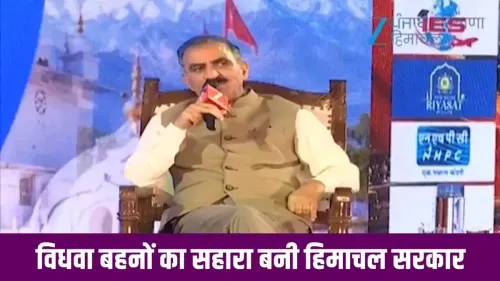
From a village widow's daughter dreaming of a medical seat to a first-generation engineer from a low-income family — Himachal Pradesh is staking government money on both. The Chief Minister's Office of Himachal Pradesh announced on Friday, 16 October 2026 that the state is covering the complete education expenses of children of widowed women, right up to professional degrees in medicine and engineering.
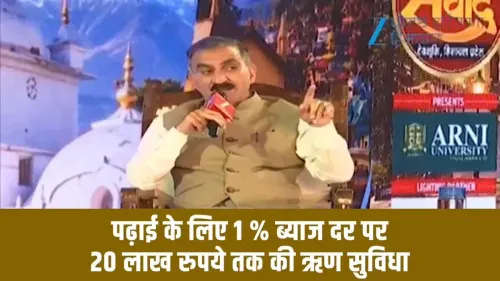
The announcement, posted on X, also detailed a concessional education loan scheme for students studying outside Himachal Pradesh: families with an annual income of up to ₹12 lakh can access loans of up to ₹20 lakh at a steeply subsidised rate of just 1% interest.
Full Coverage for Widows' Children — Doctors, Engineers Included
The state's commitment on widows' children is categorical. As the post states — 'चाहे उन्हें डॉक्टर बनना हो या इंजीनियर' ('whether they want to become a doctor or an engineer') — there is no course exclusion. Professional programmes that carry the steepest fees are explicitly brought within the safety net, plugging a gap that income-linked schemes often leave open.
Himachal Pradesh has historically layered dedicated support for widows and orphans on top of its general welfare architecture. This announcement reinforces that tradition, extending it deeper into higher and professional education — historically the point at which students from vulnerable households are most likely to drop out.
₹20 Lakh at 1% — Who Qualifies for the Loan Scheme
The concessional loan is aimed squarely at aspirational, middle-to-lower-income families sending children out of state for study. An annual family income ceiling of ₹12 lakh is the eligibility threshold — broad enough to include salaried government employees, small traders, and farm households in the hills. The ₹20 lakh loan ceiling is designed to cover tuition, hostel, and living costs at private colleges and universities across India.
The 1% interest rate is the headline number here. Commercial education loans in India typically carry rates between 9% and 14%. At 1%, the state is effectively absorbing the bulk of the interest burden — converting what would be a crippling repayment schedule into a manageable one for households earning under ₹12 lakh a year.
Himachal's Wider Pattern of Education-Welfare Layering
Indian states routinely run interest-subsidy programmes on education loans to widen access to professional courses. What distinguishes Himachal Pradesh's approach is the layering: a universal subsidy scheme running alongside a categorical, full-coverage commitment for children of widows. Together, the two measures target the two most common failure points — prohibitive interest costs for ordinary families and the complete financial exposure faced by households with no earning male member.
The state's high literacy base makes it fertile ground for such schemes; the demand for professional education is real and documented. Whether the utilisation figures and budgetary outlay match the stated ambition will be visible in upcoming state budget documents and education department notifications.
For a hill state where geography already inflates the cost of studying away from home, a 1% loan at ₹20 lakh could be the difference between a student catching a bus to a medical college and staying behind. That is the bet Shimla is placing.
Point of View
The state is running two parallel tracks — universal concessional loans and categorical full coverage for the most vulnerable. This layered architecture is increasingly common in hill and smaller states where the electorate is closely attuned to education spending as a tangible welfare signal. The 1% interest rate, if sustained in the budget, would represent a significant fiscal commitment and a direct challenge to commercial lenders' hold on the aspirational student market. The political calculus is straightforward — professional education access in a high-literacy state is both a genuine development lever and a durable vote-bank narrative.
NationPress
16 Oct 2026
Frequently Asked Questions
Who is eligible for the free education scheme for widows' children in Himachal Pradesh?
Children of widowed women in Himachal Pradesh are eligible for full state-funded education, including professional courses such as medicine and engineering, with no course exclusions mentioned in the announcement.
What is the income limit for the HP education loan at 1% interest?
Families with an annual income of up to ₹12 lakh are eligible for the concessional education loan scheme for students studying outside Himachal Pradesh.
How much education loan can students get from Himachal Pradesh at 1% interest?
Eligible students can receive up to ₹20 lakh as an education loan at 1% annual interest under the scheme announced by the Himachal Pradesh CMO.
Does the HP education scheme cover private medical and engineering colleges?
The announcement states full coverage for children of widows regardless of whether they pursue medicine or engineering; the specific coverage of private versus government institutions was not detailed in the post.
How does the HP 1% education loan compare to normal bank education loan rates?
Commercial bank education loans in India typically carry interest rates between 9% and 14%, making the Himachal Pradesh government's 1% rate a highly subsidised alternative that effectively transfers the bulk of interest costs to the state.