HP CMO Highlights Plight of Families After Breadwinner's Death
Synopsis
The Chief Minister's Office of Himachal Pradesh flagged the acute educational and financial hardship faced by families — especially single mothers — when the sole earning member dies suddenly, hinting at a forthcoming fee-support or scholarship intervention for affected students.
Key Takeaways
The Chief Minister's Office of Himachal Pradesh posted on 9 July 2026 highlighting the crisis families face after the sudden death of a breadwinner.
The post specifically identifies high institutional fees as a key barrier to continuing children's education after such a loss.
The statement centres the burden on mothers who must manage both household expenses and children's schooling simultaneously.
Himachal Pradesh has existing widow pension and education-support programmes dating back to the early 2000s.
Such official communications from state governments typically precede or accompany the rollout of new scholarship or fee-waiver schemes.
CM Sukhvinder Singh Sukhu's administration has prioritised social security expansion since taking office in December 2022 .
The Chief Minister's Office of Himachal Pradesh posted on 9 July 2026 drawing attention to the acute financial and educational crisis that strikes families when the sole earning member dies suddenly, with a particular focus on the hardship faced by mothers trying to sustain their children's education in institutions with high fee structures.
Context
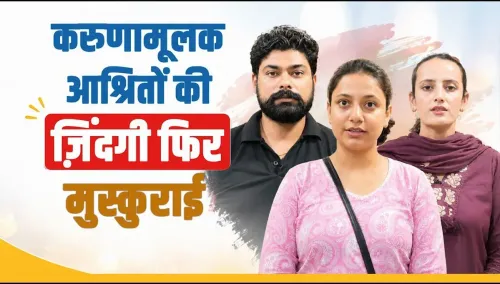
The post, written in Hindi, states: 'किसी परिवार के कमाने वाले सदस्य का अचानक निधन हो जाए, तो पूरा परिवार संकट में आ जाता है' — 'If the earning member of a family suddenly passes away, the entire family is plunged into crisis.' It goes on to note that the burden becomes especially severe when children are enrolled in quality institutions where fees are considerably high, making it extremely difficult for the mother to simultaneously manage the household and keep the children in school or college.
The statement is notable both for its empathetic framing and for the specific detail it highlights: the intersection of high private-institution fees and the sudden loss of income, a combination that frequently forces students to drop out.
Policy Backdrop
Himachal Pradesh has maintained widow pension and education-support programmes for several decades, aimed at cushioning families in hilly and rural areas from the economic shock of losing a breadwinner. These schemes have historically aligned with central government social-welfare guidelines while addressing the state's distinct demographic and geographic challenges.
Across India, state governments have periodically introduced or expanded scholarship and maintenance-grant mechanisms specifically designed to prevent student dropouts after a family breadwinner's death. Such public communications from official government accounts typically precede or accompany the rollout or enhancement of targeted financial-aid schemes, including fee waivers and direct benefit transfers to eligible families.
Chief Minister Sukhvinder Singh Sukhu, who has led the Congress-led administration in Himachal Pradesh since December 2022, has emphasised social security expansion as a priority of his government.
Stakeholders and Impact
The primary stakeholders identified in the post are single mothers and their children enrolled in schools and colleges — particularly private or professional institutions where annual fees can run into several lakh rupees. For such families, the sudden death of the earning member can mean the immediate withdrawal of children from education, with long-term consequences for social mobility.
Families in Himachal Pradesh's remote and hilly districts face compounded challenges: limited local employment options for widowed mothers, higher transportation costs, and fewer alternative income sources, making state intervention especially consequential for this demographic.
What's Next
The official framing of the problem — centred on fee burden and the mother's dual role — signals that a policy response targeting precisely this gap may be forthcoming. Observers will watch for a government order detailing eligibility criteria, the quantum of financial assistance, and the application process for any new or enhanced scheme covering children studying in private or professional institutions after the loss of a parent.
If a formal scheme announcement follows, it would represent a meaningful expansion of Himachal Pradesh's existing social-welfare architecture and could serve as a model for other hill states grappling with similar demographic pressures.
Point of View
A politically visible constituency. It signals that any forthcoming scheme will likely go beyond existing widow pension support and address the private-education segment, where dropout risk is high but current state coverage is thin. For the Sukhu administration, which has sought to distinguish its welfare agenda from previous governments, a well-designed fee-support mechanism for bereaved families could yield both social impact and political capital ahead of future electoral cycles. The broader pattern across Indian states suggests this kind of empathy-first communication is rarely standalone — a policy announcement is likely close.
NationPress
8 Oct 2026
Frequently Asked Questions
What is the Himachal Pradesh government doing to help families after a breadwinner dies?
The Chief Minister's Office of Himachal Pradesh has publicly acknowledged the crisis such families face, particularly around education costs, signalling a possible new or enhanced scheme to support children's schooling after the death of the earning parent. Existing programmes include widow pensions and education-support grants.
What schemes does Himachal Pradesh have for widows and their children's education?
Himachal Pradesh has operated widow pension schemes and education-support programmes since at least the early 2000s. These are designed to provide financial relief to families that lose their primary earner, though coverage of high-fee private institutions has historically been limited.
Who is the Chief Minister of Himachal Pradesh in 2026?
Sukhvinder Singh Sukhu is the Chief Minister of Himachal Pradesh. He has led a Congress-led government since December 2022 and has made social security expansion a stated priority of his administration.
How does the sudden death of a breadwinner affect children's education in India?
When a family's sole earning member dies suddenly, children — especially those in private schools or professional colleges with high fees — are at significant risk of dropping out. Mothers are often left managing household expenses alone, making continued fee payments extremely difficult without state support.
Will Himachal Pradesh announce a new scholarship for children of deceased breadwinners?
No formal scheme has been announced as of the date of this post. However, official communications of this nature from state government accounts typically precede policy rollouts. Observers are watching for a government order detailing eligibility, the amount of assistance, and the application process.