Goyal Highlights Why Tripura's Industrial Growth Matters

Synopsis
Union Commerce Minister Piyush Goyal on 9 July 2026 posted a video urging attention to Tripura's industrial development, spotlighting the northeastern state's strategic role in India's Act East Policy and trade connectivity with Bangladesh and ASEAN.
Key Takeaways
Piyush Goyal posted a video on 9 July 2026 calling for awareness of Tripura's industrial development .
Tripura borders Bangladesh on three sides, giving it strategic importance for India's trade with Southeast Asia.
The North East Industrial Development Scheme (NEIDS) , approved in 2017 , offers capital investment and interest subsidies to new industrial units in the region.
The Act East Policy (rebranded 2014 ) positions northeastern states as gateways to ASEAN markets.
Key beneficiaries include MSME units and local youth in Tripura, with rubber, bamboo and agro-processing identified as priority sectors.
Policy watchers expect possible scheme updates or investment summit announcements tied to this renewed focus on Tripura.
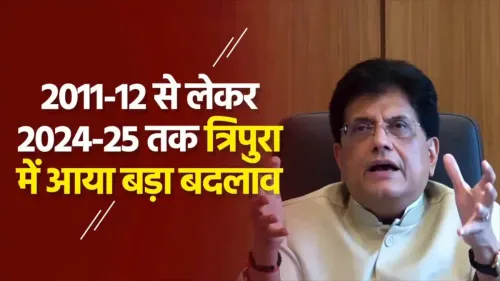
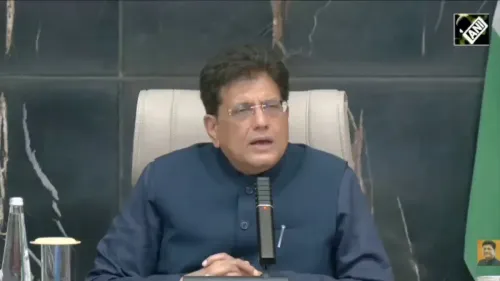
Union Commerce and Industry Minister Piyush Goyal on Thursday, 9 July 2026 shared a video on X asking Indians to understand why the industrial development of Tripura is essential, drawing attention to the northeastern state's untapped economic potential and its strategic role in India's trade architecture.
Context
The post, captioned 'Janiye kyun zaroori hai Tripura ka audyogik vikas' ('Know why Tripura's industrial development is necessary'), is accompanied by a video that frames the northeastern state's growth as a national priority. Goyal, who also serves as Leader of the House in the Rajya Sabha, has consistently championed industrial outreach to India's northeastern states as part of the Union government's broader economic integration agenda.
Tripura borders Bangladesh on three sides and has historically been constrained by limited connectivity and infrastructure, despite possessing significant natural resources including rubber, tea, bamboo, and handicrafts. The state's geographic position gives it outsized strategic importance as India deepens economic ties with Southeast Asia.
Policy Backdrop
The push for Tripura's industrialisation sits within a well-established policy lineage. The North East Industrial and Investment Promotion Policy (NEIIPP), notified in 2007, introduced fiscal incentives to attract industry to the region. A decade later, the North East Industrial Development Scheme (NEIDS), approved by the Union Cabinet in 2017, extended capital investment subsidies and interest subventions to new industrial units across northeastern states including Tripura.
Overarching these schemes is the Act East Policy, rebranded in 2014, which repositions India's northeastern states as gateways to ASEAN markets rather than peripheral territories. Under this framework, Tripura's proximity to Bangladesh — and through it to Myanmar and beyond — becomes a commercial asset rather than a logistical liability.
Stakeholders and Impact
The primary beneficiaries of accelerated industrial activity in Tripura are MSME units and local youth, groups that successive policy documents have identified as the target of employment generation efforts in the Northeast. Rubber processing, bamboo-based manufacturing, and agro-processing are sectors where Tripura holds a comparative advantage and where small enterprises can scale with targeted support.
For the broader Indian economy, a more industrially active Tripura strengthens the case for using the India–Bangladesh trade corridor more intensively. Bangladesh is one of India's largest trading partners in the subcontinent, and land-port connectivity through Tripura — particularly the Agartala–Akhaura rail link — positions the state as a critical node in regional supply chains.
What's Next
Minister Goyal's public communication around Tripura's industrial potential is likely a precursor to concrete announcements, possibly timed to an upcoming Northeast investment summit or the next Union Budget cycle. Watchers of northeastern policy will look for updates to central incentive schemes, enhanced capital outlay for industrial corridors, or state-level policy complementarity from the Tripura government. The emphasis on explaining the 'why' of Tripura's development signals a deliberate effort to build public and investor awareness ahead of larger policy moves.
Point of View
Not mere information. It signals that the Union government is preparing to make a fresh case for northeastern industrialisation, likely with an eye on the next budget cycle or a Northeast investor conclave. The timing also reflects a broader BJP strategy of showcasing governance dividends in states like Tripura where the party holds power and needs to demonstrate economic delivery. Positioning Tripura as a trade gateway rather than a development charity case marks a subtle but important rhetorical shift in how Delhi talks about the Northeast.
NationPress
8 Oct 2026
Frequently Asked Questions
Why is Tripura important for India's industrial growth?
Tripura borders Bangladesh on three sides and sits at the edge of India's Act East Policy corridor, making it a potential gateway for trade with Bangladesh and ASEAN nations. Its natural resources — rubber, bamboo, tea — also provide a base for agro and forest-based industries.
What government schemes support industries in Tripura?
The North East Industrial Development Scheme (NEIDS), approved by the Union Cabinet in 2017, provides capital investment subsidies and interest subventions to new industrial units in Tripura and other northeastern states. The earlier NEIIPP of 2007 also offered fiscal incentives for the region.
What did Piyush Goyal post about Tripura?
On 9 July 2026, Commerce and Industry Minister Piyush Goyal shared a video on X asking people to understand why Tripura's industrial development is necessary, highlighting the state's economic and strategic importance.
What is India's Act East Policy and how does it relate to Tripura?
The Act East Policy, rebranded in 2014, aims to deepen India's economic engagement with ASEAN countries and positions the northeastern states as the country's eastern frontier for trade. Tripura's proximity to Bangladesh and the Agartala–Akhaura rail link make it a key node under this policy.
Who benefits from industrial development in Tripura?
MSME units and local youth are identified as the primary beneficiaries, with sectors such as rubber processing, bamboo-based manufacturing, and agro-processing offering the most immediate employment and investment opportunities.