Goyal Invites States to Apply for BHAVYA Industrial Parks
Synopsis
Commerce Minister Piyush Goyal on 23 May 2026 called on all States and Union Territories to apply under the BHAVYA scheme for developing world-class industrial parks, extending the Modi Government's decade-long push to build plug-and-play manufacturing infrastructure through a federal partnership model.
Key Takeaways
Union Commerce Minister Piyush Goyal announced the BHAVYA scheme on 23 May 2026 , inviting all States and UTs to apply for industrial park development.
The scheme follows the established federal model where the Centre sets the framework and states contribute land and local approvals.
BHAVYA builds on a decade of policy lineage including Make in India (2014), the National Industrial Corridor Development Programme (2014-15), and PM Gati Shakti (2021).
State governments and manufacturing investors are the primary stakeholders expected to benefit from plug-and-play industrial infrastructure.
Key milestones ahead include publication of eligibility norms, application deadlines, and any formal cabinet or budget approvals for the scheme.
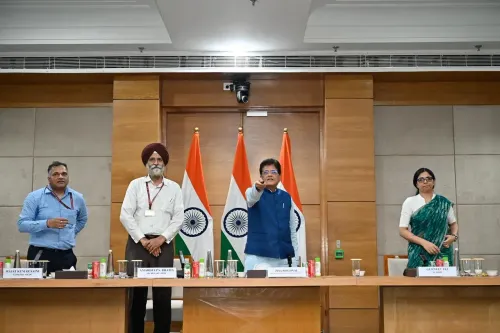
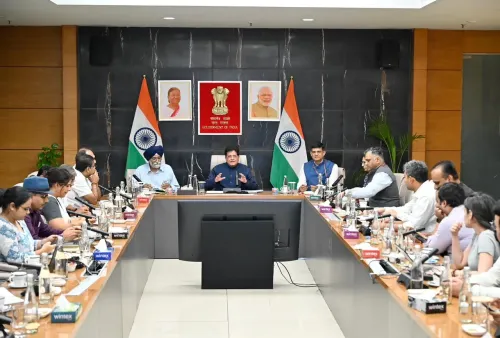
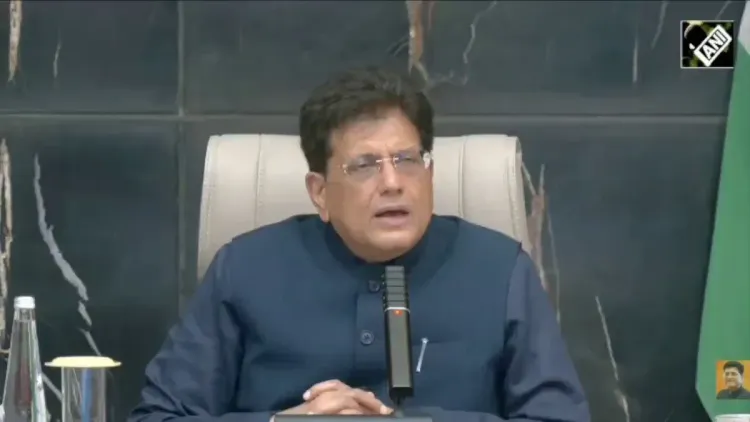
Union Commerce and Industry Minister Piyush Goyal on Saturday, 23 May 2026 announced that the Modi Government is inviting all States and Union Territories to apply for the development of world-class industrial parks under the BHAVYA scheme, signalling a fresh push to expand India's manufacturing infrastructure through a federal partnership model.
Context
Goyal's post, shared on X, states plainly: 'The Modi Government invites the States and Union Territories to apply for the development of a world-class industrial park under the BHAVYA scheme.' The announcement positions the scheme as a centrally driven initiative that places implementation responsibility squarely on state and UT administrations, which must submit applications to be considered for selection.
The call to states follows a well-established federal model in Indian industrial policy, where the Centre designs and funds the framework while state governments contribute land, local approvals, and on-ground coordination. This division of labour has been a defining feature of major manufacturing programmes since 2014.
Policy Backdrop
The BHAVYA scheme sits within a broader policy architecture that the Modi Government has built over more than a decade. The Make in India initiative, launched in September 2014, first signalled India's ambition to become a global manufacturing hub, while the National Industrial Corridor Development Programme, approved in 2014-15, introduced the concept of integrated industrial parks with plug-and-play infrastructure.
The PM Gati Shakti National Master Plan, launched in 2021, added a logistics coordination layer, ensuring that new industrial zones are linked to roads, railways, ports, and airports through a unified planning framework. The Industrial Park Rating System, introduced in 2018, further standardised quality benchmarks for such parks. BHAVYA, as announced, appears to extend this lineage by inviting states to compete for central support in building next-generation facilities.
Stakeholders and Impact
State governments and Union Territory administrations are the immediate stakeholders, as they must initiate the application process. For states with available land banks and investor-ready ecosystems, the scheme offers an opportunity to attract domestic and foreign manufacturing investment under a centrally validated brand.
Manufacturing investors — both domestic conglomerates and multinational corporations scouting for production bases in India — stand to benefit from industrial parks that meet world-class infrastructure standards. Plug-and-play parks reduce the time and cost of setting up operations, a persistent concern for investors comparing India with competing destinations in Southeast Asia.
What's Next
The immediate milestones to watch are the publication of detailed eligibility norms and selection criteria, application deadlines for states and UTs, and any follow-up cabinet approvals or budget allocations that formalise the scheme's funding pattern. The pace at which states respond to the invitation will also indicate how much political and administrative appetite exists at the sub-national level for this model of industrial development.
If the scheme gains traction, it could add a significant number of investment-ready industrial clusters to India's manufacturing map, reinforcing the country's pitch to global supply chains looking to diversify beyond China in the coming years.
Point of View
Application-based central schemes to incentivise state-level industrial action — a model that shifts accountability downward while retaining central oversight and branding. By framing the call as an invitation rather than a directive, the Centre creates political ownership at the state level, which can accelerate implementation but also risks uneven uptake across states with varying administrative capacity. For Minister Goyal, the announcement reinforces his portfolio's central role in India's manufacturing ambitions ahead of a period when global supply-chain realignment is creating rare windows for new industrial entrants. The scheme's real test will be whether its selection criteria and funding commitments are robust enough to attract states that have the land and intent to deliver genuinely world-class outcomes.
NationPress
19 Sept 2026
Frequently Asked Questions
What is the BHAVYA scheme?
The BHAVYA scheme is a central government initiative under which States and Union Territories can apply to develop world-class industrial parks, as announced by Commerce Minister Piyush Goyal on 23 May 2026. Detailed eligibility norms and funding patterns are yet to be publicly notified.
How can states apply for the BHAVYA industrial park scheme?
States and Union Territories have been invited to submit applications under the BHAVYA scheme; specific application procedures, deadlines, and selection criteria are expected to be published by the Ministry of Commerce and Industry.
What is the BHAVYA scheme related to Make in India?
BHAVYA extends the Make in India policy lineage that began in September 2014, building on earlier programmes such as the National Industrial Corridor Development Programme and the PM Gati Shakti National Master Plan to create plug-and-play manufacturing infrastructure.
Who announced the BHAVYA scheme for industrial parks?
Union Commerce and Industry Minister Piyush Goyal announced the scheme on 23 May 2026, stating that the Modi Government is inviting all States and Union Territories to apply for industrial park development under BHAVYA.
What are world-class industrial parks in India?
World-class industrial parks in India typically offer plug-and-play infrastructure — ready utilities, roads, logistics links, and regulatory clearances — so that manufacturing investors can begin operations quickly. Standards are benchmarked through frameworks like the Industrial Park Rating System introduced in 2018.