Giriraj Singh flags BHAVYA scheme to build 100 industrial parks
Synopsis
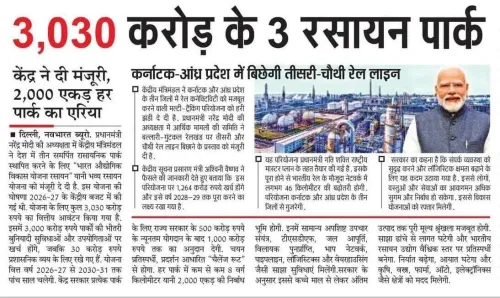
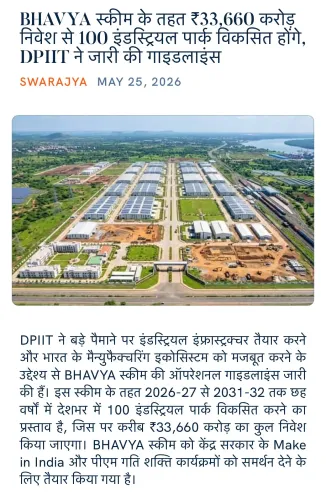
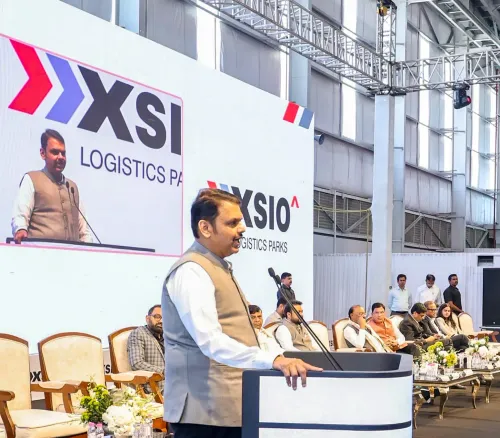
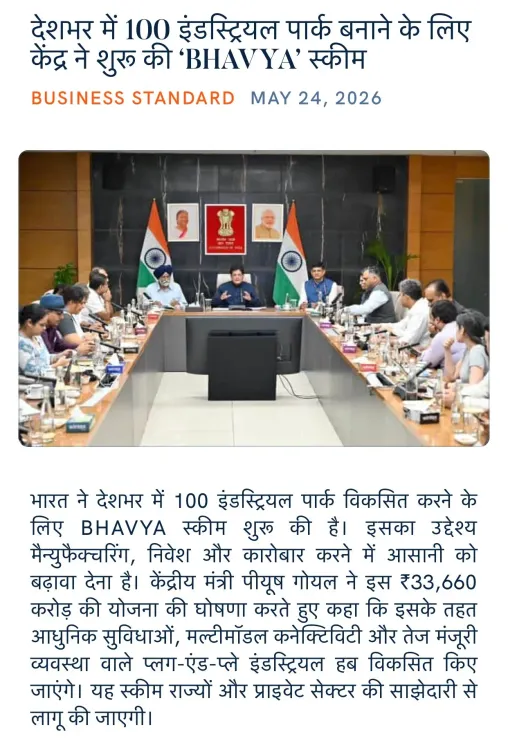
The Centre has launched the BHAVYA scheme to build 100 industrial parks nationwide, Union Textiles Minister Giriraj Singh announced on 24 May 2026. The move aligns with India's Make in India push and is expected to benefit manufacturing and textile sectors across states.
Key Takeaways
The central government has launched the BHAVYA scheme to establish 100 industrial parks across India.
Union Textiles Minister Giriraj Singh shared the announcement on 24 May 2026 via the NaMo App and X .
The scheme aligns with India's broader Make in India industrial infrastructure agenda.
Manufacturing units and the textile industry are among the primary intended beneficiaries.
Specific financial outlay, implementing agency, and park distribution criteria have not yet been publicly detailed.
State-level memoranda and budget allocations in upcoming fiscal announcements will signal the programme's pace and scale.
Union Textiles Minister Giriraj Singh on Sunday, 24 May 2026 shared news of the central government launching the 'BHAVYA' scheme, aimed at establishing 100 industrial parks across the country, posting the development on the NaMo App and X.
Context
The minister shared a post in Hindi reading: 'देशभर में 100 इंडस्ट्रियल पार्क बनाने के लिए केंद्र ने शुरू की BHAVYA स्कीम' ('Centre launches BHAVYA scheme to set up 100 industrial parks across the country'). The post, shared via the NaMo App, signals the government's intent to scale up industrial infrastructure at a national level. No additional details about the scheme's financial outlay or implementing agency were included in the post.
Policy Backdrop
Industrial park development has been a recurring pillar of India's manufacturing push, closely aligned with the broader Make in India initiative. Successive central governments have pursued state-central coordination models to develop dedicated industrial zones that lower logistics costs, improve utility access, and cluster supply chains. The BHAVYA scheme, as referenced in the post, appears to continue this lineage by targeting a defined count of 100 parks spread across the country, though specific provisions and budget allocations have not been detailed publicly at this stage.
The Textiles Ministry, which Giriraj Singh heads, has a direct stake in industrial park infrastructure — textile and apparel manufacturing units are among the primary beneficiaries of plug-and-play industrial estates that reduce the cost and complexity of setting up greenfield production facilities.
Stakeholders and Impact
The scheme, if implemented as described, would directly benefit manufacturing units and the textile industry, alongside other labour-intensive sectors that depend on affordable industrial land and shared infrastructure. State governments are typically key partners in such programmes, providing land and clearances while the centre provides capital support and policy frameworks. Investors and domestic entrepreneurs looking to set up production units stand to gain from reduced infrastructure barriers.
For Bihar and other states with lower industrial density, a nationally distributed parks programme could offer an opportunity to attract investment that has historically concentrated in western and southern manufacturing corridors. Giriraj Singh, as Lok Sabha MP from Begusarai, Bihar, represents a constituency where industrial development is a longstanding demand.
What's Next
Observers and industry bodies will watch for formal gazette notifications, scheme guidelines, and state-level memoranda of understanding that typically follow such announcements. Budget allocations in subsequent fiscal announcements will be a key indicator of the scheme's scale and pace of rollout. The distribution of the 100 parks across states — and the criteria for selection — will determine whether the programme meaningfully addresses regional industrial imbalances or concentrates in already-industrialised zones.
Point of View
Numbered-target programmes to signal manufacturing ambition — a format that has defined industrial policy communication since Make in India's launch. Giriraj Singh amplifying it through the NaMo App underscores the BJP's effort to consolidate policy messaging within its own digital ecosystem. The scheme's real test will lie in state uptake and budget follow-through, areas where similar past programmes have shown uneven results. For the Textiles Ministry specifically, industrial parks are a structural lever to revive domestic apparel manufacturing at a time when global supply chain realignment offers India a narrow but real window.
NationPress
19 Sept 2026
Frequently Asked Questions
What is the BHAVYA scheme?
The BHAVYA scheme is a central government initiative aimed at setting up 100 industrial parks across India to boost manufacturing infrastructure and attract investment.
Who announced the BHAVYA industrial park scheme?
Union Textiles Minister Giriraj Singh shared the announcement of the BHAVYA scheme on 24 May 2026 via the NaMo App and X.
How many industrial parks will be built under BHAVYA?
The BHAVYA scheme targets the establishment of 100 industrial parks across the country.
Which sectors will benefit from the BHAVYA scheme?
Manufacturing units and the textile industry are among the primary intended beneficiaries, along with other labour-intensive sectors that rely on affordable industrial land and shared infrastructure.
Is the BHAVYA scheme linked to Make in India?
The scheme aligns with the broader Make in India initiative, continuing the government's policy of developing dedicated industrial zones to lower production costs and cluster supply chains.