Goyal Backs BHAVYA Scheme for Ease of Business in Industrial Parks
Synopsis
Union Commerce Minister Piyush Goyal has highlighted the BHAVYA scheme's industrial parks as a multidimensional initiative to simplify business entry for entrepreneurs, reinforcing India's Atmanirbhar Bharat manufacturing push through dedicated industrial infrastructure.
Key Takeaways
Union Commerce and Industry Minister Piyush Goyal announced that industrial parks under the BHAVYA scheme will have multidimensional benefits.
The scheme is specifically aimed at providing ease of starting a business for entrepreneurs within dedicated industrial clusters.
The initiative aligns with the broader Atmanirbhar Bharat manufacturing push that has prioritised industrial parks and single-window clearances since 2014 .
MSMEs and entrepreneurs are the primary target beneficiaries, segments that face significant barriers in land acquisition and multi-agency regulatory approvals.
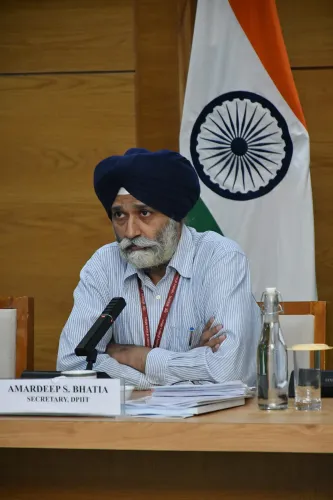
DPIIT , under Goyal's ministry, is expected to be the nodal agency for implementation guidelines and coordination with state governments.
Specific park locations, eligibility norms, and budget linkages remain to be announced and will be closely tracked by industry stakeholders.
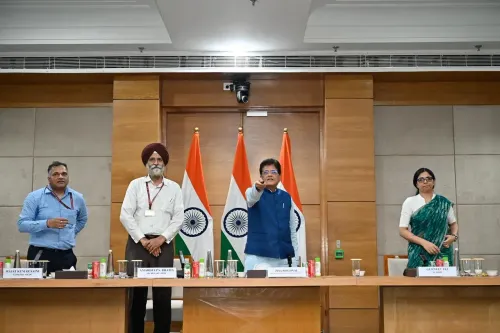
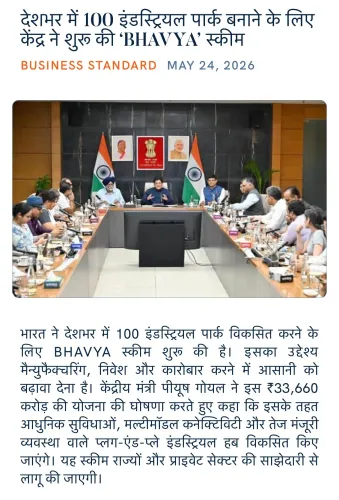
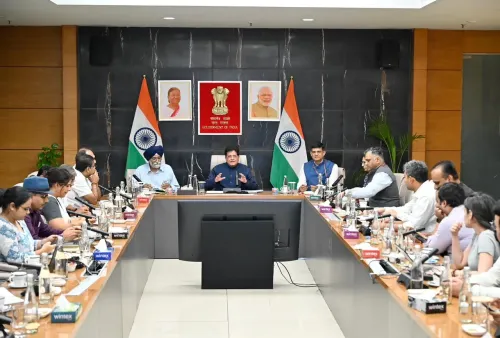
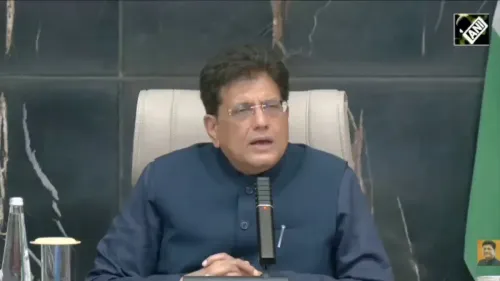
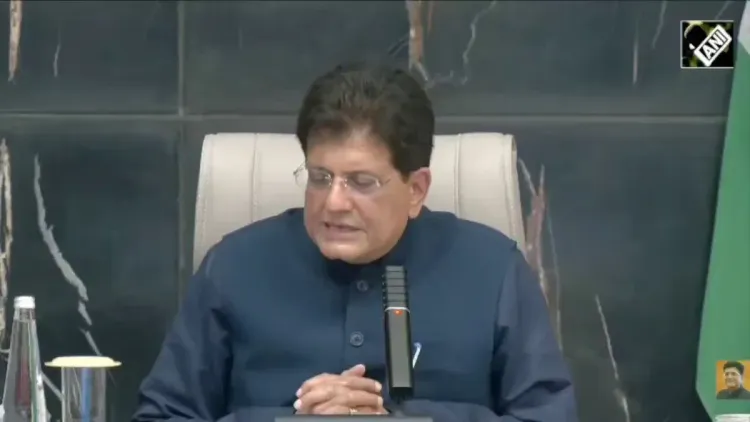
Union Commerce and Industry Minister Piyush Goyal on Saturday, May 23, 2026, stated that industrial parks being developed under the BHAVYA scheme will deliver multidimensional benefits and significantly ease the process of starting a business for entrepreneurs across India.
Context
Goyal's post underscores the government's continued focus on building dedicated industrial infrastructure as a lever for manufacturing-led growth. The minister said the parks would provide 'ease of starting a business for entrepreneurs,' signalling an intent to reduce entry barriers for new ventures within these clusters.
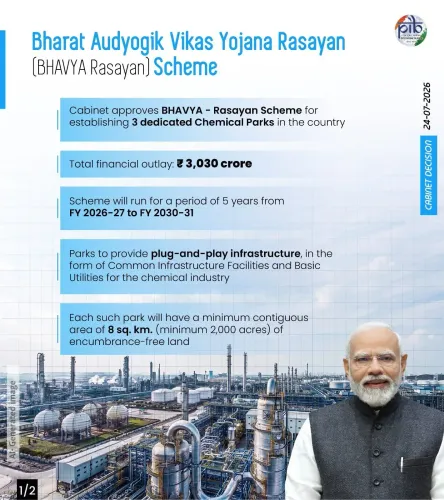
The BHAVYA scheme, as described by the minister, is positioned as a multi-benefit initiative aimed at creating plug-and-play industrial ecosystems. Such parks typically consolidate land, utilities, logistics, and regulatory clearances in a single location, lowering the cost and complexity of setting up manufacturing units.
Policy Backdrop
The announcement fits within a broader arc of industrial policy that successive central governments have pursued — building dedicated clusters to cut logistics costs and streamline regulation. The Atmanirbhar Bharat initiative, which accelerated after 2014, placed industrial parks and manufacturing clusters at the centre of India's self-reliance agenda.
The Production Linked Incentive (PLI) scheme, launched in 2020 across multiple sectors, similarly sought to attract investment into manufacturing clusters by offering output-linked financial incentives. BHAVYA, if structured comparably, could complement PLI by providing the physical and regulatory infrastructure that PLI-linked units require.
The Department for Promotion of Industry and Internal Trade (DPIIT), which falls under Goyal's ministry, has historically been the nodal agency for such industrial park schemes, overseeing land pooling, single-window clearances, and coordination with state governments.
Stakeholders and Impact
The primary beneficiaries identified are entrepreneurs and MSME exporters — segments that have long cited land acquisition complexity, utility connectivity, and multi-agency approvals as critical barriers to setting up or scaling manufacturing operations.
Dedicated industrial parks address these pain points by offering pre-cleared land parcels, common infrastructure, and consolidated regulatory interfaces. For MSMEs in particular, access to such parks can be transformative, lowering capital requirements and reducing time-to-production significantly.
State governments are also key stakeholders, as central industrial park schemes typically require state co-investment in land and connectivity infrastructure. The scheme's success will depend in part on how effectively central guidelines align with state industrial policies.
What's Next
Attention will now turn to implementation details — including specific park locations, eligibility criteria for entrepreneurs, and formal guidelines from DPIIT. Any linkage with upcoming Union Budget allocations or cabinet notes will be closely watched by industry bodies and state governments.
As India works to expand its share of global manufacturing, schemes like BHAVYA that lower the friction of starting and scaling industrial units will be a key test of whether policy intent translates into on-ground investment and job creation.
Point of View
' the minister is framing the scheme in the language of entrepreneurship rather than large-capital investment — a rhetorical shift that broadens the scheme's political appeal to MSMEs and first-generation founders. The announcement, made without granular detail, is characteristic of the government's pattern of building public momentum ahead of formal policy notification. Whether BHAVYA delivers on its multidimensional promise will ultimately hinge on state-level execution and the speed of DPIIT's implementation framework.
NationPress
14 Sept 2026
Frequently Asked Questions
What is the BHAVYA scheme?
The BHAVYA scheme is a central government initiative to develop industrial parks designed to provide multidimensional benefits and ease the process of starting a business for entrepreneurs, as described by Union Commerce Minister Piyush Goyal in May 2026. Detailed guidelines are yet to be formally notified.
Who will benefit from BHAVYA scheme industrial parks?
Entrepreneurs and MSME exporters are the primary intended beneficiaries, as the parks aim to consolidate land, infrastructure, and regulatory clearances to lower the barriers of setting up manufacturing units.
Which ministry is responsible for the BHAVYA scheme?
The Union Ministry of Commerce and Industry, headed by Minister Piyush Goyal, oversees the scheme. The Department for Promotion of Industry and Internal Trade (DPIIT) under the ministry is expected to be the nodal implementation agency.
How does the BHAVYA scheme relate to Atmanirbhar Bharat?
The BHAVYA scheme's industrial parks are part of the broader Atmanirbhar Bharat manufacturing push, which has prioritised dedicated industrial clusters, land pooling, and single-window clearances as tools to boost domestic production and reduce import dependence.
What are the next steps for the BHAVYA scheme?
Stakeholders are awaiting the announcement of specific park locations, formal implementation guidelines from DPIIT, and any linkage with Union Budget allocations or cabinet approvals that would formalise the scheme's rollout.