Goyal Launches BHAVYA Portal for 100 Industrial Parks
Synopsis
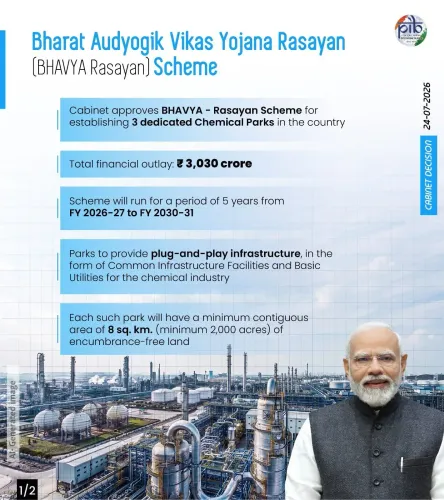
Union Commerce Minister Piyush Goyal on June 8, 2026, launched the BHAVYA portal to set up 100 plug-and-play industrial parks across India, offering MSMEs and investors a complete ecosystem of land, utilities, approvals, and connectivity to drive manufacturing-led growth.
Key Takeaways
BHAVYA portal launched on June 8, 2026 by Union Commerce Minister Piyush Goyal .
Scheme targets development of 100 plug-and-play industrial parks across India.
Parks will offer a complete ecosystem: land, connectivity, utilities, approvals, and social infrastructure .
Primary beneficiaries identified as MSMEs , with goals of job creation and fresh investment attraction .
BHAVYA extends the plug-and-play model tested in corridors like the Delhi-Mumbai Industrial Corridor to a national scale.
Scheme is positioned within India's 12-year manufacturing push anchored by Make in India and PLI schemes .
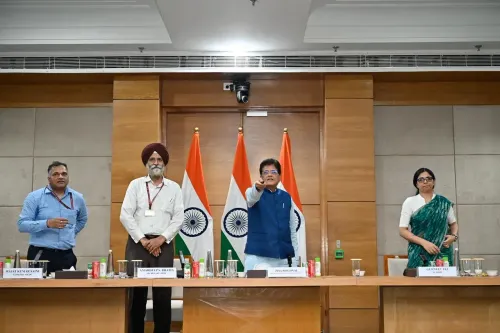
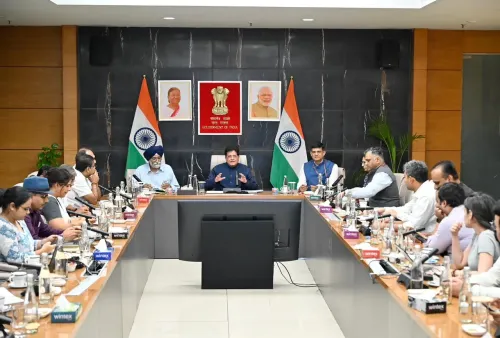
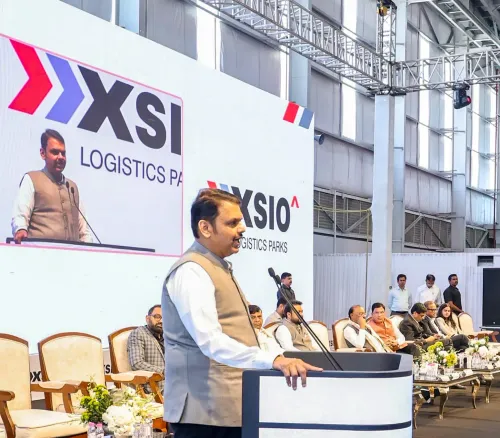
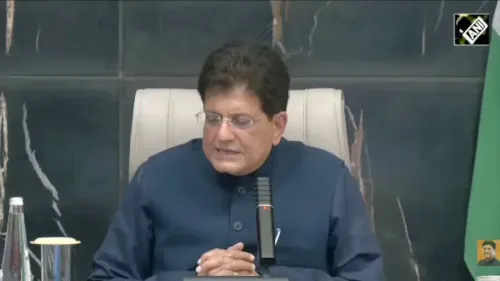
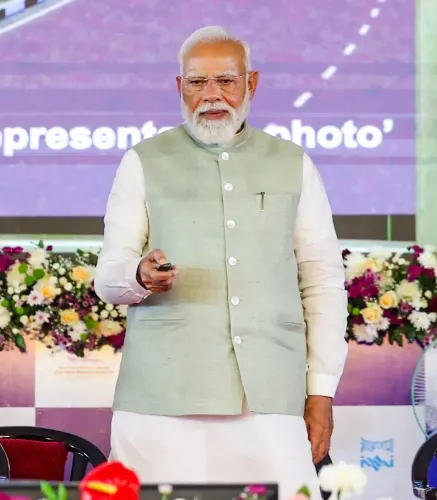
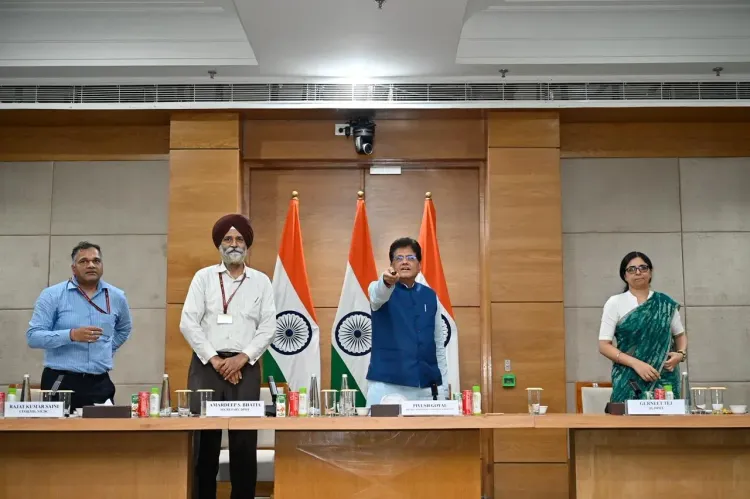
Union Commerce and Industry Minister Piyush Goyal on Monday, June 8, 2026, launched the portal of the Bharat Audyogik Vikas Yojna (BHAVYA), a new initiative to develop 100 plug-and-play industrial parks across India, aimed at accelerating manufacturing-led growth with a focus on MSMEs, job creation, and fresh investment.
Context
Announcing the portal launch, Minister Goyal described BHAVYA as more than a land-allocation scheme. 'It will ensure that investors get more than just land: a complete, investment-ready ecosystem with connectivity, utilities, approvals, and social infrastructure,' he said. The minister framed the initiative as 'a major step towards making India the world's preferred destination for industry and enterprise.'
The scheme explicitly targets micro, small and medium enterprises (MSMEs), which form the backbone of India's manufacturing sector and account for a substantial share of employment generation. By offering pre-cleared, fully serviced plots, BHAVYA aims to cut the time and cost that smaller manufacturers typically spend assembling land, utilities, and regulatory clearances on their own.
Policy Backdrop
BHAVYA builds on over a decade of manufacturing-focused policy. The Make in India programme, launched in September 2014, set the strategic direction of positioning India as a global manufacturing hub and raising the sector's share of GDP. The Production Linked Incentive (PLI) schemes, rolled out from 2020 across multiple sectors, added demand-side incentives to that supply-side push.
The plug-and-play model itself is not new to Indian industrial policy. Earlier projects such as the Delhi-Mumbai Industrial Corridor tested ready-to-occupy infrastructure nodes to shorten project gestation periods. BHAVYA appears to scale that concept nationally, extending it to a network of 100 parks spread across the country rather than concentrating capacity along a single freight corridor.
Goyal noted that the scheme 'builds on the growth momentum over the last 12 years,' situating it within the broader arc of reforms since 2014 that have emphasised ease of doing business, single-window clearances, and infrastructure-first industrial development.
Stakeholders and Impact
MSMEs stand to benefit most directly: a ready ecosystem with utilities, connectivity, and pre-obtained approvals removes the entry barriers that disproportionately affect smaller enterprises with limited capital and legal bandwidth. Domestic and foreign investors gain predictable timelines and standardised infrastructure, reducing project risk at the feasibility stage.
State governments will be key implementation partners, as industrial land allocation in India is primarily a state subject. The success of individual parks will depend on how quickly states can designate and prepare sites, integrate them into the BHAVYA portal, and align local approval processes with the scheme's investment-ready promise.
Broader employment generation is a stated goal. Industrial parks that reduce setup friction tend to accelerate the transition of informal manufacturing clusters into formal, scalable units, which is critical to India's ambition of deepening its manufacturing base and competing with regional peers for global supply-chain investment.
What's Next
The portal launch marks the commencement of the scheme's operational phase, but the phased rollout timelines for all 100 parks and the pace of investor sign-ons will be closely tracked. Upcoming investor summits and the next Union Budget will likely provide further clarity on capital allocation, state-wise distribution of parks, and sector-specific priorities under BHAVYA.
If the scheme delivers on its investment-ready promise at scale, it could meaningfully shift India's manufacturing geography — distributing industrial capacity beyond established clusters and into tier-2 and tier-3 regions, creating jobs where labour supply is abundant but formal employment remains thin.
Point of View
PLI, industrial corridors — that the government has layered over 12 years to build a manufacturing-friendly environment. By institutionalising the plug-and-play model at scale across 100 parks, the Commerce Ministry is signalling that reducing investor friction, not just offering financial incentives, is now the central strategy. The explicit MSME focus is politically and economically significant: it addresses the segment most vulnerable to infrastructure gaps and most capable of generating mass employment. The real test will be execution — whether state governments can align land, utilities, and clearances fast enough to make the 'investment-ready' promise credible to domestic and global capital.
NationPress
20 Sept 2026
Frequently Asked Questions
What is BHAVYA scheme India?
BHAVYA, or Bharat Audyogik Vikas Yojna, is a central government scheme launched by Commerce Minister Piyush Goyal in June 2026 to develop 100 plug-and-play industrial parks across India, providing MSMEs and investors with ready infrastructure including land, utilities, connectivity, and pre-cleared approvals.
What are plug-and-play industrial parks in India?
Plug-and-play industrial parks are pre-developed industrial zones where land, utilities, road connectivity, and regulatory approvals are arranged in advance, allowing businesses to begin operations quickly without spending time or capital on basic infrastructure setup.
How will BHAVYA help MSMEs?
BHAVYA removes the entry barriers that typically disadvantage smaller manufacturers — the cost and complexity of assembling land, utilities, and clearances — by offering a complete, investment-ready ecosystem, enabling MSMEs to focus resources on production rather than setup logistics.
How many industrial parks will be built under BHAVYA?
The BHAVYA scheme targets the development of 100 industrial parks spread across India, as announced at the portal launch on June 8, 2026.
How does BHAVYA relate to Make in India?
BHAVYA is a continuation of India's manufacturing-led growth strategy that began with the Make in India initiative in September 2014 and was deepened through PLI schemes from 2020. BHAVYA adds a national network of ready industrial infrastructure to the policy and incentive framework already in place.